- Category
- Vegetables
- State
- Fresh
- Usual unit
- g
What it is
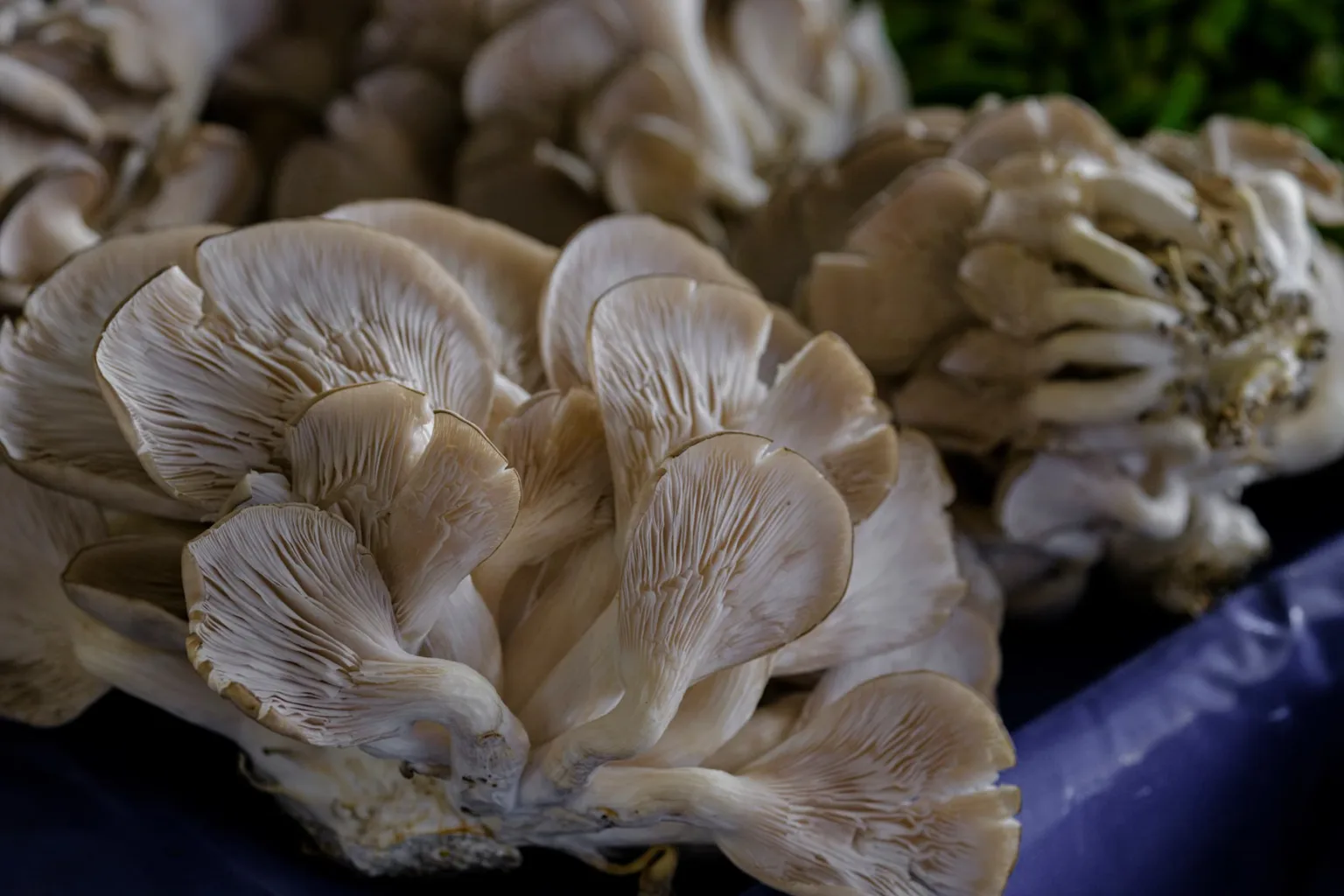
Oyster mushrooms are edible fungi in the Pleurotus genus; the common oyster mushroom is identified as Pleurotus ostreatus. Their cap often resembles a fan or shell, and colors can range from pale shades to grey and brown. In cooking, they are valued for a mild flavor and tender texture. They are sold fresh and can be prepared in several ways, including sautéing, grilling or roasting. The name covers varieties and products that can differ in appearance, so individual mushrooms need not have exactly the same shape or color.
When to use it
Use oyster mushrooms when you want to add a mild-tasting ingredient with a tender texture without overwhelming the rest of the dish. They work in sautés and as a side, and can be added to rice dishes, pasta, soups or oven-cooked meals. Their gentle flavor suits aromatic seasonings such as garlic and parsley. Choose the method to fit the meal: a pan works for a simple side, while the oven is convenient when preparing several pieces at once.
How to use it
Remove any visible growing material carefully and cut the mushrooms into manageable pieces, separating clusters if needed. To sauté them, use a roomy pan and avoid crowding it so the mushrooms can brown rather than steam in their own moisture. Add garlic and finish with parsley if you like. They can also be roasted or baked with oil and seasonings, or added to rice, pasta and soups. Adjust the cut and when you add them to suit the dish and the texture you want. Cook them before serving; do not serve them raw.
Flavour and texture
Their flavor is mild and delicate, and some descriptions note a slight sweetness. Once cooked, the texture is tender; browning can give the edges more definition. Differences in variety and appearance are normal, and size or color alone should not be treated as proof of quality or freshness.
How to choose it
Choose fresh oyster mushrooms that look intact and show no obvious damage; check that the package is in good condition and identifies the product as suitable for eating. Appearance and color vary among varieties, so do not expect one exact shade. For loose mushrooms, choose pieces that look firm and avoid those that are visibly spoiled or have moisture collecting around them.
Storage
Refrigerate them and follow any package directions. As a fresh product, their quality can decline over time, so use them while their appearance and texture remain good. Avoid leaving them forgotten in a closed container with accumulated moisture, and inspect them before cooking. No fixed storage period is given here because the available sources do not establish one that is reliable across formats and conditions.
Substitutions
Shiitake can stand in when you want a stronger, more umami-rich flavor, though the result will not be identical. King trumpet mushrooms are another option when a firmer texture is useful. Adjust the cut and cooking to the mushroom you choose; these are changes in character, not exact equivalents.
Common mistakes
Crowding the pan can make the mushrooms cook in their own liquid instead of browning. Another mistake is expecting every oyster mushroom to have the same color or shape, since varieties differ. Do not serve them raw: the available culinary guidance recommends cooking them before eating.
Safety and allergens
Use mushrooms sold as food and follow the package directions. Cook them before eating and discard pieces that are visibly spoiled. Do not eat wild mushrooms unless they have been safely identified by a qualified expert.
Culinary uses
- Guarnición de verduras
- Ingrediente para salteados, arroces, pastas y sopas
Recommended techniques
- Saltear en sartén
- Asar u hornear
Pairs well with
- Ajo y perejil
- Arroz o pasta
Frequently asked questions
Can oyster mushrooms be eaten raw?
The available culinary guidance recommends cooking them before serving; sauté, roast or bake them.
What do oyster mushrooms taste like?
They have a mild, delicate flavor, also described as slightly sweet, and a tender texture when cooked.
What can I use instead of oyster mushrooms?
Shiitake has a stronger flavor, while king trumpet has a firmer texture. Neither is an exact match for oyster mushrooms.
Estimated nutrition
- Fat
- 0 g
- Saturates
- 0 g
- Carbohydrate
- 1.43 g
- Sugars
- 0.71 g
- Fibre
- 1.4 g
- Protein
- 2.86 g
- Salt
- 1.22 g
Sources and review
Automatically researched, cross-checked and validated content. Sources consulted:
- Comer setas puede salvar el planeta: por qué la micología es clave para una alimentación sostenible doi.org
- Dictionary of Health Related Terms: English – Spanish hia.berkeley.edu
- Sevin 16oz Concentrate Label v20 ucanr.edu
- Auge de hongos comestibles especializados: Perspectivas del reporte USDA 2025 extension.psu.edu
- Manejo de insectos escama en el invernadero | Integrated Pest Management | College of Agriculture, Health and Natural Resources | University of Connecticut ipm.cahnr.uconn.edu
- Seta de ostra: propiedades, cultivo y cómo cocinarla comozeta.es
- Setas ostra: propiedades y métodos de cocción | Recetas.com recetas.com
- One step to curbing climate change this holiday season is to make the most of your food waste, UF/IFAS experts toss in tips on why and how to compost - News blogs.ifas.ufl.edu
- Online Dictionary of Invertebrate Zoology: F digitalcommons.unl.edu
- Food Mycology – Cornell Mushroom Blog blog.mycology.cornell.edu
- RECENT LITERATURE ON LEPIDOPTERA images.peabody.yale.edu
- Setas Ostra y Condimentos – Setas Shop setasshop.com
- Setas de ostra salteadas al estilo asiático margavilan.substack.com
- SETAS DE OSTRA CON AJO, PEREJIL Y AOVE MORISCA - Oliva Oliva olivaoliva.com
- De ostra, de cardo, de pie azul o aguja de oro; así son las Setas de La Rioja | La Rioja Capital lariojacapital.com