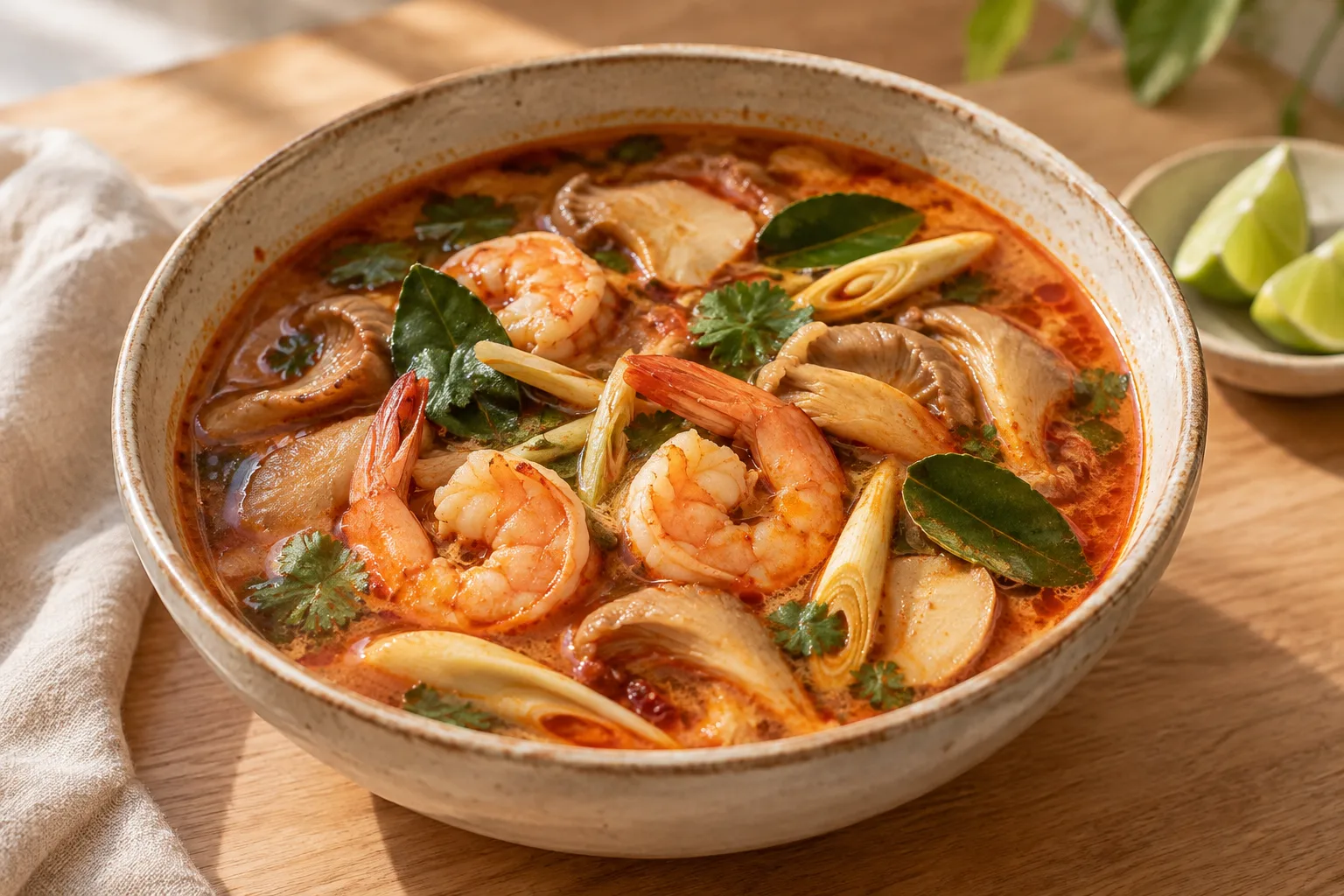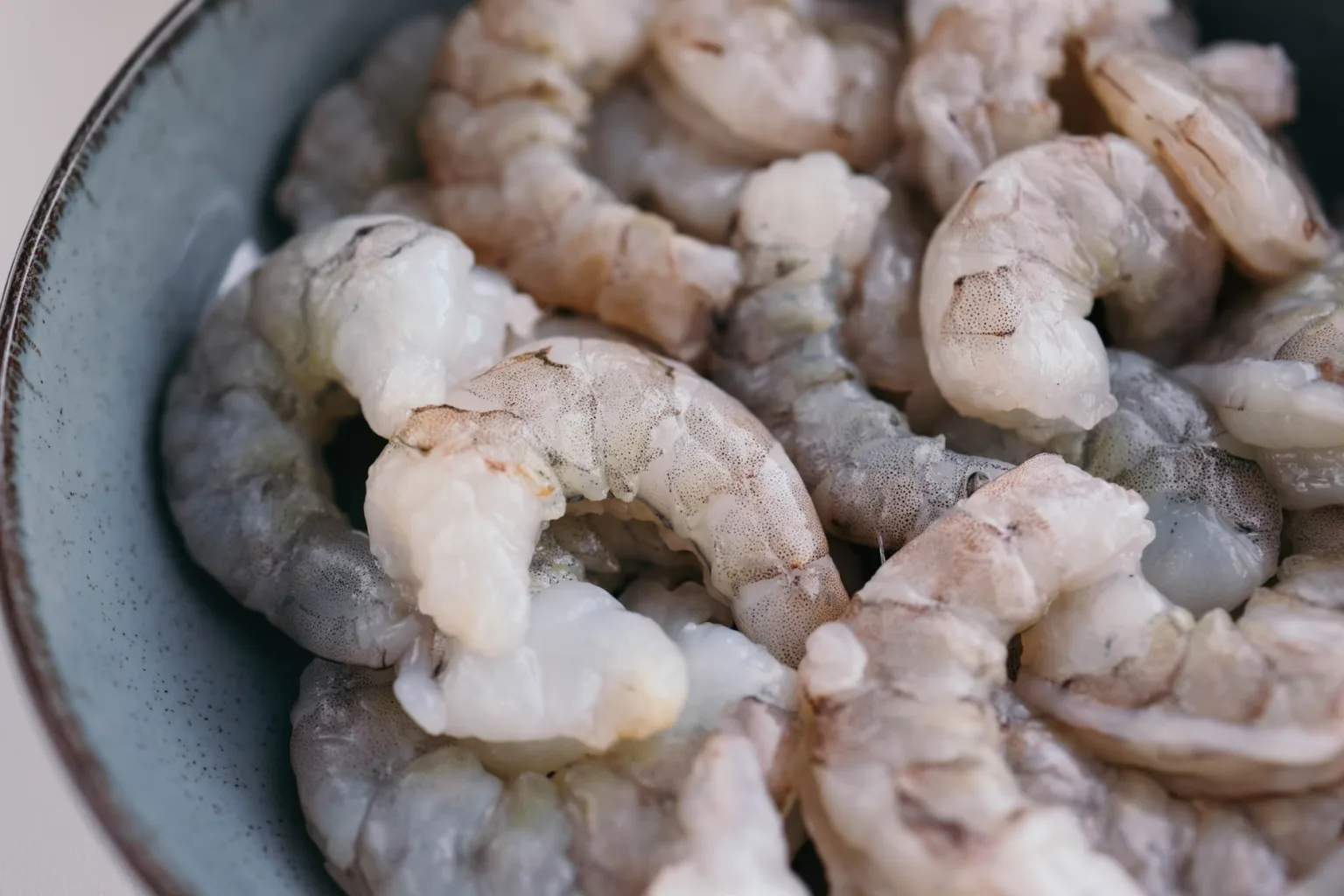
- Category
- Fish and seafood
- State
- Fresh
- Usual unit
- unit
What it is
Raw shrimp is shrimp that has not been cooked, a seafood ingredient in the decapod crustacean group. The name can cover different species and sizes depending on region and use, so appearance and the amount of meat vary between products. Its flesh is generally described as tender and soft, with a delicate, mildly sweet, marine taste. Shrimp is sold whole or peeled and may be available fresh or frozen; this profile focuses on fresh raw shrimp. Its appearance and texture change during cooking, so do not expect the uncooked product to look the same once prepared.
When to use it
Use raw shrimp when you want a quickly cooked seafood ingredient that can remain prominent in a dish. It works in vegetable or noodle stir-fries, pasta with garlic and tomato, rice dishes, broths, and soups. Whole shrimp can be served grilled or cooked on a hot surface, while smaller pieces mix readily into rice and spoonable dishes. Species and size vary, so adjust the cut and point of addition to the recipe rather than relying on one universal cooking time. For a cautious choice, cook shrimp before serving.
How to use it
Before cooking, check the product and follow the storage instructions on its packaging or from the seller. Prepare the other ingredients first, since shrimp is often added near the end of a recipe. Sauté it with garlic and oil, cook it on a hot surface, add it to rice or soup, or coat it lightly for a tempura-style preparation. For pasta, pair it with garlic, tomato, or white wine; in rice dishes, add it near the end so it is not exposed to unnecessarily prolonged cooking. Remove it once cooked and tender, rather than leaving it over heat until firm or rubbery. Avoid serving shrimp raw or undercooked, and keep raw shrimp separate from ready-to-eat foods.
Flavour and texture
Shrimp flesh is described as soft, tender, and juicy, with a delicate marine flavor and sometimes a sweet note. Intensity and texture vary among species, sizes, and product forms, so a small shrimp will not necessarily give the same result as a large one. Carefully cooked shrimp can accompany assertive ingredients without disappearing from the dish. Excessive cooking can reduce its juiciness and make it firm or rubbery, so keep an eye on it and add it late to preparations that remain on the heat.
How to choose it
Choose refrigerated shrimp with an even appearance and no strong or unpleasant smell. When possible, check the package, its date marking, and storage instructions; at a fish counter, ask whether the shrimp is fresh or thawed, since appearance alone cannot confirm its storage history. Size, color, and the amount of meat vary with species and product form, so choose according to the dish: larger pieces for grilling and smaller ones for rice or stir-fries. Avoid shrimp with obvious signs of deterioration and keep it cool on the way home.
Storage
Raw shrimp is perishable. Refrigerate it as soon as you get home, following the package or seller's instructions, and do not leave it at room temperature while preparing the rest of the meal. Follow any product-specific directions; a universal storage duration cannot be given without knowing the product form and its handling history. Keep raw seafood separate from ready-to-eat foods, and use clean utensils and surfaces. If you cannot use it according to the product directions, ask the seller how to proceed rather than guessing at a storage period.
Substitutions
Prawns or similarly sized shrimp can play a comparable role in rice dishes, stir-fries, soups, and pasta. Adjust the cut and cooking point to the alternative's size and texture: species do not all have the same flavor, meat-to-shell proportion, or response to heat. Other crustaceans may work in some preparations, but they will change the result. When substituting seafood, check the chosen product's label and allergen information too.
Common mistakes
A common mistake is leaving shrimp on the heat for too long: the flesh can become firm and lose juiciness. Adding it early to pasta, rice, or soup that still needs to cook can also spoil the texture. Do not assume all shrimp have the same size, flavor, or cooking needs, and do not rely on smell or appearance alone as proof of safe storage. Do not serve the product raw or undercooked on the assumption that a marinade has cooked it.
Safety and allergens
Treat raw shrimp as perishable: keep it refrigerated as directed on the package and handle it with clean utensils and surfaces, separate from ready-to-eat foods. As a precaution, cook it before serving and follow the product's handling and cooking directions. If its appearance, smell, or storage history raises concerns, do not eat it.
Culinary uses
- Proteína principal para platos de marisco
- Ingrediente para arroces, pastas, sopas y salteados
Recommended techniques
- Saltear
- Cocinar a la plancha
- Añadir al final de arroces, pastas o sopas para controlar la cocción
- Freír en una cobertura ligera, como en la tempura
Pairs well with
- Ajo y aceite
- Arroz y caldo de pescado
- Tomate y vino blanco
- Verduras, fideos y cítricos
Frequently asked questions
Can raw shrimp go straight into pasta?
Yes. Add it while the sauce is cooking or near the end of preparation so it is cooked before serving. Avoid leaving it over heat longer than needed.
What dishes can use raw shrimp as an ingredient?
It is used in rice dishes, pasta, soups, stir-fries, grilled preparations, and tempura-style dishes. For a cautious option, serve it cooked.
Why can shrimp turn rubbery?
Prolonged cooking can make it lose juiciness and become firm or rubbery. Add it late to dishes that are still cooking and watch its texture.
Estimated nutrition
- Fat
- 1.79 g
- Saturates
- 0 g
- Carbohydrate
- 0.89 g
- Sugars
- 0 g
- Fibre
- 0 g
- Protein
- 20.5 g
- Salt
- 0.42 g
Sources and review
Automatically researched, cross-checked and validated content. Sources consulted:
- Client Challenge doi.org
- The Essential Glossary of Cooking Terms for the Culinary Arts - Escoffier escoffier.edu
- Gambas: origen, variedades, propiedades y cómo usarlas en la cocina abc.es
- Gambas, del océano a un platillo delicioso | Recetas Nestlé recetasnestle.com.co
- Propiedades y beneficios de las gambas - Compesca compesca.com
- Agencia Española de Seguridad Alimentaria y Nutrición aesan.gob.es
- Dictionary of Health Related Terms: English – Spanish hia.berkeley.edu
- 1. Aprendamos sobre las comidas y las expectativas en un restaurante – Yo puedo: segundos pasos milnepublishing.geneseo.edu
- informe anual de indicadores - agricultura, pesca y alimentación servicio.mapa.gob.es
- Home food preservation | Servicio de Extensión de OSU extension.oregonstate.edu
- Event Menus - University of Notre Dame hospitality.nd.edu
- UF/IFAS Economic Contributions of U.S. Seafood Imports ... fred.ifas.ufl.edu
- Home Food Safety - Penn State Extension extension.psu.edu
- Examining Dietary Acculturation in Hispanic Males Residing ... aquila.usm.edu
- Gambas crudas: análisis y comparativa de los mejores productos para hacer comida asiática thaibistro.es