- Category
- Grains, flour and pasta
- State
- Dry
- Usual unit
- g
What it is
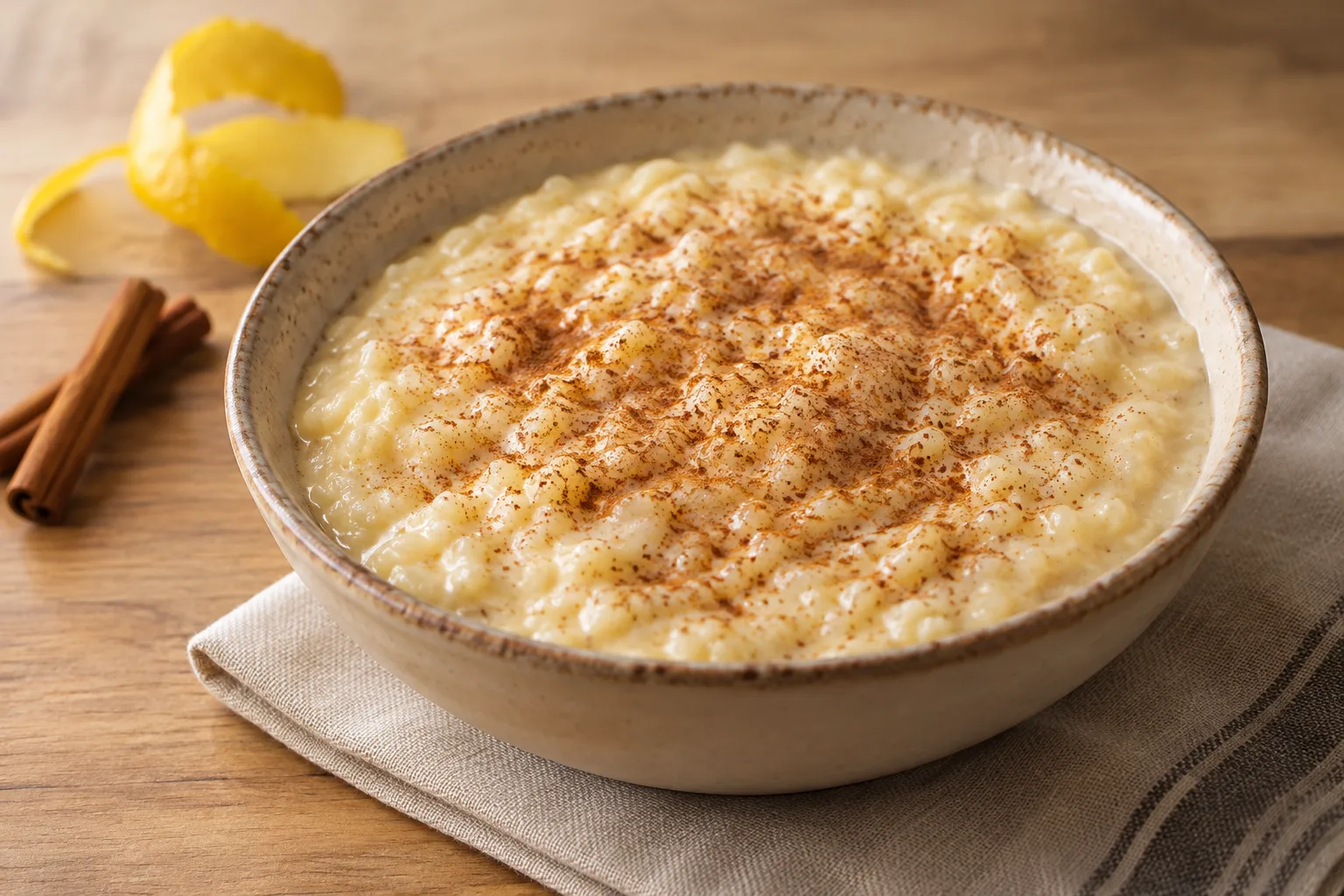
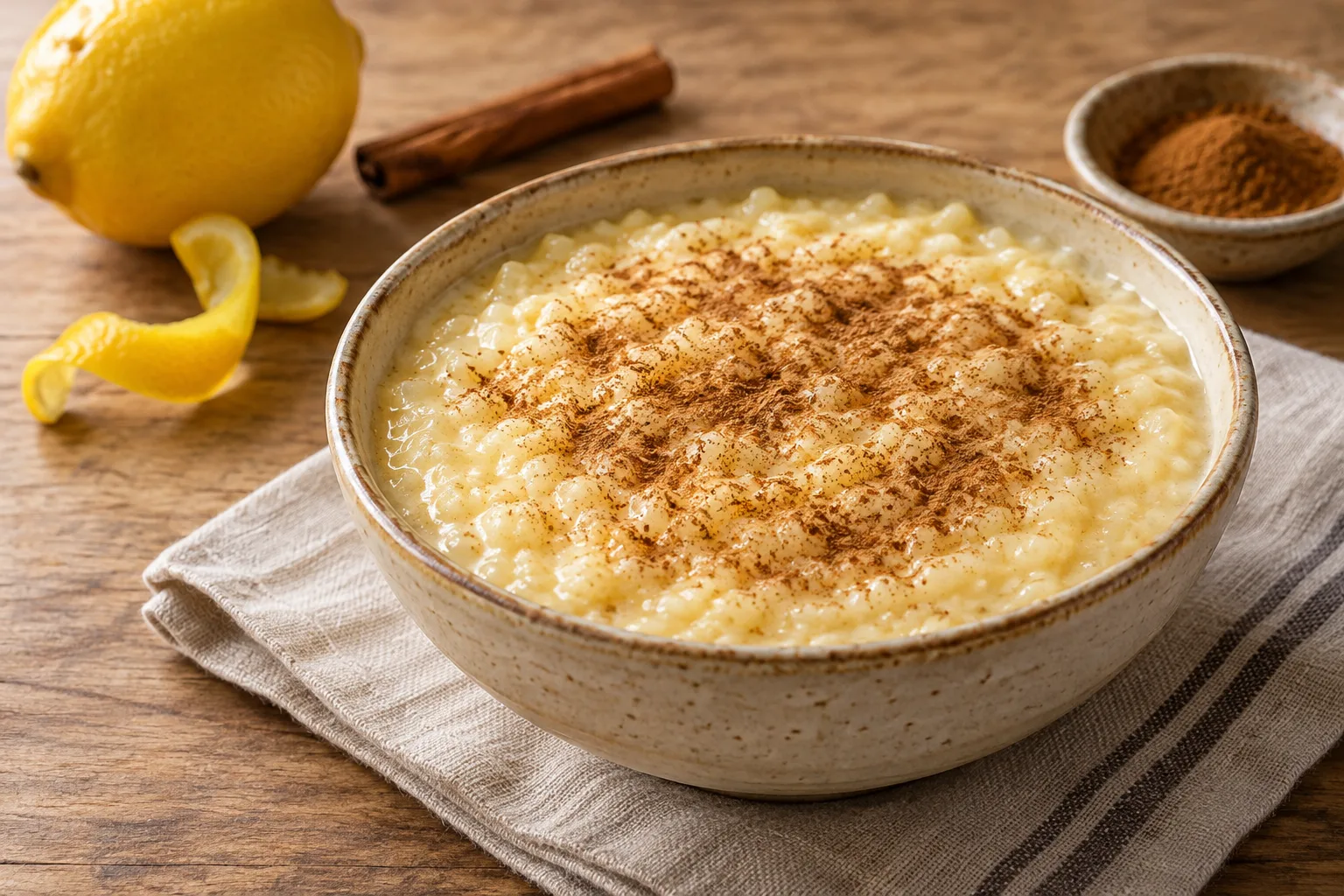
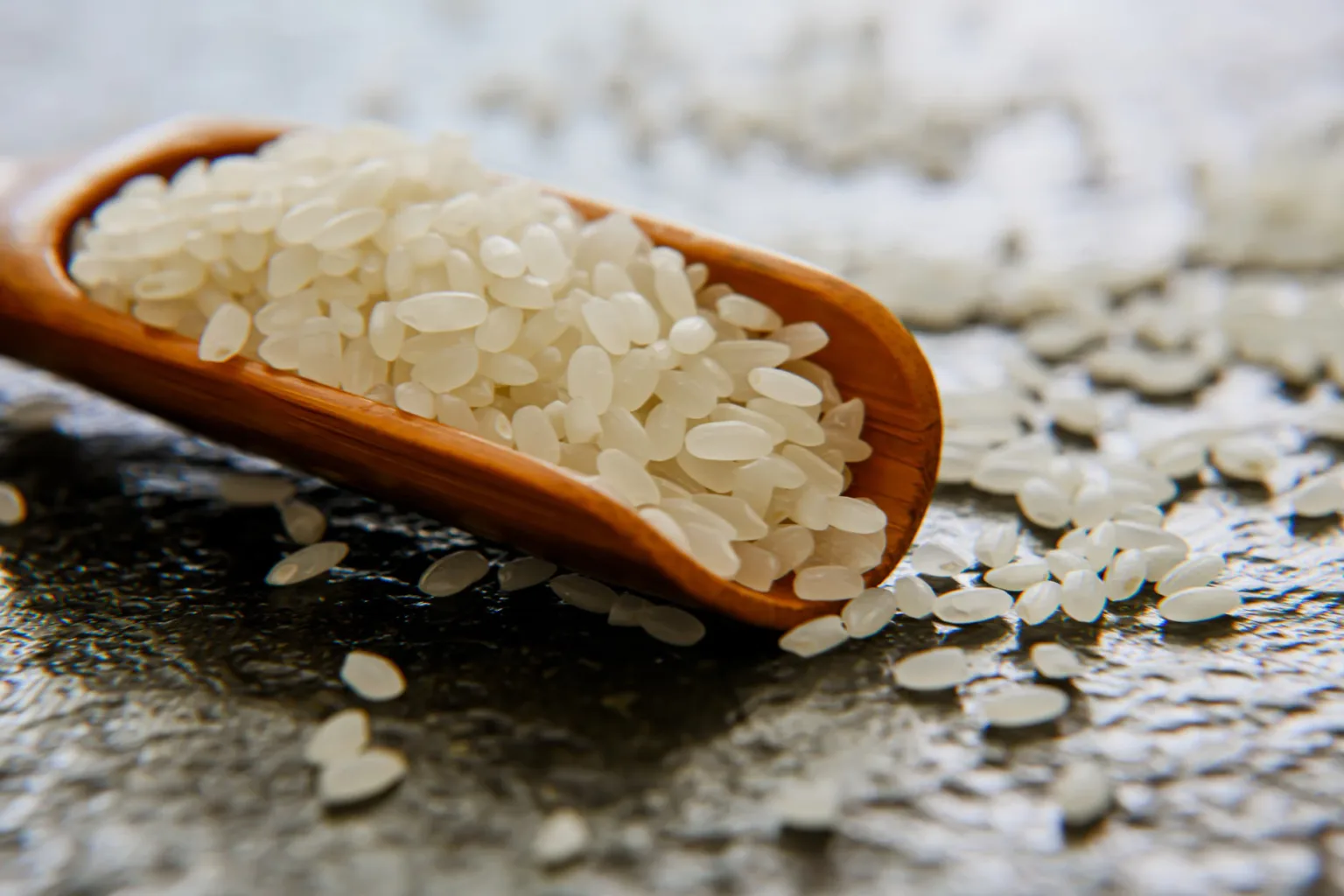
Round-grain rice is a broad category of rice identified by its short, rounded, almost spherical kernels. The name does not necessarily refer to one single variety: kernel size, starch characteristics and the cooked result can differ from one product to another. In general, round-grain rice releases starch as it cooks and tends to become more cohesive and creamy than long-grain rice, whose kernels are more likely to remain separate. This makes it useful in dishes where the rice and liquid are meant to come together, such as creamy rice dishes, risotto and rice pudding. Treat “round-grain” as a description of grain shape and general cooking behavior rather than a guarantee that every product will cook identically.
When to use it
Choose round-grain rice when you want a tender, moist and somewhat cohesive result rather than very separate kernels. It can suit creamy or brothy rice dishes, risotto and desserts such as rice pudding. It is also used in stews and dishes where rice cooks with broth, vegetables or legumes. The best choice depends on the texture you want: sources describe round-grain rice as useful for making the most of its starch and achieving a creamy preparation, while long-grain rice is commonly associated with looser, more separate kernels. Check the package if your recipe calls for a particular variety.
How to use it
Measure the rice and liquid according to the recipe or package directions, because different varieties within this category can behave differently. Simmer it gently in water, broth or a seasoned base until it reaches the texture you want. For a creamy or soft rice dish, cook the rice with the liquid so its starch can help thicken and bind the preparation; stir as the recipe directs. For rice pudding, cook it in the liquid specified for the dessert and follow the recipe for the desired doneness. Do not assume that one variety’s cooking time applies to another: rice type and kernel size affect the result. If you need distinct, separate kernels, choose a variety intended for that purpose instead.
Flavour and texture
Its flavor is generally mild, so it takes on notes from broth, a cooked aromatic base and the other ingredients in the dish. Its main culinary feature is texture: when cooked, it tends to become tender, somewhat sticky and cohesive, and can help create a creamy consistency. The result depends on the variety and cooking method; not every round-grain rice becomes equally firm or releases starch in the same way. This category may not be the best choice when a side dish of very separate kernels is the goal.
How to choose it
Look for “round-grain” on the label and check whether the package names a particular variety or recommends specific uses. The term describes a general grain shape and cooking behavior; it does not guarantee that all products are identical. Match the rice to the dish: round-grain rice is often suitable when creaminess or cohesion is wanted, while long-grain types are worth considering for separate kernels. Check that the package is intact and follow the manufacturer’s directions.
Storage
Keep dry rice in a tightly closed package or a clean, dry container, in a cool place away from moisture. Protecting it from moisture helps keep the product dry; consult the package date and directions for storage guidance. Once cooked, follow the storage instructions given for the recipe or prepared product. The available evidence does not establish one storage duration that applies to every round-grain rice.
Substitutions
Short- or medium-grain rice may work in some recipes when a cohesive texture is wanted, but it will not always produce the same result. Variety, starch characteristics and cooking method affect creaminess and firmness. If a recipe depends on a specific rice, using that variety is the most reliable choice. If substituting, check the package directions and monitor the texture as it cooks.
Common mistakes
A common mistake is treating all round-grain rice as identical: grain shape alone does not identify one variety or establish a universal cooking time. It may also be the wrong choice when very separate kernels are wanted. Avoid borrowing liquid amounts or cooking times from a different variety without checking the recipe or package, and do not assume a substitute will reproduce exactly the same texture.
Safety and allergens
Keep dry rice protected from moisture and follow the package and recipe instructions for preparation and storage. No rice-specific cooked-storage guidance is established here.
Culinary uses
- Base for creamy rice dishes and risotto
- Grain for rice pudding, soups, and brothy rice dishes
Recommended techniques
- Simmer in a measured amount of liquid until tender
- Cook in broth or a seasoned base when a creamy, cohesive result is wanted
Pairs well with
- Broth or stock
- Vegetables and legumes
Frequently asked questions
What texture does round-grain rice have when cooked?
It often cooks up tender and more cohesive than long-grain rice; its starch can contribute to a creamy texture. The result varies with the variety and cooking method.
What dishes is round-grain rice used for?
It is used in creamy rice dishes, risotto, brothy rice preparations and rice pudding when a closer relationship between the rice and liquid is wanted.
Can I replace it with long-grain rice?
You can, but the result may differ: long-grain rice tends to remain more separate. Choose according to the texture you want.
Estimated nutrition
- Fat
- 0 g
- Saturates
- 0 g
- Carbohydrate
- 80 g
- Sugars
- 0 g
- Fibre
- 6.7 g
- Protein
- 6.67 g
- Salt
- 0 g
Sources and review
Automatically researched, cross-checked and validated content. Sources consulted:
- The Essential Glossary of Cooking Terms for the Culinary Arts - Escoffier escoffier.edu
- ¿Qué tipos de arroz existen? Variedades y características vaellocampos.com
- Hablemos de arroces - BuleBar bulebar.es
- CERVECERO ESPAÑOL aesan.gob.es
- Tipos de arroz, usos culinarios - Pepekitchen pepekitchen.com
- Tipos de arroz: ¿cuántos hay y para qué se usa cada uno? mastershosteleria.com
- - YouTube youtube.com
- Ganar el gordo de Navidad es como encontrar un grano concreto de arroz en treinta platos de paella doi.org
- THE BEAUTIFUL WOMAN IN MEDIEVAL IBERIA mospace.umsystem.edu
- Mucho honra storage.lib.uchicago.edu
- ¿Sabías que el arroz redondo absorbe mejor el sabor del caldo? harineraelmolino.com