- Category
- Vegetables
- State
- Fresh
- Usual unit
- stalk
What it is
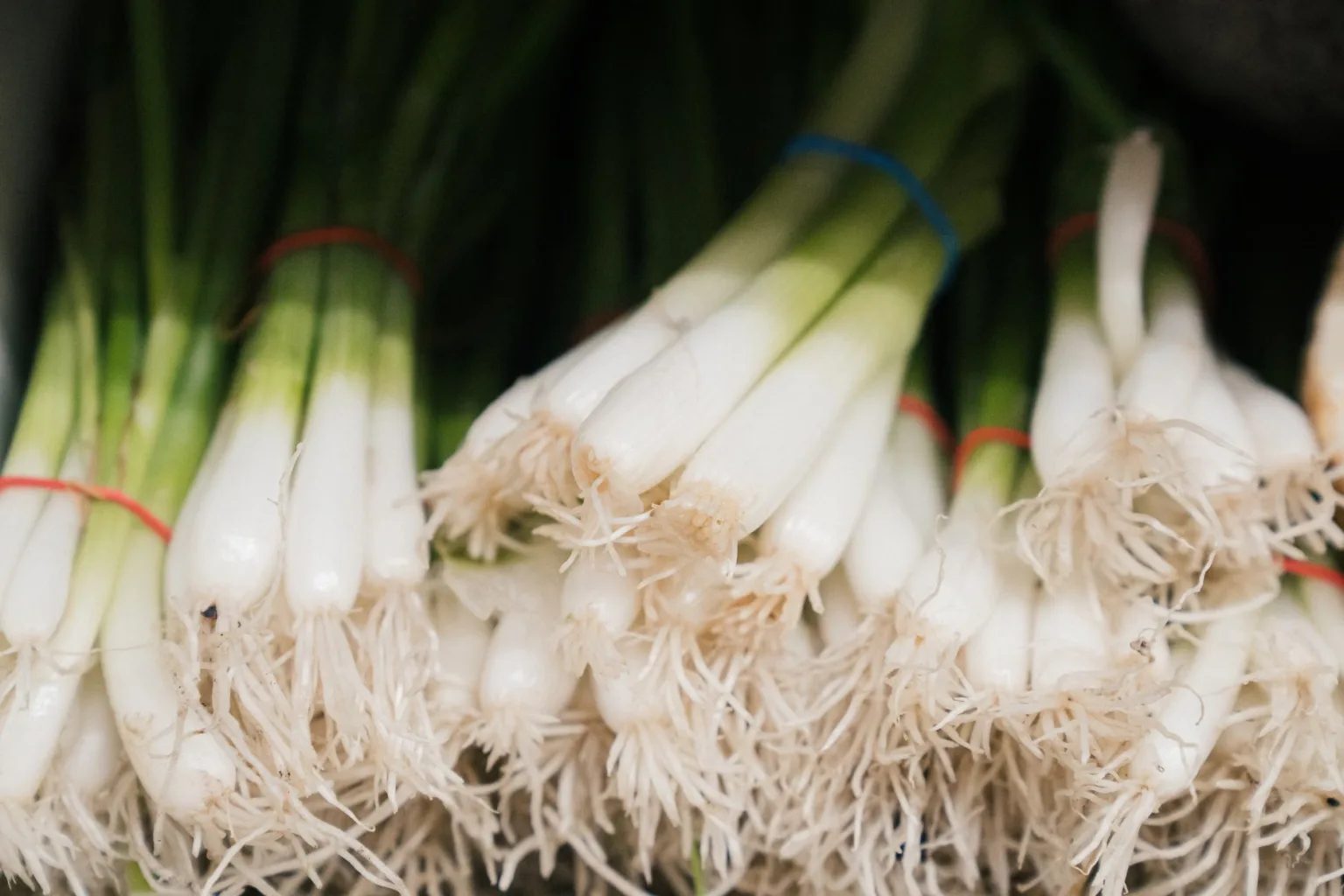
Scallions belong to the allium group, which also includes onions, leeks, and chives. This profile covers only the green leaves or tops, not the white portion. The greens are edible and can be used raw or cooked. Their flavor is mild and onion-like; thicker leaves can seem fibrous when raw and may work better cooked. Names used in shops vary by region and can refer to different kinds of green onion, so it is best to judge the actual product and the portion being sold rather than assume every item is identical. The green parts are useful both as a finishing touch and as an ingredient in cooked dishes.
When to use it
Use scallion greens when you want fresh color and a mild onion flavor without making it the dominant note. Finely chopped, they work as a finishing touch for salads, soups, sauces, and rice dishes. They can also be added to egg dishes, broths, and stir-fries. If the leaves are thick or seem fibrous, cooking them in a soup or stir-fry is often preferable to serving them raw. Choose raw or cooked use according to the texture and freshness you want: raw greens stay distinct and fresh-tasting, while cooked greens blend into the rest of the dish.
How to use it
Rinse the green leaves under clean water and dry them before cutting. Remove damaged tips, then slice or finely chop the portion you plan to use. For a fresh finish, scatter the greens raw over a salad, soup, sauce, or rice dish shortly before serving. They can also be added to an egg preparation or mixed into a sauce. For thicker leaves, add them to a soup, broth, or stir-fry and cook them with the other ingredients. Match the cut to the dish: thin slices distribute easily, while a fine chop is convenient for mixing into sauces and other preparations.
Flavour and texture
Scallion greens have a fresh, mild onion flavor. They may remind you of chives, though the exact flavor and texture depend on the kind of scallion and how thick its leaves are. Tender leaves are suitable for raw use; thicker leaves can feel fibrous uncooked and may be more pleasant in soups or stir-fries. A fine cut helps distribute their flavor and texture throughout a dish.
How to choose it
Choose scallions with green leaves that look fresh and firm, without visibly damaged portions. Check that you are buying the part you need: this profile is for the green leaves, even when the whole plant is sold. Leaf thickness varies; thicker greens may be less appealing raw and can be put to better use cooked. Local names do not always identify a single type, so assess the product itself.
Storage
Keep fresh scallions refrigerated in a plastic bag. The available guidance gives about one week for refrigerated green onions, but actual keeping quality can vary with their condition at purchase and refrigerator conditions. Separate the green portion when preparing only what you need. If freezing scallions for later use in cooked dishes, label the container and follow the available guidance to use them within four months.
Substitutions
Chives can replace scallion greens when you want a fresh finishing touch, though they are more delicate and do not have exactly the same texture. Leek or onion can provide an allium flavor in cooked dishes, but their strength and texture differ; start with less and adjust to taste. No substitute exactly reproduces the flavor and texture of scallion greens.
Common mistakes
Do not assume the green part is inedible: it can be used raw or cooked. Avoid serving very thick, fibrous leaves raw if that texture is unwelcome; add them to soup or a stir-fry instead. Do not mistake scallion greens for chives: they share some uses but are different ingredients.
Safety and allergens
Rinse the greens under clean water before cutting, and use clean utensils and work surfaces. Discard damaged portions; do not use produce that shows signs of spoilage.
Culinary uses
- Fresh garnish and finishing ingredient
- A mild onion-flavored addition to soups, salads, sauces, and cooked dishes
Recommended techniques
- Rinse, dry, and slice or finely chop
- Use raw or add to soups and sautéed dishes
Pairs well with
- Salads, soups, and miso-style broth
- Egg dishes, sauces, rice, tofu, and sautéed vegetables
Frequently asked questions
Can scallion greens be eaten raw?
Yes. Tender green leaves can be chopped and added raw to salads, soups, sauces, or other dishes as a finishing touch.
What should I do if the green leaves are thick?
If they seem fibrous raw, add them to a soup, broth, or stir-fry and serve them cooked.
How should I store fresh scallions?
Keep them in a plastic bag in the refrigerator. Available guidance suggests about one week, though starting condition and storage conditions can affect that period.
Sources and review
Automatically researched, cross-checked and validated content. Sources consulted:
- Usos culinarios apropiados de las variedades de plátano verde barraganete, dominico y maqueño, en la gastronomía ecuatoriana. | Revista de Gastronomía y Cocina doi.org
- Qué es la cebolleta en España: La joya verde de nuestra gastronomía - Agrícola Campolor agricolacampolor.com
- Producción de Cebolla extension.psu.edu
- Recetas - Expanded Food and Nutrition Education Program efnep.tamu.edu
- Cebollas en el Huerto extension.usu.edu
- Teen Cuisine Encore aces.edu
- Cebollines | Servicio de Extensión de OSU extension.oregonstate.edu
- Cebollines wpcdn.web.wsu.edu
- Aprovéchalo todo de la cebolleta ametllerorigen.com
- Cebolletas tiernas, tallos y hojas únicamente (¿crudas, orgánicas?) | Fundación G+E diet-health.info
- Diferencias entre cebolla, cebolleta, cebollino y chalota bonviveur.com