- Category
- Drinks
- State
- Liquid
- Usual unit
- tablespoon
What it is
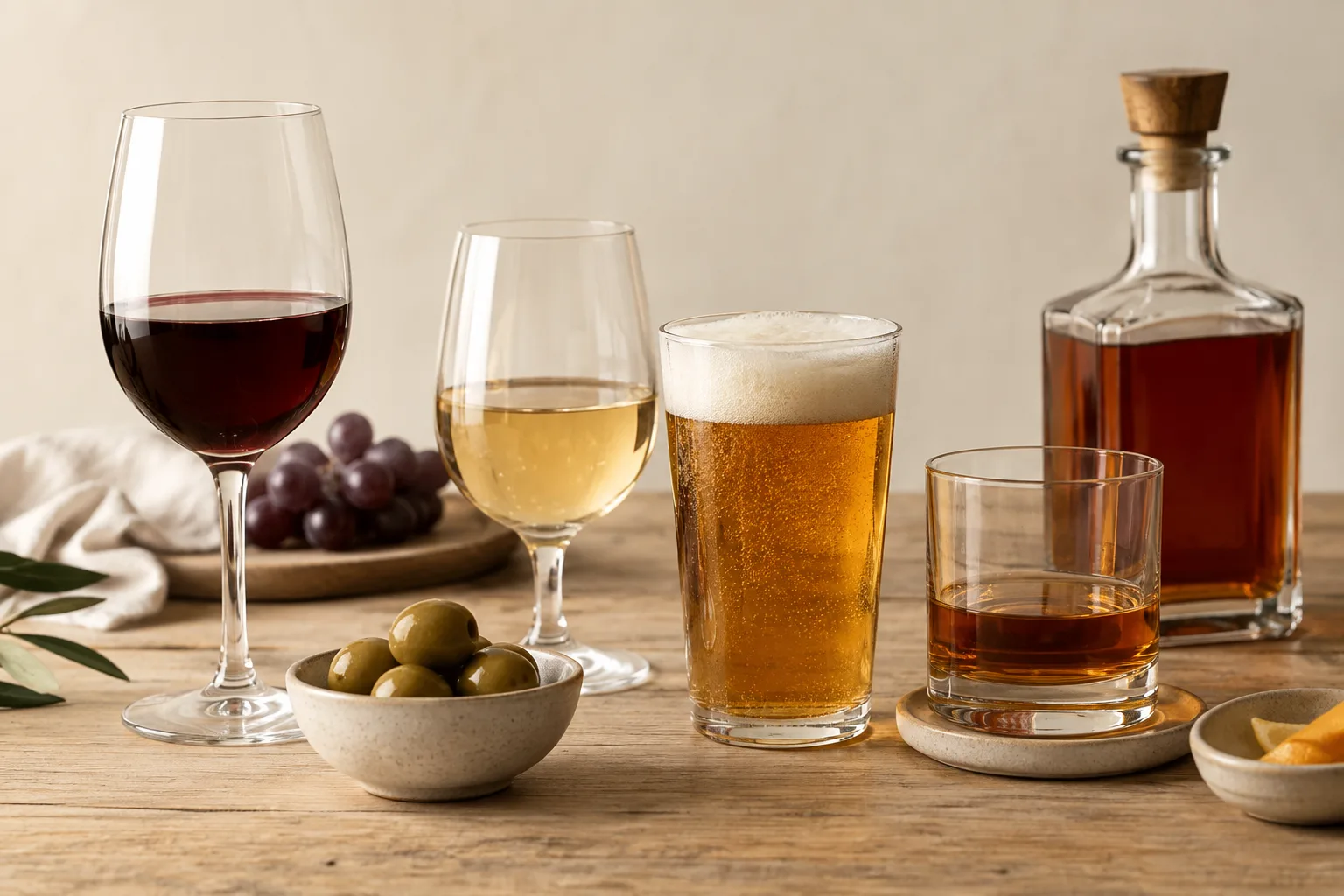
Alcohol, treated here as a culinary ingredient, is a broad category of liquid drinks that includes wine, beer, liqueurs and spirits. It does not have one uniform flavor: each drink brings its own profile and may contribute aroma, acidity, sweetness, bitterness or other nuances. It is used in both savory and sweet preparations, before or during cooking. Choose it with the intended result in mind rather than treating all alcoholic drinks as interchangeable.
When to use it
Use it when the profile of a particular drink complements the dish: for example, wine in marinades, stews or sauces, beer in some batters, and liqueurs in sweet preparations. It can be added before cooking, during cooking, or as part of a mixture. Choose the drink for its characteristics and intended role, since different drinks do not contribute the same things. Do not add it on the assumption that heat will remove all the alcohol: the amount remaining varies with the preparation and technique.
How to use it
Choose a drink whose flavor works with the other ingredients, and follow the recipe’s stated amount because drinks vary considerably. You can add it to marinades or macerations, include it in stews and sauces, use it in reductions, or incorporate it into batters and doughs. Liqueurs are also used for aroma in some desserts. Balance the dish with the drink’s acidity, sweetness, bitterness and aromas in mind. Cooking may reduce some alcohol, but it does not guarantee complete removal; if you need to avoid alcohol, choose an alcohol-free alternative rather than relying on cooking.
Flavour and texture
Flavor and aroma depend on the drink: wine, beer and spirits are not interchangeable. Depending on the product, they may contribute acidic, sweet, bitter, fruity, toasted or spiced notes. Some drinks can also influence the character of sauces, marinades, doughs and batters; there is no single texture associated with alcohol as a category.
How to choose it
Choose a drink with a profile suited to the recipe, and check the label to identify the product you are buying. Alcoholic drinks differ from one another, and the broad category name alone does not specify their composition or flavor. For packaged products, consult the manufacturer’s information, including the alcohol percentage where applicable.
Storage
This category includes different products, so there is no single storage instruction that applies to all of them. Read the label and follow the storage directions for the specific product; storage information can vary by food and presentation. Keep the container identified so it is not mistaken for an alcohol-free drink.
Substitutions
To avoid adding alcohol, you can choose alcohol-free wine or use spices and other alcohol-free aromatics. The result will not be identical: alternatives change the dish’s aroma and balance. Match the choice to the recipe, and do not assume that cooking an alcoholic drink makes it equivalent to an alcohol-free alternative.
Common mistakes
A key mistake is assuming all alcohol disappears when heated, boiled or flambéed: some may remain. It is also worth avoiding a direct swap between drinks without considering their different flavors and characteristics. Choose according to the dish rather than treating the broad category as one uniform flavor.
Safety and allergens
Cooking with an alcoholic drink does not guarantee that all alcohol disappears. If you need to avoid it, whether for personal preference or another reason, choose an alcohol-free alternative and clearly communicate what was used. For packaged drinks above 1.2% alcohol by volume, check the percentage shown on the label.
Culinary uses
- condimento
- aporte de aroma y sabor
- ingrediente líquido
Recommended techniques
- marinar y macerar
- añadir a guisos y salsas
- reducir
- flambear
- incorporar a masas y rebozados
Pairs well with
- vino con guisos de carne o pescado
- vino en salsas y marinadas
- cerveza en rebozados
- licores en postres de fruta
Frequently asked questions
Does all the alcohol disappear during cooking?
Not necessarily. Cooking may reduce it, but the amount remaining depends on the preparation and method; do not assume the finished dish is alcohol-free.
Which drinks are used in cooking?
Wine, beer, liqueurs and spirits are among the options. Each has a different profile, so choose one that suits the dish.
What can I use instead of alcohol?
Alcohol-free wine, spices and other alcohol-free aromatics are possible options. They will change the dish’s profile, so choose according to the recipe.
Estimated nutrition
- Fat
- 0 g
- Saturates
- 0 g
- Carbohydrate
- 0.27 g
- Sugars
- 0 g
- Fibre
- 0 g
- Protein
- 0.9 g
- Salt
- 0.01 g
Sources and review
Automatically researched, cross-checked and validated content. Sources consulted:
- En el etiquetado alimentario hay algunas menciones que son obligatorias eletiquetadocuentamucho.aesan.gob.es
- Client Challenge doi.org
- Agencia Española de Seguridad Alimentaria y Nutrición aesan.gob.es
- Storing Staple Ingredients in the Kitchen extension.psu.edu
- How Much Alcohol Is Left In Foods When Cooking • AnswerLine • Iowa State University Extension and Outreach blogs.extension.iastate.edu
- Providing Food at Events with Alcohol Present | St. Lawrence University stlawu.edu
- Sobriety in the Kitchen | Institute of Culinary Education ice.edu
- The Rise of Sober Dining: How Restaurants Are Rethinking the Role of Alcohol - Escoffier escoffier.edu
- Alcoholic Beverages on Campus | ECC elgin.edu
- No Worries, the Alcohol Burns Off During Cooking—But, Does It Really? | Idaho State University isu.edu
- Chilled Food and Drink | Cottage Food | Illinois Extension | Illinois extension.illinois.edu
- Alcohol en las comidas, ¿Realmente se evapora con la cocción? – World's Hygienist colegiohigienistasmadrid.org
- El alcohol, un condimento básico en la cocina actual | El Diario Montañés eldiariomontanes.es
- Un alimento cocinado con alcohol, ¿contiene alcohol? - Julio Basulto juliobasulto.com
- Cocinar con alcohol: qué aporta al sabor, al aroma y al resultado final de un plato margavilan.substack.com