- Category
- Herbs and spices
- State
- Dry
- Usual unit
- Variable
What it is
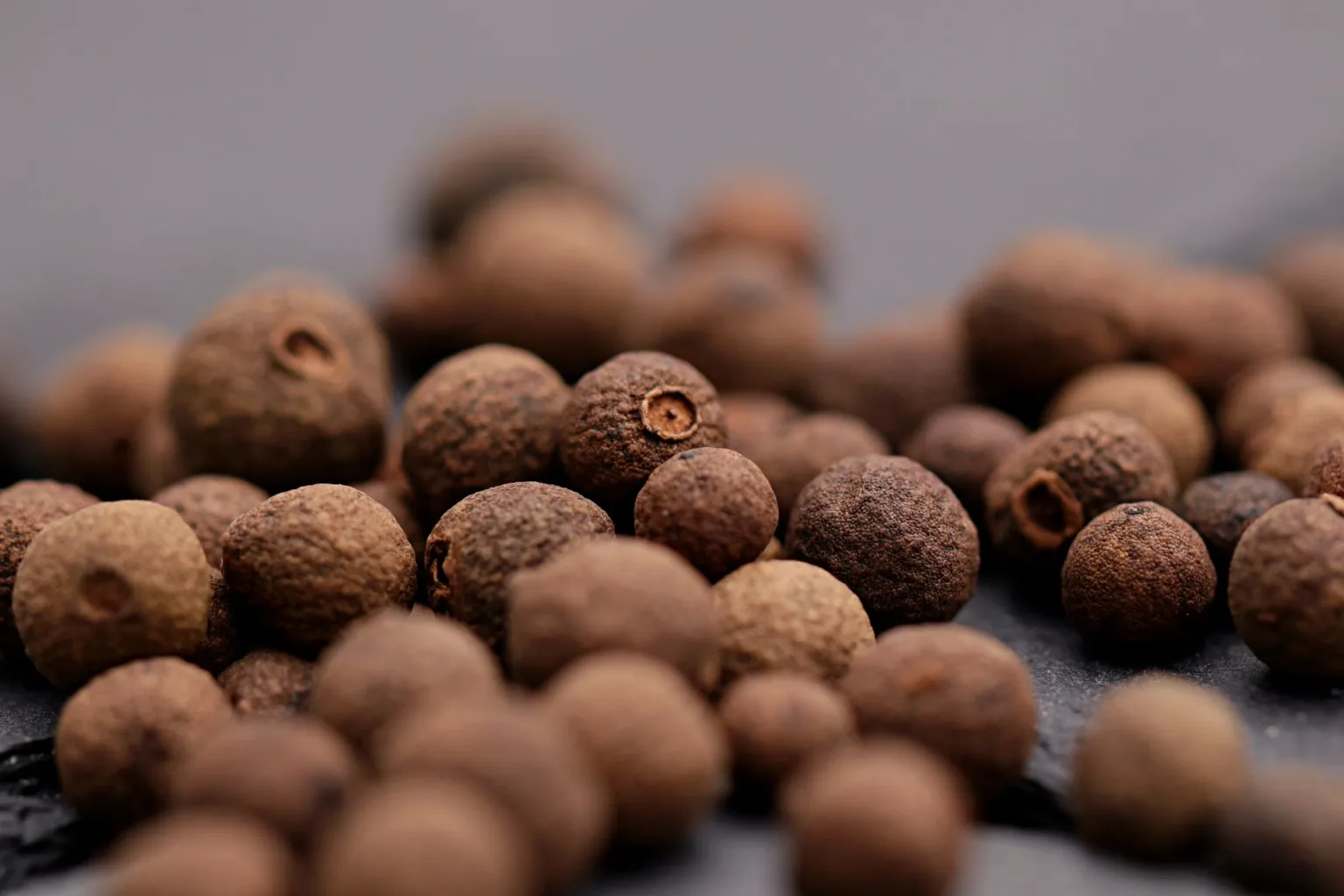
Allspice is a spice made from the dried fruit of Pimenta dioica, a tree in the Myrtaceae family. It is also called Jamaican pepper or pimento. Despite the English name allspice, it is one spice, not a prepared blend. Its aroma is described as reminiscent of cinnamon, clove, black pepper and nutmeg, though it is not identical to any of them. It is sold whole or ground and can be added to sweet and savory food. This profile refers to dried berries used as a seasoning, not black pepper or a mixture of spices.
When to use it
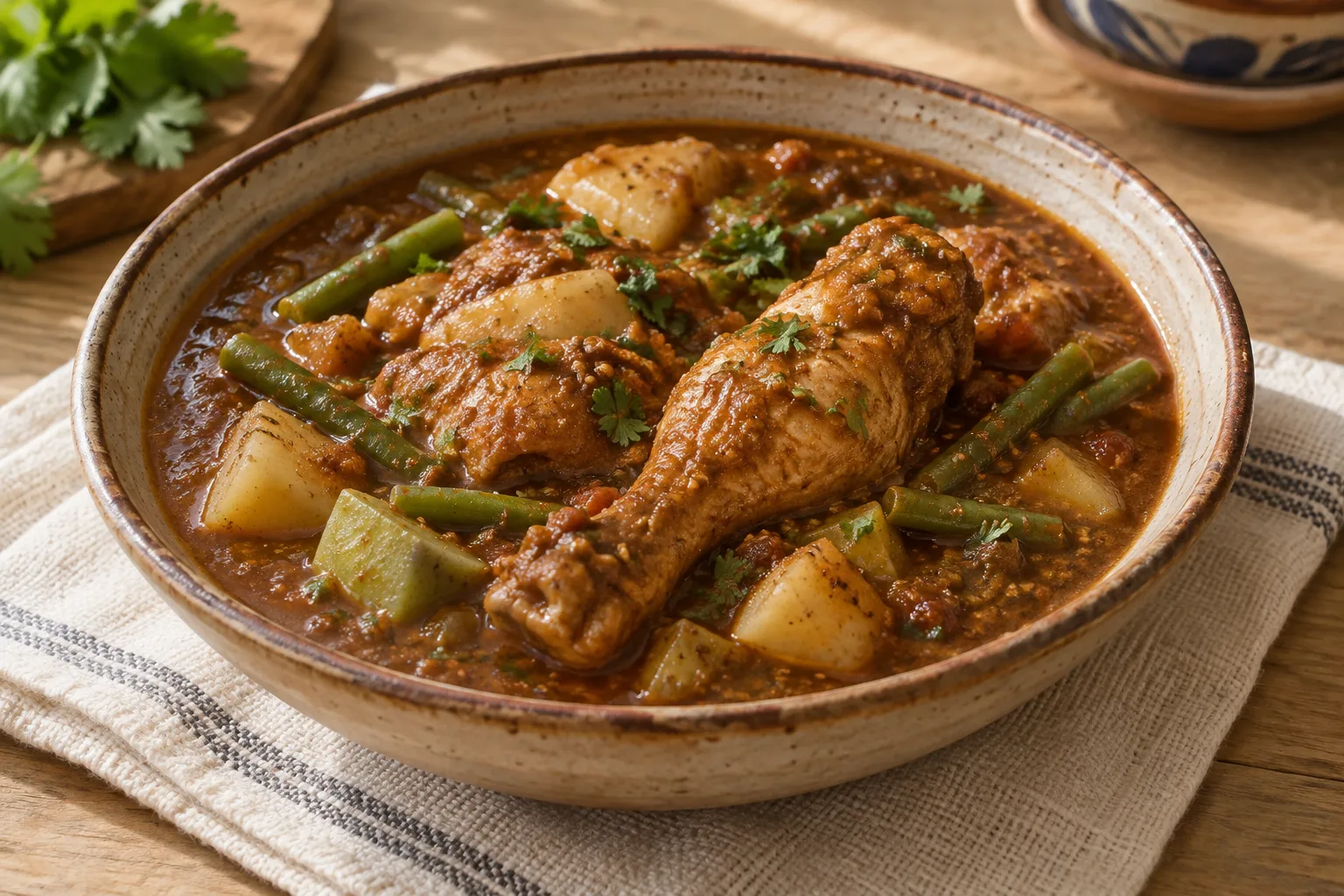
Use allspice when you want a warm, aromatic note in a sweet or savory recipe. It can season meat, fish and vegetables, as well as soups, broths, fruit compotes, cakes and drinks. In rice pudding, a lightly crushed berry can infuse the cooking liquid alongside cinnamon; in sauces or more robust dishes, allspice contributes its own aroma. Because its profile recalls several spices, it can work alongside them, but it should not be mistaken for a ready-made blend or for black pepper.
How to use it
Add whole berries to let them infuse a dish as it cooks, or crush them lightly before adding. Ground allspice is also sold and is easy to distribute through batters, sauces and seasoning blends. Start with a modest amount and adjust to the aroma you want; the supplied sources do not establish a universal quantity. One documented use in rice pudding calls for a lightly crushed berry with cinnamon. For sweet cooking, try it in compotes or cakes; for savory food, it can season meat, fish, vegetables, soups or sauces. Do not automatically replace it with black pepper: they are distinct ingredients with different aromatic profiles.
Flavour and texture
The dried berry has a warm aroma reminiscent of cinnamon, clove, black pepper and nutmeg. That resemblance describes its aroma; it does not mean the spice contains those other spices. It is available whole or ground: the whole form is added as a berry, while ground allspice disperses through a dish. The supplied evidence does not establish one fixed intensity or texture for every product; these can vary with the product and form.
How to choose it
Look for a product clearly identified as Pimenta dioica, allspice or Jamaican pepper, and check whether it contains whole berries or ground spice. The official source describes the fruit sold for seasoning as dried and notes that leaves, sticks and other foreign material are separated during processing. If choosing whole berries, check that the product is presented as a dried spice and has no visible foreign matter. Do not confuse its name with black pepper or a spice blend.
Storage
The supplied evidence confirms that allspice is sold as dried fruit, but it does not specify storage conditions, a shelf life or dependable signs of quality loss. Follow the package directions rather than assigning it an unsupported storage period. If the package gives no guidance, ask the seller or manufacturer; this profile does not prescribe a method, temperature or storage life.
Substitutions
No exact substitute is documented. Cinnamon and clove can approximate part of its aromatic profile because they are described as similar notes, but the combination may not reproduce the full flavor. Black pepper and nutmeg also share some aromatic associations without being equivalent. Adjust any alternative to the recipe and do not treat it as a direct conversion.
Common mistakes
Do not confuse allspice with black pepper: allspice comes from Pimenta dioica and has its own aromatic profile. Nor should allspice be taken to mean a blend; it is a single spice. Another mistake is to assume whole berries and ground allspice behave or measure the same in every recipe; the sources provide no universal conversion.
Safety and allergens
Use it as a culinary spice and follow the package directions. The supplied sources provide no specific official safety or allergen warning for this ingredient; that absence does not establish that it is suitable for everyone.
Culinary uses
- Especia aromática para platos dulces
- Condimento para platos salados, salsas y bebidas
Recommended techniques
- Usar la baya entera para aromatizar una preparación
- Machacar ligeramente o moler antes de incorporar
Pairs well with
- Canela y clavo
- Pimienta negra y nuez moscada
- Arroz con leche, carnes y salsas
Frequently asked questions
Is allspice a spice blend?
No. It is the dried fruit of Pimenta dioica. The name refers to an aroma reminiscent of several spices, not to a mixture.
Can I use allspice whole or ground?
Yes. The sources describe both whole berries and ground allspice. One rice-pudding recipe uses a lightly crushed berry.
What foods pair with allspice?
It is used in sweet and savory foods, including compotes, cakes, soups, sauces, and meat, fish or vegetable dishes. It is also used in rice pudding.
Sources and review
Automatically researched, cross-checked and validated content. Sources consulted:
- Client Challenge doi.org
- Pimienta: origen, tipos, propiedades y usos en la cocina bonviveur.com
- A Culture of Cacao and Chocolate | ReVista revista.drclas.harvard.edu
- Vamos a Conservar Alimentos: Tomates extension.psu.edu
- Arroz con Leche 2010 (Rice Pudding) - lacocina.utsa.edu
- Revi sta a^r^opecuaria mapa.gob.es
- Monocotyledons and Gymnosperms of Puerto Rico and the ... naturalhistory.si.edu
- camera trapping as a basis for multi-species assessment of rex.libraries.wsu.edu
- Pimienta Gorda: ¿Qué es y qué beneficios tiene? - Blog de La Parada de las Especias comprarespecias.net
- Pimienta, la reina de las especias: conoce sus variedades y prepara estas recetas | Grupo Animal grupoanimal.mx
- Pimienta gorda, la pimienta mexicana | Secretaría de Agricultura y Desarrollo Rural | Gobierno | gob.mx gob.mx
- Pimenta dioica - Wikipedia, la enciclopedia libre es.wikipedia.org
- Pimienta gorda: 12 Usos Tradicionales + Evidencia yerbateca.org