- Category
- Fish and seafood
- State
- Fresh
- Usual unit
- g
What it is
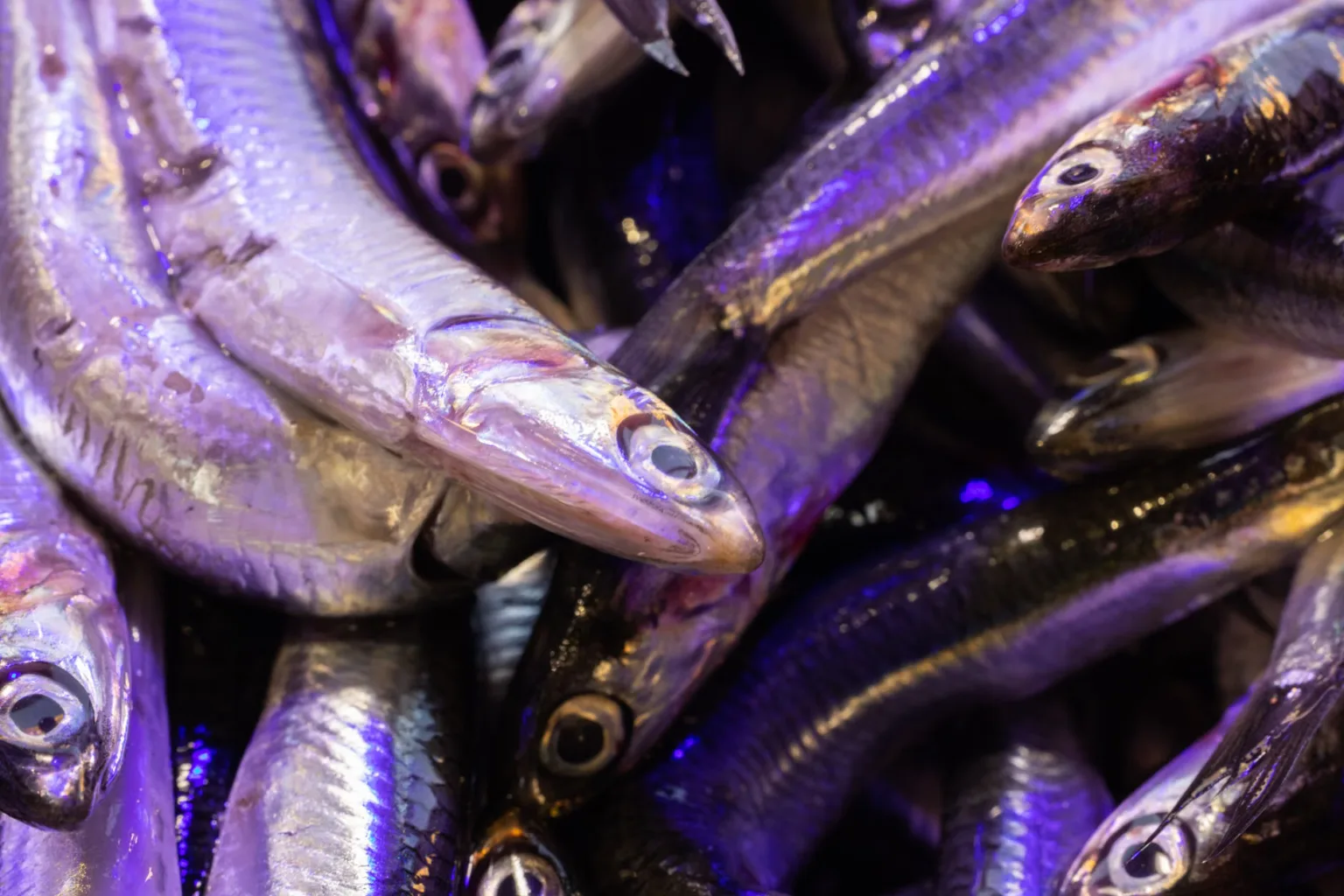
Anchovies are small fish in the family Engraulidae. In cooking, the name can refer to fresh fish or to prepared and preserved products, such as salt-cured anchovies. These forms do not behave identically: preserved anchovies tend to have a more concentrated, salty flavor, while fresh fish requires its own preparation. This profile distinguishes the forms where that difference matters. Anchovies can be used as a visible ingredient, such as a topping for bread or pizza, or in small amounts to give sauces and dressings greater depth. They do not need to dominate a dish: their savory, salty character can blend into the mixture.
When to use it
Use anchovies when a dish needs a salty, savory note or a sauce needs more depth. Preserved anchovies can be mashed or dissolved into a preparation; whole pieces also work as a topping for pizza, salad, or bread. For pasta, they can be combined with oil, garlic, and chili. Because intensity varies with the product and its form, add them gradually and taste before adding more salt. If you want the fish itself to stand out, serve the anchovies whole or in pieces.
How to use it
To enrich a sauce or dressing, mash preserved anchovies and stir them in until incorporated; add them in pieces if you want their texture to remain noticeable. For a simple pasta preparation, warm oil with garlic and chili, add the anchovies, and stir until they partly break down before tossing with the pasta. You can also place them on pizza, toast, or salads for a pronounced accent. Pair them with tomato, bread, or roasted peppers for familiar contrasts. If a recipe uses salt-cured or otherwise preserved anchovies, taste before salting the rest of the dish. Fresh fish is a different form and should not automatically be treated as a ready-to-serve preserve: follow the instructions from its package or seller.
Flavour and texture
Anchovies are described as salty and savory, with enough intensity to enhance a dish in small amounts. Their texture and concentration depend on the form: a whole anchovy gives a distinct bite, while a mashed or dissolved piece blends into a sauce. Salt-cured preserved anchovies generally have a more concentrated character than fresh fish, so do not assume that the two can be used in the same proportions.
How to choose it
First check which form you need: fresh fish, salt-cured anchovies, and other preserved products are not identical in use or intensity. Read the label and check the condition of the package where applicable. Preserved anchovies can be convenient when you want an ingredient to blend into a sauce; for visible pieces, choose a form suited to serving that way. Consider the product’s saltiness when deciding how to season the rest of the dish.
Storage
Storage depends on the form and the product’s instructions. Keep fresh fish and preserved anchovies according to their labels, and check the package directions after opening. Do not assume fresh fish can be stored like a salt-cured preserve, or that every anchovy product needs the same treatment. If instructions are unavailable, ask the seller or consult an official food-safety source rather than guessing a storage period.
Substitutions
Capers or olives can add a salty, savory accent, but they do not reproduce anchovies’ fish flavor. Miso, aged cheese, tomato paste, or mushrooms can add savory depth, depending on the dish. None is an exact replacement: start with a small amount and adjust the rest of the seasoning, especially salt.
Common mistakes
A common mistake is adding salt before tasting a preparation that already contains anchovies, especially preserved ones. Using a large amount when you only want extra depth can also overpower a dish. Do not automatically treat fresh fish as a ready-to-eat preserve or assume fresh and salt-cured anchovies have the same intensity or use.
Safety and allergens
No anchovy-specific official warning is provided here. Follow the product label and storage instructions, and check official food alerts if you have concerns about a particular batch.
Culinary uses
- Salty, umami-rich seasoning
- Fish ingredient for toppings and small bites
- Flavor base for sauces and pasta
Recommended techniques
- Mash or dissolve into a sauce or dressing
- Warm in oil with garlic and chili to flavor pasta
- Serve whole or in pieces on bread, pizza, or salads
Pairs well with
- Garlic and olive oil
- Tomato and pasta
- Bread and roasted peppers
- Olives and chili
Frequently asked questions
Can fresh and preserved anchovies be used the same way?
Not necessarily. Their form affects their intensity and use; check the label and adjust the recipe.
How can I add anchovies to a sauce?
Mash preserved anchovies and stir them into the sauce, or add pieces if you want their texture to remain noticeable.
What can I use instead of anchovies?
Capers and olives add saltiness; miso, aged cheese, tomato paste, or mushrooms can add savory depth, but none exactly imitates the fish.
Estimated nutrition
- Fat
- 10 g
- Saturates
- 0 g
- Carbohydrate
- 0 g
- Sugars
- 0 g
- Fibre
- 0 g
- Protein
- 20 g
- Salt
- 14.68 g
Sources and review
Automatically researched, cross-checked and validated content. Sources consulted:
- Client Challenge doi.org
- The Essential Glossary of Cooking Terms for the Culinary Arts - Escoffier escoffier.edu
- Agencia Española de Seguridad Alimentaria y Nutrición aesan.gob.es
- An Ecological Approach to African American Adolescent Food ... scholarworks.waldenu.edu
- Las anchoas en la gastronomía friolisa.es
- Secretos de las Anchoas: Tesoros del Mar en un Bocado Inolvidable – Conservas Ana Maria conservasanamaria.com
- Anchoas en salazón: toda su historia, sabor y usos en la cocina conservasmontebuciero.com
- Anchoas del Cantábrico: una historia de sabor y tradición gastronómica - Casa Santoña casasantona.com
- Planning to Eat Out | Home & Garden Information Center hgic.clemson.edu
- recipe book bennington.edu
- Culinary Arts & Management Associate Degree | Institute of Culinary Education ice.edu
- cooking | Live Healthy Live Well u.osu.edu
- Food Habits of the Bay Anchovy, Anchoa mitchilli, in ... aquila.usm.edu
- From Poblano to Ancho: Why Dried Chili Peppers Have a Name of Their Own | UC Master Food Preserver ucanr.edu
- Recetas intenacionales con anchoas| Blasan blasan.es