- Category
- Vegetables
- State
- Fresh
- Usual unit
- cup
What it is
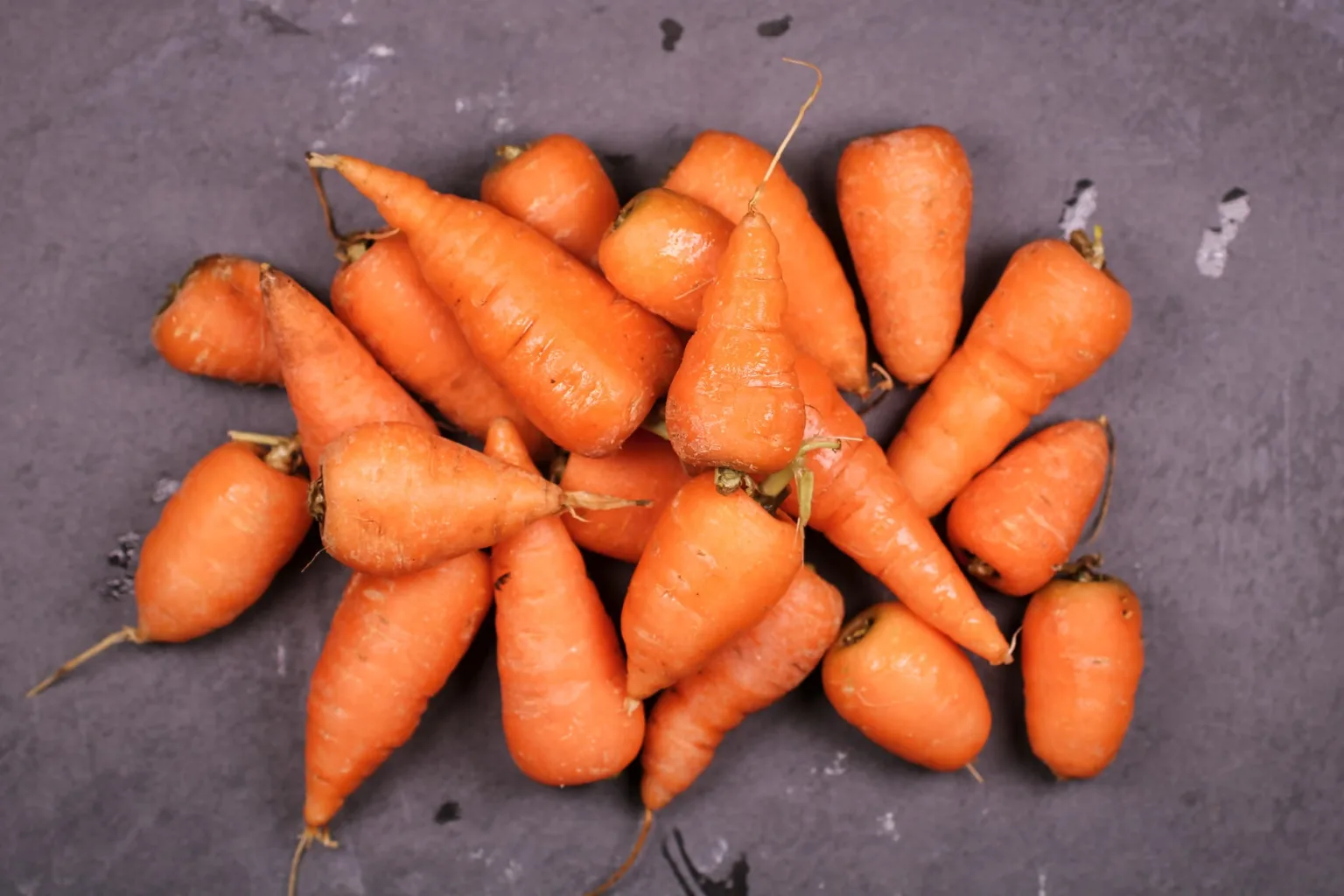
Baby carrots can refer to more than one product. Some are small-calibre carrots harvested before reaching the usual mature size. Others, commonly sold in ready-to-eat bags, are made by peeling and cutting full-size carrots into short, regular pieces. So a small appearance does not always mean the root grew that way: it is useful to distinguish naturally small carrots from baby-cut pieces. Both are carrots, but peeling and cutting can affect texture and how a packaged product is stored.
When to use it
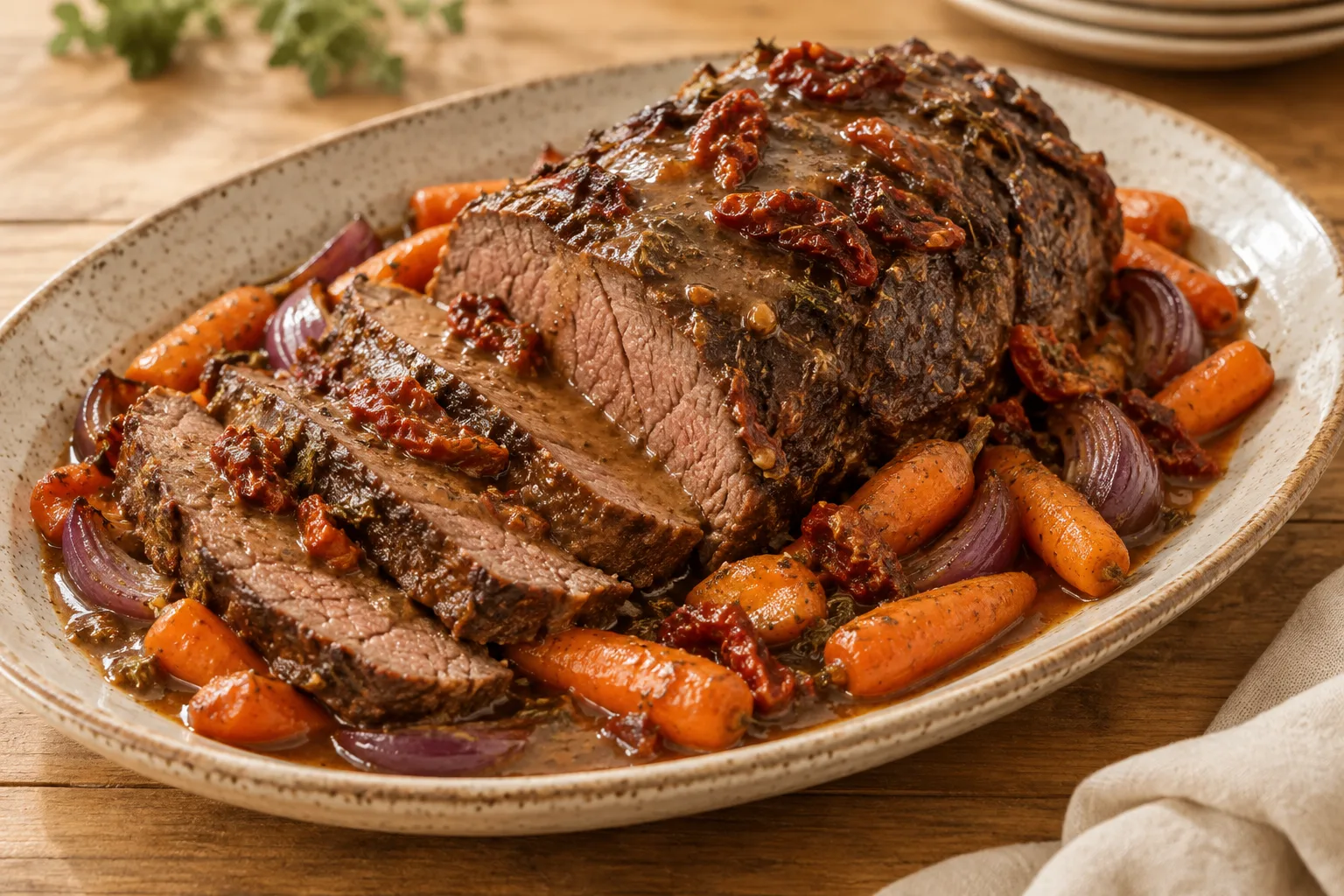
Use them when you want an easy-to-serve vegetable snack, a neat-looking side, or small pieces to add to a cooked dish. Whole baby carrots can be served raw; they are also used in salads, stews, soups and purées, and sautéed or glazed dishes. If a recipe calls for regular carrots, adjust the size of the baby pieces so they cook more evenly. Choose naturally small carrots or cut baby carrots according to the format available and the result you want.
How to use it
Serve them raw, whole or cut, perhaps with a dip, or add them to a salad. For hot dishes, use them in stews, soups and purées, or sauté them and serve as a side. They can also be glazed with honey and spices; thyme and dill are examples of herbs used in that style of preparation. If the pieces vary in size, cut them to a more similar size to help them cook evenly. Frozen and canned baby carrots are also available; follow the package directions for those formats.
Flavour and texture
Flavour and texture vary with the variety, size and processing. Peeled, cut baby carrots may feel different from a whole carrot with its skin; some culinary descriptions call them tender and sweet, but that should not be assumed of every product. Their smooth, regular shape is convenient for serving and presentation. If the package identifies a different format, such as frozen or canned, bear in mind that it is not necessarily the same as the fresh version.
How to choose it
Check which kind of baby carrot you are buying: it may be naturally small or a regular carrot that has been peeled and trimmed. For packaged products, check the product description, its state and the label’s storage and date instructions. For whole carrots, look for roots that appear firm and have no visible damage; if the tops are attached, they should look fresh. The best format depends on whether you value convenience, appearance or a naturally small root.
Storage
Refrigerate baby carrots when the package instructs you to do so, particularly if they are peeled and packaged. Follow the label’s storage and date instructions, as these can vary with the product and how it is presented. Keep the package closed as directed, and do not assume fresh, frozen and canned carrots all need the same handling. For whole roots, also follow the seller’s or package’s guidance.
Substitutions
If you do not have baby carrots, use regular carrots peeled and cut into small pieces or sticks. For a more uniform presentation, trim them to the size the recipe calls for. Naturally small carrots can also replace baby-cut carrots when available, though size and texture may differ. Match the cut to the dish; the shape does not have to be identical.
Common mistakes
Do not assume all baby carrots are roots grown small: many are peeled and cut from full-size carrots. Do not treat fresh, frozen and canned products as interchangeable in every preparation. Follow the package’s storage and use instructions, which can vary with the product and packaging.
Safety and allergens
For packaged products, follow the label’s storage, date and safe-use instructions. Required information can vary with how food is sold and presented; if you are unsure about a particular product, check its package or ask the seller.
Culinary uses
- Tentempié crujiente para comer crudo
- Guarnición o ingrediente para platos cocinados
Recommended techniques
- Comer cruda, entera o cortada
- Asar
- Cocer y triturar para hacer puré
- Glasear o saltear
Pairs well with
- Hierbas como tomillo y eneldo
- Miel y especias
- Otras verduras en ensaladas, guisos y cremas
Frequently asked questions
Are all baby carrots naturally small?
No. The name can refer to small roots harvested before maturity or to regular carrots peeled and cut into uniform pieces.
How can I serve baby carrots?
Serve them raw as a snack or add them to salads, stews, soups, purées and sautéed dishes. They can also be roasted or glazed with honey and spices.
How should I store them?
Follow the package instructions. Peeled, packaged baby carrots should be refrigerated when the product label says so; do not assume every format has the same storage needs.
Estimated nutrition
- Fat
- 0.13 g
- Saturates
- 0.02 g
- Carbohydrate
- 8.24 g
- Sugars
- 4.76 g
- Fibre
- 2.9 g
- Protein
- 0.64 g
- Salt
- 0.2 g
Sources and review
Automatically researched, cross-checked and validated content. Sources consulted:
- En el etiquetado alimentario hay algunas menciones que son obligatorias eletiquetadocuentamucho.aesan.gob.es
- Client Challenge doi.org
- NOTICIA: Zanahoria, la hortaliza revitalizante de la cocina del mundo. dulceslaly.es
- Zanahorias: variedades, beneficios y usos – Pimienta y Purpurina pimientaypurpurina.com
- Gastronomía de El Salvador - Wikipedia, la enciclopedia libre es.wikipedia.org
- ¿Cuál es el origen de las zanahorias baby? | Consumer consumer.es
- ZANAHORIAS BABY Málaga, tu Huerta de proximidad | deHigosaPeras dehigosaperas.com
- Cómo se hacen las zanahorias baby | Gastronomía & Cía gastronomiaycia.com
- ¿Sabes cuál es el origen de las zanahorias baby? - Proyecto Puente proyectopuente.com.mx
- Sorprendentes recetas con zanahorias baby que debes probar cookpad.com
- ¿Qué son las zanahorias bebé? | ABC Noticias abcnoticias.mx
- Las monísimas zanahorias baby del súper no existen, tienen truco directoalpaladar.com
- Zanahoria Baby - Frutas y Verduras frutasyverduras.info
- 4 formas de cocinar zanahorias bebé - wikiHow es.wikihow.com
- Zanahorias baby glaseadas en miel y especias jetextramar.com
- Puré fácil de zanahoria para bebés recetasparamibebe.com
- Buscador de recetas de Cocina - Recetas rtve.es