- Category
- Fruit
- State
- Fresh
- Usual unit
- leaf
What it is
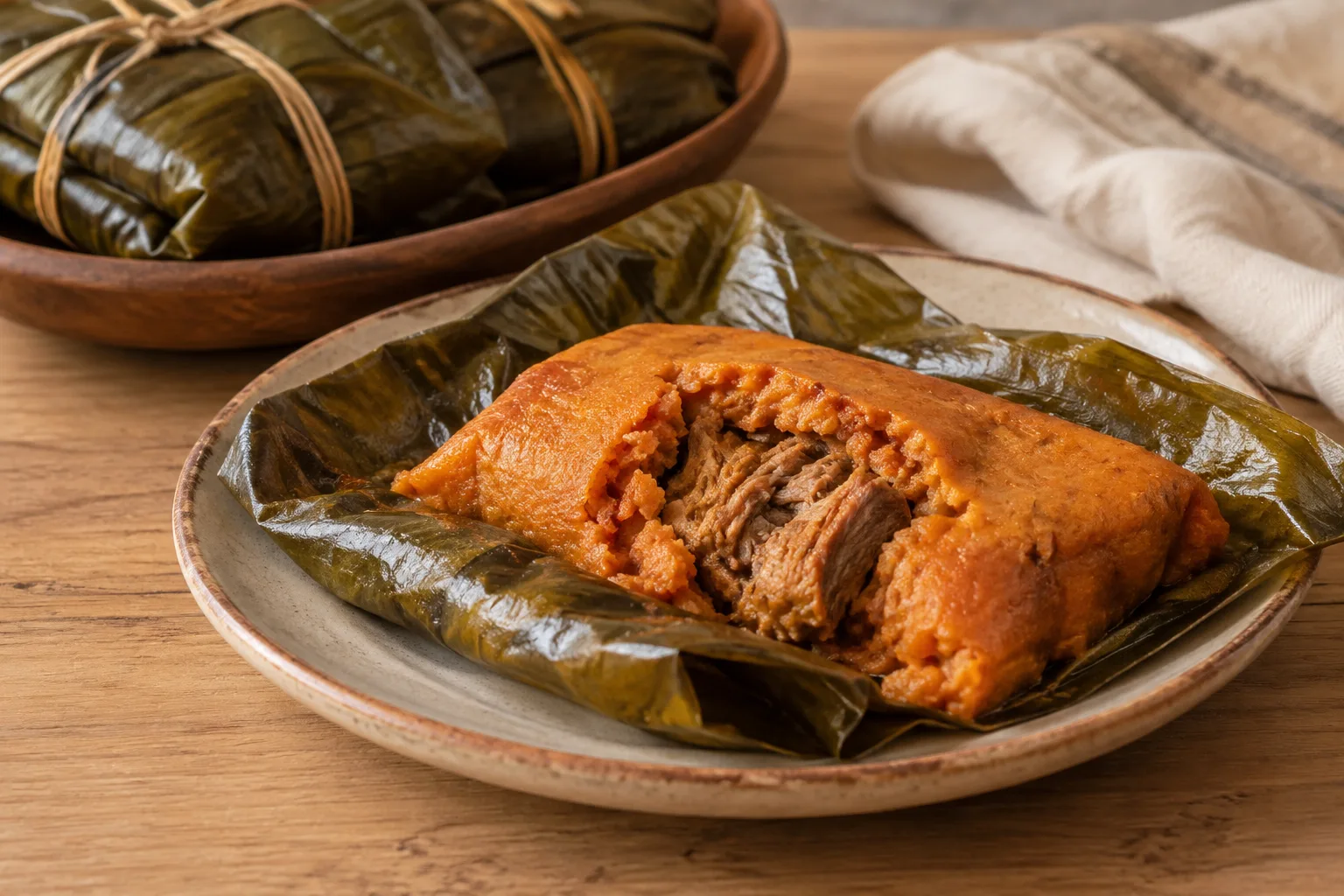
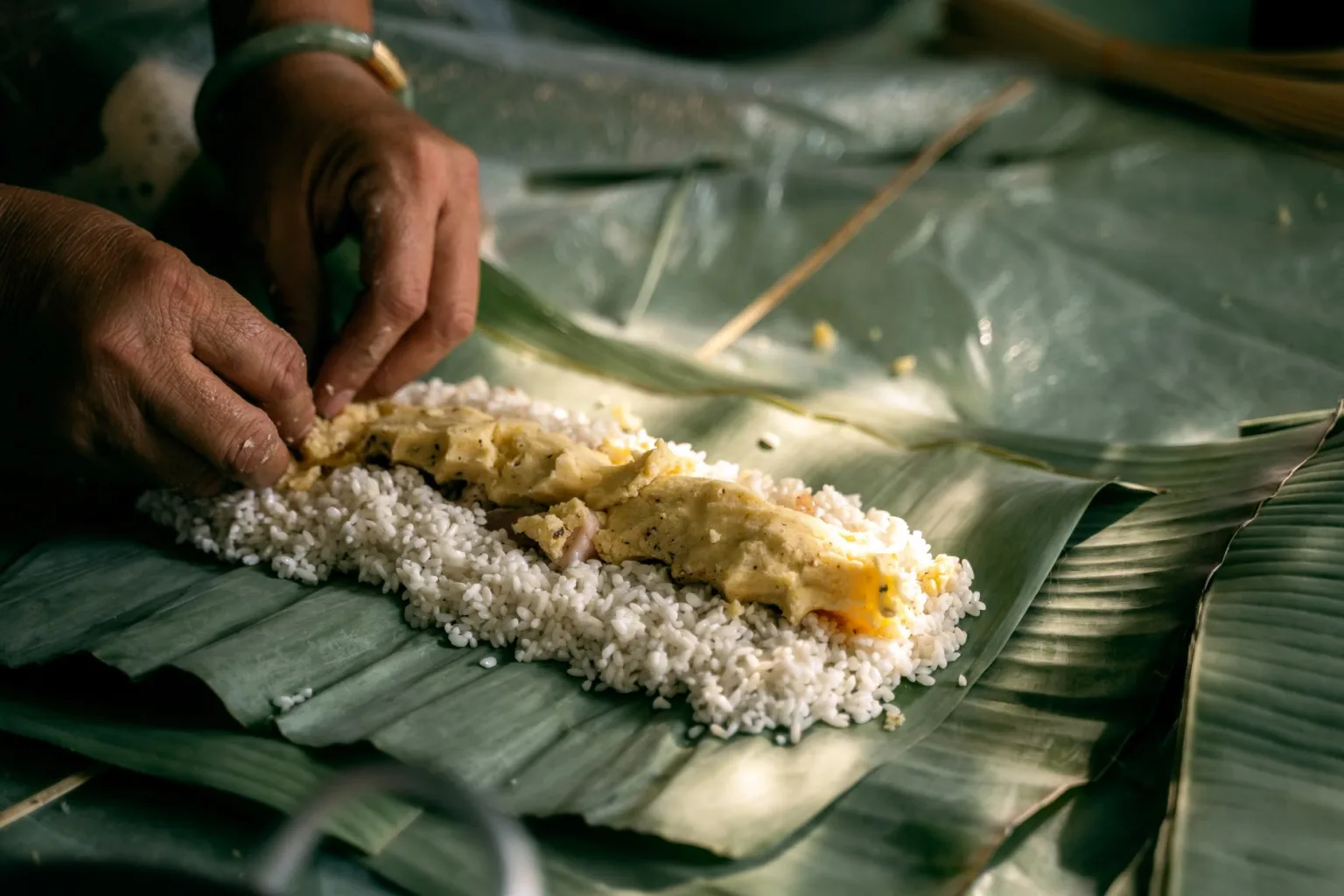
Banana leaves are large, flexible leaves from the banana plant used in cooking as wrappers or serving surfaces. They are not the fruit’s flesh: in these preparations, their main role is to contain food during preparation and cooking. They can wrap doughs, rice and fillings before steaming or boiling, and some recipes also use them for grilling. Briefly heating a leaf can make it more pliable and easier to fold around ingredients. Banana leaves are used in preparations such as tamales and hallacas, as well as wrapped rice dishes such as juanes. A leaf helps hold and protect the contents, and its aroma may gently accompany the dish. Leaves can also serve as a base for presenting food. Preparation and results depend on the recipe and the leaf available; the leaf does not replace the main ingredient or determine the final flavor on its own.
When to use it
Choose banana leaves when you want to wrap dough, rice or a filling for steaming or boiling, keep it together, and make it easier to portion or present. They suit preparations such as tamales, hallacas and wrapped rice dishes. They can also be used as a serving base. Use them when a leafy aroma works with the ingredients and the recipe allows a wrapper. If a leaf tears when folded, briefly heating it may make it more pliable. A leaf is a culinary wrapper, not a substitute for cooking instructions for the filling; follow the method specified for the food it contains.
How to use it
Check the leaf and trim parts that do not suit the shape of your preparation. If you need to fold it and it feels stiff, briefly heat it to make it more pliable, as some recipes advise; do not assume every leaf needs the same treatment. Place dough, rice or filling in the center, fold the leaf to enclose it, and secure it as the recipe directs. Steam or boil the parcel when that is the specified method. The leaf can help protect the contents and retain their moisture during cooking. It can also be used as a serving base. Choose the size and number of pieces to suit the recipe, and remember that the leaf is a wrapper, not the main food: safe cooking of the contents depends on their ingredients and the method specified for the dish.
Flavour and texture
When heated, a banana leaf may lend a gentle leafy aroma, although the result can vary with the leaf and recipe. Its clearest function is as a flexible wrapper that holds doughs and fillings and helps protect them during cooking. Culinary descriptions also note that the wrapper can help retain food moisture. The final flavor depends on the recipe, filling and cooking method as well as the leaf.
How to choose it
Look for whole leaves, or pieces large enough to wrap the portions you plan to make. For a recipe that requires folding, choose manageable pieces and avoid leaves so damaged that they cannot contain the filling. The available evidence does not establish a buying season or specific maturity criteria; check the condition of each leaf and confirm that it is intended for culinary use. If only small pieces are available, consider whether the recipe allows them to be joined or whether another wrapper is more suitable.
Storage
The available evidence does not specify a shelf life or storage conditions for fresh leaves. Follow the package or seller’s directions and general food-safety guidance for fresh foods. Keep leaves clean and separate from raw foods that could contaminate them. Discard leaves that are damaged or dirty and cannot be cleaned appropriately. Do not rely on a leaf to preserve food in place of recommended storage methods for the finished dish.
Substitutions
Corn husks are also used to wrap tamales, though they can change the aroma and texture of the preparation. In some mixiotes, banana leaves can be used when the traditional maguey leaf is unavailable, depending on the recipe. These are not universal swaps: size, flexibility and cooking method need to suit the dish.
Common mistakes
Do not force a stiff leaf around a filling; it may tear and fail to contain it. If the recipe allows, briefly heat the leaf to make folding easier. Do not assume the leaf cooks the contents on its own or that every recipe uses the same method; steam or boil only when appropriate for the preparation. Remember that the leaf is a wrapper, not the main edible part of the dish.
Safety and allergens
Use leaves intended for food contact and keep them clean during preparation. A leaf does not replace safe cooking of the filling: follow appropriate instructions for the ingredients it contains. The available evidence does not identify a specific safety warning unique to banana leaves.
Culinary uses
- Wrapping and protecting food during cooking
- Serving base or presentation surface
Recommended techniques
- Wrapping food for steaming
- Wrapping food for boiling
- Briefly heating to make the leaf easier to fold
Pairs well with
- Corn dough and fillings for tamales
- Seasoned rice in wrapped dishes such as juanes
- Meat or vegetable fillings
Frequently asked questions
Are banana leaves eaten?
In these culinary uses, the leaf mainly serves as a wrapper or serving base. Remove it before eating unless the recipe clearly says otherwise.
How can I make a banana leaf easier to fold?
Some recipes recommend briefly heating it to make it more pliable. Handle it carefully and follow the directions for your recipe.
What can I wrap in banana leaves?
They are used to wrap doughs and fillings for dishes such as tamales and hallacas, as well as seasoned rice in dishes such as juanes. The cooking method depends on the recipe.
Sources and review
Automatically researched, cross-checked and validated content. Sources consulted:
- The Essential Glossary of Cooking Terms for the Culinary Arts - Escoffier escoffier.edu
- Usos culinarios apropiados de las variedades de plátano verde barraganete, dominico y maqueño, en la gastronomía ecuatoriana. | Revista de Gastronomía y Cocina doi.org
- Washington State Food Access English-Spanish Glossary wpcdn.web.wsu.edu
- Agencia Española de Seguridad Alimentaria y Nutrición aesan.gob.es
- Nutrition After Your Transplant - Health Online healthonline.washington.edu
- A Recipe for Memory: Hispanic Heritage as Told Through Cultural Dishes news.sunyempire.edu
- La Hoja de Plátano: El Envase Natural que Define Sabores chefyerika.com
- View of De las hojas del plátano a las bolsas de plástico pubs.lib.umn.edu
- Meet the Chefs hdhdining.ucsd.edu
- Ecological uses of banana leaves cursus.edu
- Vista de Usos de la hoja de plátano (Musa paradisiaca L.) ... academiaculinaria.org
- Hoja de plátano: recetas fáciles y usos en cocina goya.es
- Las hojas de plátano y sus cualidades - Formacion en Gastronomia formacionengastronomia.com