- Category
- Fruit
- State
- Fresh
- Usual unit
- unit
What it is
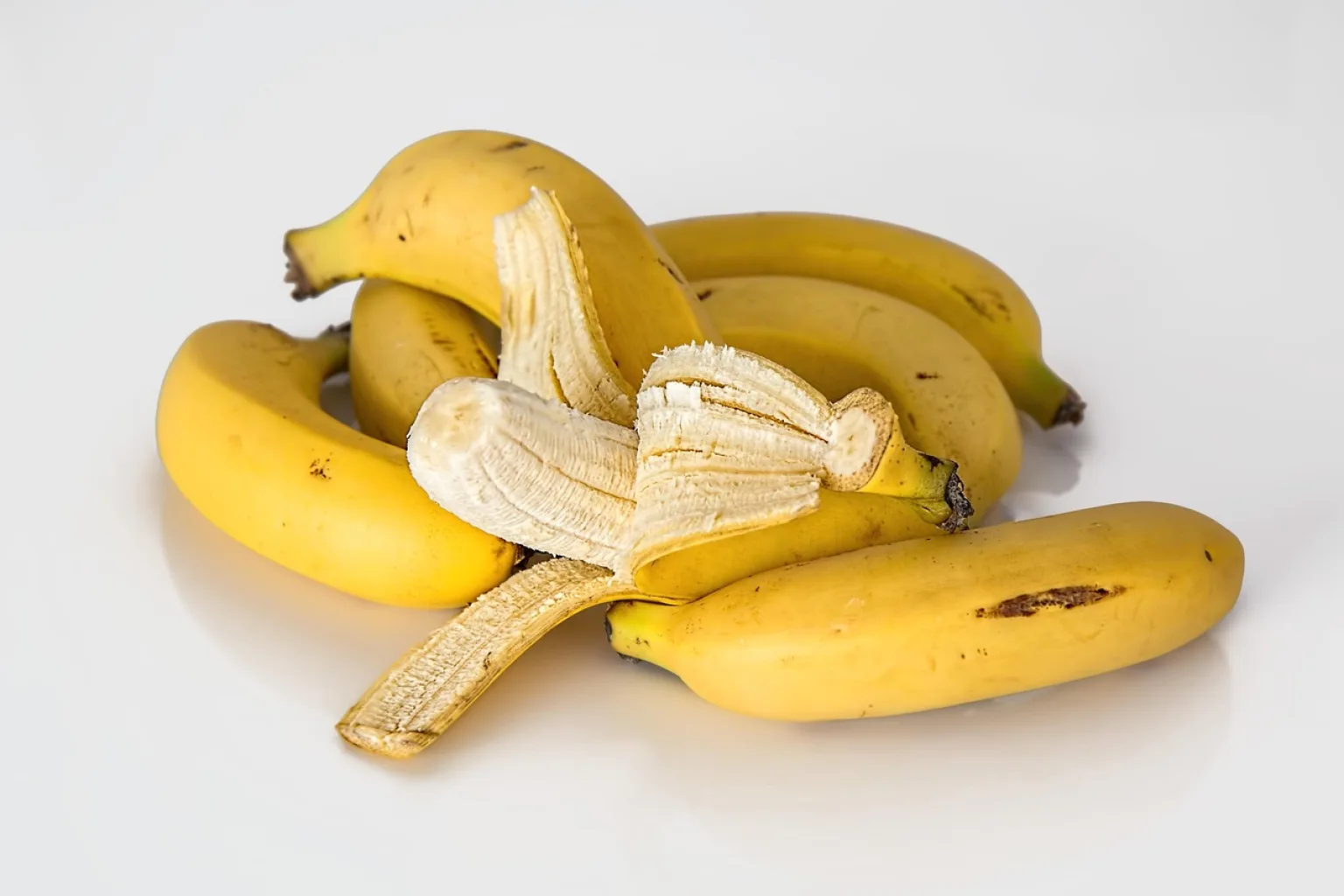
Banana peel is the outer covering of fruit from plants in the genus Musa. It is usually removed before the flesh is eaten, but it also appears as an ingredient in some recipes and food-use projects. Reported applications include adding pieces to granola, cooking strips in a pan, and processing peel into flour for certain baked goods. These examples do not mean that every peel can be used in the same way or that all preparations produce the same result. Fruit condition and recipe method can affect texture and flavor, so use a reliable recipe and do not assume that peel behaves as a uniform ingredient.
When to use it
Use banana peel when you have a recipe that specifically calls for it and explains how to prepare it. It can feature in both sweet and savory ideas: published examples include granola with pieces of peel and seasoned strips cooked in a pan. Peel has also been processed into flour for baked goods, but that is a different form from fresh peel. Do not substitute it casually into an unrelated recipe: the available evidence does not establish universal quantities or equivalent results across varieties and stages of ripeness.
How to use it
Start with a recipe that names banana peel and gives preparation steps; the reported examples are not general instructions for every dish. For a recipe using pieces, cut the peel as directed and combine it with the other ingredients. Published examples include pieces in granola and strips cooked in a pan with soy sauce, maple syrup, smoked paprika, garlic, and vegetable oil. For baked goods, one reported approach processes peel by blanching, drying, and grinding it into flour, but this is not a validated household process for every peel. Plantain peel has also been explored as a raw material for processed ingredients; that does not establish that its results are identical to those from dessert-banana peel.
Flavour and texture
Peel does not offer the same eating experience as the flesh, and the texture of a finished dish depends on how it is cut and prepared. Published recipes show it used in pieces in granola or as strips cooked in a savory preparation. The supplied evidence does not provide a robust, general sensory description that applies to every peel, variety, or stage of ripeness. Expect the result described by the recipe you choose rather than assuming a constant flavor or texture.
How to choose it
Choose fruit with peel that appears intact and clean, and select it with the intended recipe in mind. The available evidence does not establish one ideal variety, color, or stage of ripeness for every culinary use of peel. Some recipes call for ripe fruit, while other reported processes concern green banana or plantain peel; follow the recipe’s specification rather than swapping these automatically.
Storage
The supplied evidence does not establish specific storage times or conditions for fresh peel. If a recipe tells you to save peel, follow its directions and use a clean container; one published recipe suggests refrigerating saved peel while collecting enough for the dish, but this is not a general safety time limit. Storage of flour or processed ingredients depends on the process and final product, so do not apply commercial-process findings automatically to home preparation.
Substitutions
No direct, universal substitute for fresh banana peel is established in the supplied evidence. Peel flour is a processed form and may not behave like pieces of fresh peel. Plantain peel has been investigated for making ingredients, but that does not demonstrate culinary equivalence with other peels. If a recipe depends on peel’s form or texture, choose another recipe rather than substituting without guidance.
Common mistakes
Do not assume that any recipe can take fresh peel without adjustment: the published examples use specific preparations. Do not treat peel flour and pieces of peel as interchangeable, or assume that findings for plantain peel apply to every banana. Avoid assigning a fixed flavor, texture, or quantity when the recipe does not specify one.
Safety and allergens
The official source supplied does not provide a peel-specific warning or preparation protocol. Follow a reliable recipe’s directions, and do not treat the culinary examples available as a general safety guarantee for every peel or preparation.
Culinary uses
- Aprovechamiento culinario del fruto
- Ingrediente para elaboraciones dulces y saladas
Recommended techniques
- Cortar en trozos o tiras antes de incorporarla a una receta
- Cocinar en sartén
- Hornear en una elaboración como granola
- Procesar y secar para obtener harina, en contextos de elaboración documentados
Pairs well with
- Avena, frutos secos, semillas, miel y canela
- Salsa de soja, sirope de arce, pimentón ahumado, ajo y aceite vegetal
Frequently asked questions
Can banana peel be cooked?
Published recipes use it in sweet and savory preparations, including pieces in granola and strips cooked in a pan. Follow a specific recipe; these examples are not universal instructions.
Can fresh peel and peel flour be used the same way?
Not necessarily. Flour is a processed form and differs from fresh peel pieces. Directions for peel flour should not automatically be applied to a recipe using fresh peel.
Is plantain peel interchangeable with banana peel?
The evidence mentions projects using plantain peel and recipes using banana peel, but it does not establish that they are interchangeable in every recipe. Use the type of fruit specified in the preparation.
Sources and review
Automatically researched, cross-checked and validated content. Sources consulted:
- The Essential Glossary of Cooking Terms for the Culinary Arts - Escoffier escoffier.edu
- Usos culinarios apropiados de las variedades de plátano verde barraganete, dominico y maqueño, en la gastronomía ecuatoriana. | Revista de Gastronomía y Cocina doi.org
- Washington State Food Access English-Spanish Glossary wpcdn.web.wsu.edu
- Agencia Española de Seguridad Alimentaria y Nutrición aesan.gob.es
- The Canning of Green Bananas. Ill. Effect of Storage and ... revistas.upr.edu
- Storing Fresh Fruits and Vegetables for Best Flavor extension.arizona.edu
- From Peel to Pantry: Upcycling Plantain Byproducts into Functional Food Ingredients | Plants for Human Health Institute plantsforhumanhealth.ncsu.edu
- Cáscara de plátano: beneficios, propiedades y cómo utilizar (con recetas) - Tua Saúde tuasaude.com
- 5 recetas con PIEL DE PLÁTANO (cáscara de banana) - Sebastian Simon - Cocina Zero Waste: Recetas y consejos para una vida sostenible cocinazerowaste.com
- Esto es lo que ocurre si usas la cáscara de plátano como ingrediente lasexta.com
- Piel de banana - Wikipedia, la enciclopedia libre es.wikipedia.org