- Category
- Vegetables
- State
- Fresh
- Usual unit
- g
What it is
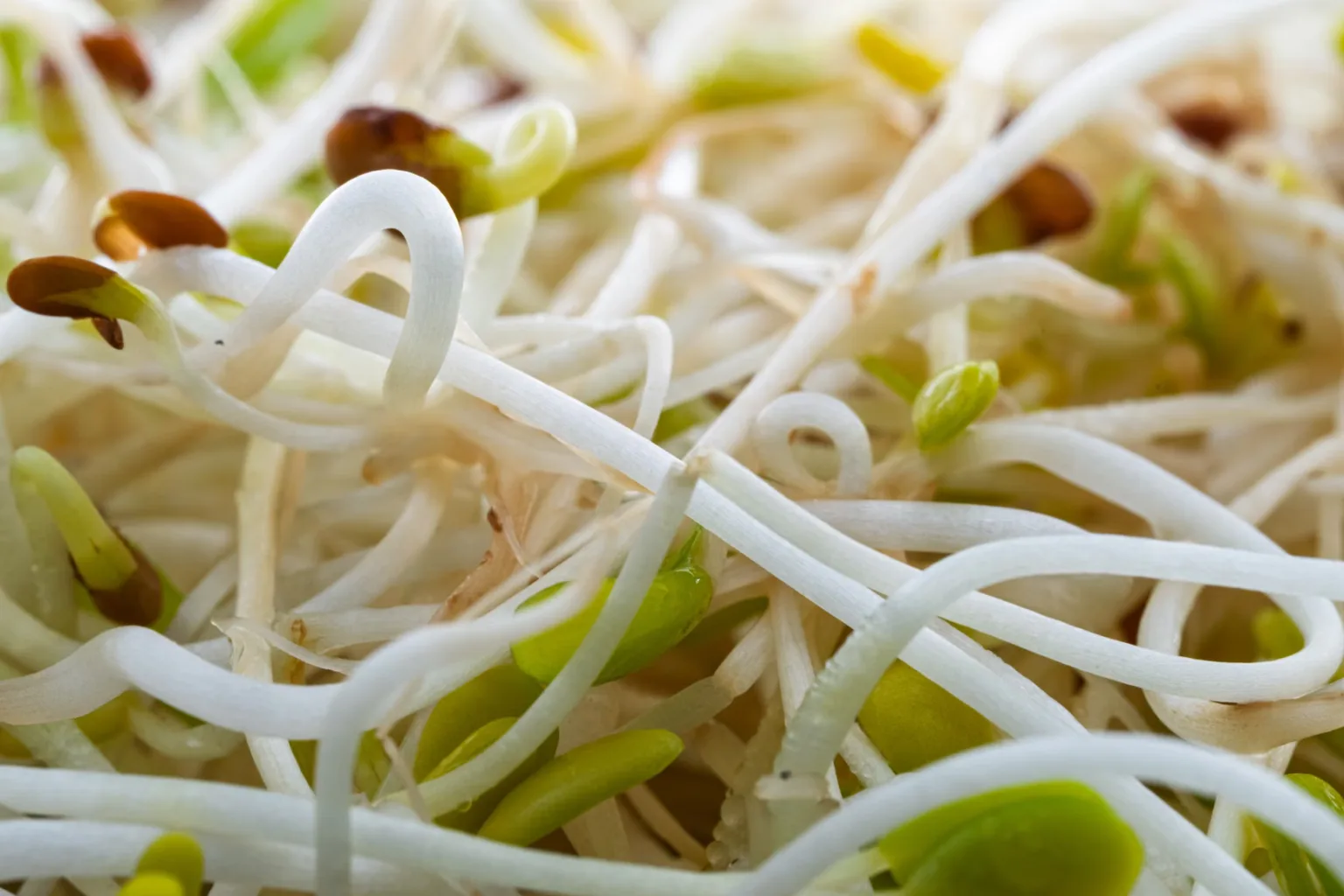
Soybean sprouts are soybean seeds eaten at an early stage of growth after germination. In cooking, they are treated as a fresh vegetable: they bring a moist, crisp texture and a mild flavor that blends easily with other ingredients. They are not the same as dried soybeans; germination changes the product and how it is used in the kitchen. The name “bean sprouts” can be ambiguous in shops, so check the product name and ingredient list if you need to confirm that the sprouts are soy. This profile refers to fresh sprouts, not canned ones.
When to use it
Use them when you want a crisp, fresh contrast in a mild or strongly flavored dish. They work in salads and as a finishing touch for soups, and can also be added to stir-fries, rice dishes, noodles and omelettes. In cooked dishes, add them near the end if you want to retain some crunch. The available evidence also describes them as a filling for vegetable sandwiches and as a garnish. If a recipe relies on their crisp texture, remember that longer heating will change it.
How to use it
Before using them, check the package and prepare an amount suited to the recipe. For a salad, toss the sprouts with the other ingredients and dressing, or add them on top just before serving to highlight their texture. For a stir-fry, combine them with other vegetables, such as peppers, and cook briefly; they can also go into rice or noodles. Add them near the end of cooking soups and broths, or mix them into the dish earlier if you prefer a softer texture. They can also be used in a vegetable sandwich or an omelette. Do not confuse them with dried soybeans: these are different products and are not used in the same way.
Flavour and texture
Their flavor is mild and understated, so they complement stronger ingredients without overpowering them. Their main culinary contribution is a tender, crisp texture that brings freshness to both cold and hot dishes. How much crunch remains depends on how they are added: brief cooking helps retain more texture, while longer cooking changes it. Since the commercial name can refer to products sold in different forms, check whether the package identifies them as fresh or canned.
How to choose it
For this profile, look for a product identified as fresh soybean sprouts and check the package information before buying. Make sure you have not selected canned sprouts if the recipe calls for fresh ones: their form and texture may differ. Appearance alone does not confirm the species, so read the product name and ingredients when that distinction matters. The available evidence does not establish specific freshness criteria, a buying season or a storage period; do not rely on such details without checking the label.
Storage
Follow the package’s storage and use instructions, and check the label to find out whether the product should be refrigerated and how long it keeps after opening. The available evidence does not specify a storage temperature or period for fresh sprouts, so do not invent one or transfer instructions for canned sprouts to a fresh product. Keep the product protected and handle it with clean utensils. If the package gives specific directions, follow the manufacturer’s instructions.
Substitutions
The available evidence does not support an exact substitute. In a stir-fry, green pepper strips can serve as another vegetable option, but their flavor and texture differ. In a salad, endive can contribute some crispness, though it will not reproduce the sprouts’ mild flavor. Adjust the amount and timing to suit the recipe: these are culinary alternatives, not exact equivalents.
Common mistakes
Do not confuse fresh sprouts with canned soybean sprouts or dried soybeans: these are different forms. Another common mistake is expecting them to retain exactly the same texture after prolonged cooking; add them briefly or near the end if you want a crisp result. Also avoid assuming that every product sold as “bean sprouts” has the same form: check the package.
Safety and allergens
The official evidence supplied does not include a specific warning or cooking instruction for soybean sprouts. Handle them with clean utensils and follow the package directions; check current official alerts if you have concerns about a particular product.
Culinary uses
- Elemento crujiente para ensaladas
- Guarnición o ingrediente para salteados y sopas
Recommended techniques
- Servir crudos en preparaciones frías
- Saltear brevemente o añadir a sopas y tortillas
Pairs well with
- Pimientos verdes y otras verduras salteadas
- Ensaladas, sopas, arroz y tallarines
Frequently asked questions
Are soybean sprouts the same as soybeans?
No. They are germinated soybean seeds eaten as tender sprouts; dried soybeans are a different form and are not prepared in the same way.
Can I add soybean sprouts to a salad?
Yes. They are described as a raw salad ingredient that contributes freshness and crisp texture.
How can I use them in hot dishes?
Add them to stir-fries, soups, rice dishes, noodles or omelettes. Add them near the end if you want to retain more texture.
Estimated nutrition
- Fat
- 5.88 g
- Saturates
- 0 g
- Carbohydrate
- 4.71 g
- Sugars
- 0 g
- Fibre
- 5.9 g
- Protein
- 3.53 g
- Salt
- 0.02 g
Sources and review
Automatically researched, cross-checked and validated content. Sources consulted:
- ¿Por qué la muerte es origen de miedos y tabúes? doi.org
- Agencia Española de Seguridad Alimentaria y Nutrición aesan.gob.es
- Agricultural Policy / Environmental eXtender Model epicapex.tamu.edu
- Estudio de la actividad antioxidante de diversas plantas ... upcommons.upc.edu
- informe anual de indicadores - agricultura, pesca y alimentación servicio.mapa.gob.es
- Introducción a las Buenas Prácticas Agrícolas extension.psu.edu
- Cómo identificar daños por herbicidas en las moras azules: Guía para productores | Servicio de Extensión de OSU extension.oregonstate.edu
- la soya en ecuador - AgEcon Search ageconsearch.umn.edu
- #SembrandoJuntos lección 3: la vida secreta de los frijoles | McClung Museum of Natural History & Culture mcclungmuseum.utk.edu
- Multi-scale and multi-sensor remote sensing in international agricultural development diposit.ub.edu
- COEVOLUTION OF SOME SEED BEETLES (COLEOPTERA home.sandiego.edu
- Brotes de soja: cómo germinarlos en casa, propiedades y usos en la cocina directoalpaladar.com
- Brotes de soja en conserva: variedad de opciones directas de la despensa - Garpa Alimentación - Almacenamiento y Distribución para las Islas Canarias garpa-alimentacion.com
- Soja y brotes de soja, ¿son lo mismo? | Consumer consumer.es