- Category
- Meat
- State
- Fresh
- Usual unit
- g
What it is
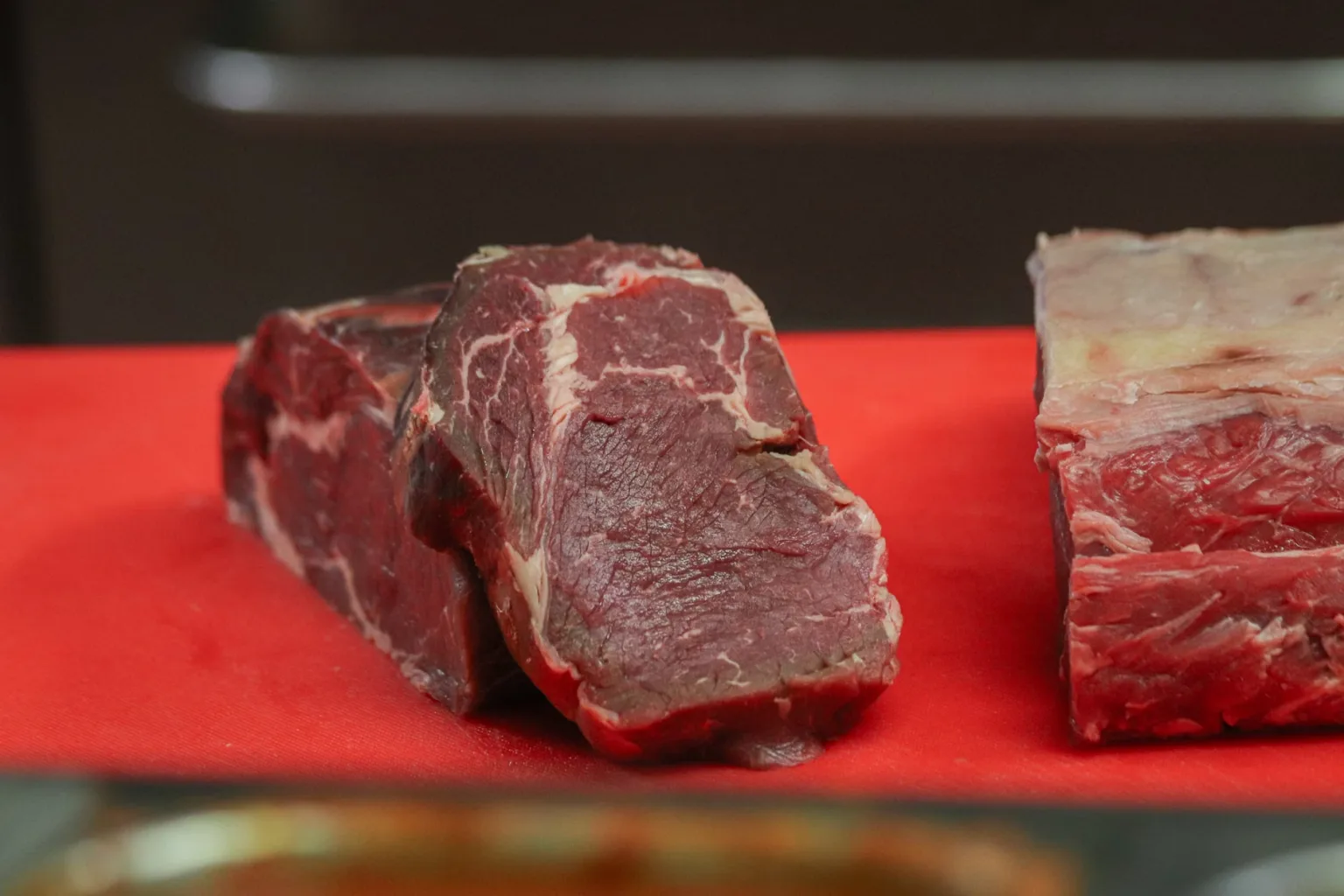
Beef is meat from cattle. It is not a uniform ingredient: the cut, the animal and other production and handling factors affect its appearance, flavor and texture. For example, ribeye and tenderloin are described as tender cuts suited to roasting or grilling, while other cuts have different characteristics and may be used in stews. Color and flavor intensity can also differ among meat from animals of different ages. When buying and cooking beef, consider both the identified cut and the intended preparation rather than treating every piece in the same way. This distinction is useful whether you are planning a grilled dish or a traditional slow-cooked preparation.
When to use it
Choose beef when a recipe calls for meat with its own distinct flavor, and select the cut to suit the cooking method. For grilling or roasting, the supplied information highlights tender cuts such as ribeye and tenderloin. For a stew, some cuts, including lower loin, may be suitable options. Beef also appears in traditional preparations such as soups, boiled dishes and stews, where bones and offal may be used. Because flavor and texture differ among cuts and animals, make your choice according to the result you want and the recipe’s instructions rather than relying on the general label “beef” alone.
How to use it
Start by identifying the cut and checking which preparation it suits. Ribeye can be roasted or grilled; tenderloin, described as very tender and mild in flavor, can also be cut into steaks for grilling or pan-cooking. Lower loin may be cut into steaks or used in stews, according to the supplied description. Beef bones and offal can feature in traditional soups and stews. Do not assume that every piece will give the same result with every method: connective tissue, fat and texture differ from cut to cut. If the label names the cut, use that information alongside the recipe to choose how to prepare it.
Flavour and texture
The sensory profile changes with the cut and the type of animal. The supplied information describes tenderloin as very tender, lean and mild, and ribeye as tender and flavorful. Other cuts may be firmer or more fibrous, while meat from older animals may have a stronger flavor and a tougher texture. Color can also vary between pieces. These are normal product variations, and they make choosing a cut to match the cooking method important.
How to choose it
Check the cut name and think about the recipe first: different cuts do not suit grilling, roasting and stewing equally. The supplied information notes differences in tenderness and flavor, highlighting tenderloin and ribeye as tender cuts. When possible, buy from a trusted retailer and consult the label for product identification and traceability information. Do not judge quality from breed, color or a marketing description alone; the cut and its handling also affect the meat’s characteristics.
Storage
Store beef according to the directions on its packaging and keep it in that packaging until you are ready to prepare it. No specific storage times, temperatures or methods are given here, so do not assume a particular storage duration. If the package does not provide enough information, consult the food-safety guidance that applies in your area before storing or using the product.
Substitutions
There is no universal substitute for beef: the result depends on the cut and cooking method. If a recipe calls for a grilling cut, look for another beef cut described as tender, such as ribeye or tenderloin. For stews, consider a cut identified for that preparation, such as lower loin. These choices are not identical; adapt your selection to the recipe and do not expect precisely the same texture or flavor.
Common mistakes
A common mistake is choosing meat by the general name alone without checking the cut. Tenderness, flavor and texture vary, so a piece suited to roasting or grilling may not be the right choice for a stew, and vice versa. It is also easy to assume that all beef has the same profile: the animal’s age and other factors can affect color and flavor intensity. Check the cut identification and match the method to its characteristics.
Safety and allergens
Handle beef carefully and follow the storage and preparation directions on its packaging. Do not infer that the product is safe from appearance or smell alone; consult the food-safety guidance that applies in your area if you are unsure.
Culinary uses
- protagonista de platos de carne
- ingrediente para guisos, asados y preparaciones a la parrilla
Recommended techniques
- asar o cocinar a la parrilla cortes tiernos como lomo alto o solomillo
- guisar cortes indicados para esa preparación, como lomo bajo
Pairs well with
- verduras y hortalizas
- huesos y productos de casquería en sopas, cocidos y potajes
Frequently asked questions
Are beef and meat from cattle the same thing?
In culinary use, beef refers to meat from cattle. The common name can vary by region.
Which cut is suitable for grilling?
The supplied information identifies ribeye and tenderloin as cuts suited to roasting or grilling. Check the cut and follow your recipe.
Can I use any cut in a stew?
Do not assume every cut behaves in the same way. Lower loin is mentioned as an option for stews, but choose according to the recipe and the cut available.
Estimated nutrition
- Fat
- 6.25 g
- Saturates
- 4.46 g
- Carbohydrate
- 0 g
- Sugars
- 0 g
- Fibre
- 0 g
- Protein
- 19.6 g
- Salt
- 0.54 g
Sources and review
Automatically researched, cross-checked and validated content. Sources consulted:
- Tipos de carne de vacuno: categorías y cortes - Las Viandas de Julian lasviandasdejulian.es
- Aplicaciones de la Biotecnología en Seguridad Alimentaria aesan.gob.es
- Healthy Eating Plan for Weight Management med.uc.edu
- ¿Por qué es tan difícil fabricar una vacuna contra el sida? doi.org
- Labeling Food Safety Attributes: To Inform or Not to Inform? digitalcommons.unl.edu
- The best foods for vitamins and minerals - Harvard Health health.harvard.edu
- Bad Bug Book ecourses.uprm.edu
- Page 5 | See All Nutrition, Diet, and Health - Nutrition, Diet, and Health - Youth, Family, and Health extension.psu.edu
- Vocabulario Módulo 2 – El Jardín del Lenguaje: A Collaborative Textbook for Intermediate Spanish pressbooks.uiowa.edu
- How to interpret sire summaries | Servicio de Extensión de OSU extension.oregonstate.edu
- Carne de vacuno: qué es, características y propiedades miguelvergara.com
- Propiedades de la carne de vacuno, despiece, producción. provacuno.es
- El papel de la carne de vacuno en la gastronomía española - Vacuno de élite | Pasión por las vacas vacunodeelite.com
- Carne - Wikipedia, la enciclopedia libre es.wikipedia.org