- Category
- Meat
- State
- Fresh
- Usual unit
- g
What it is
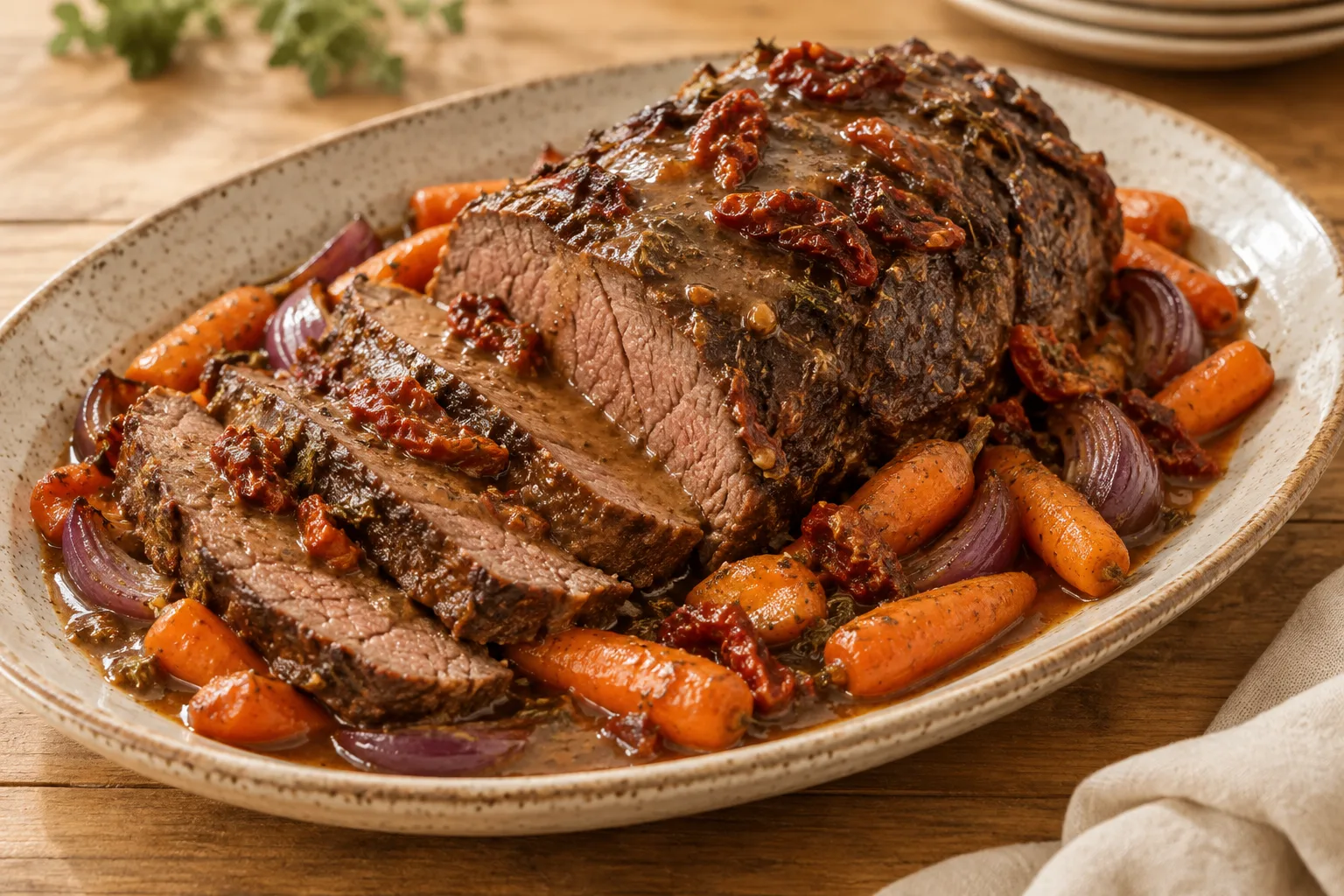
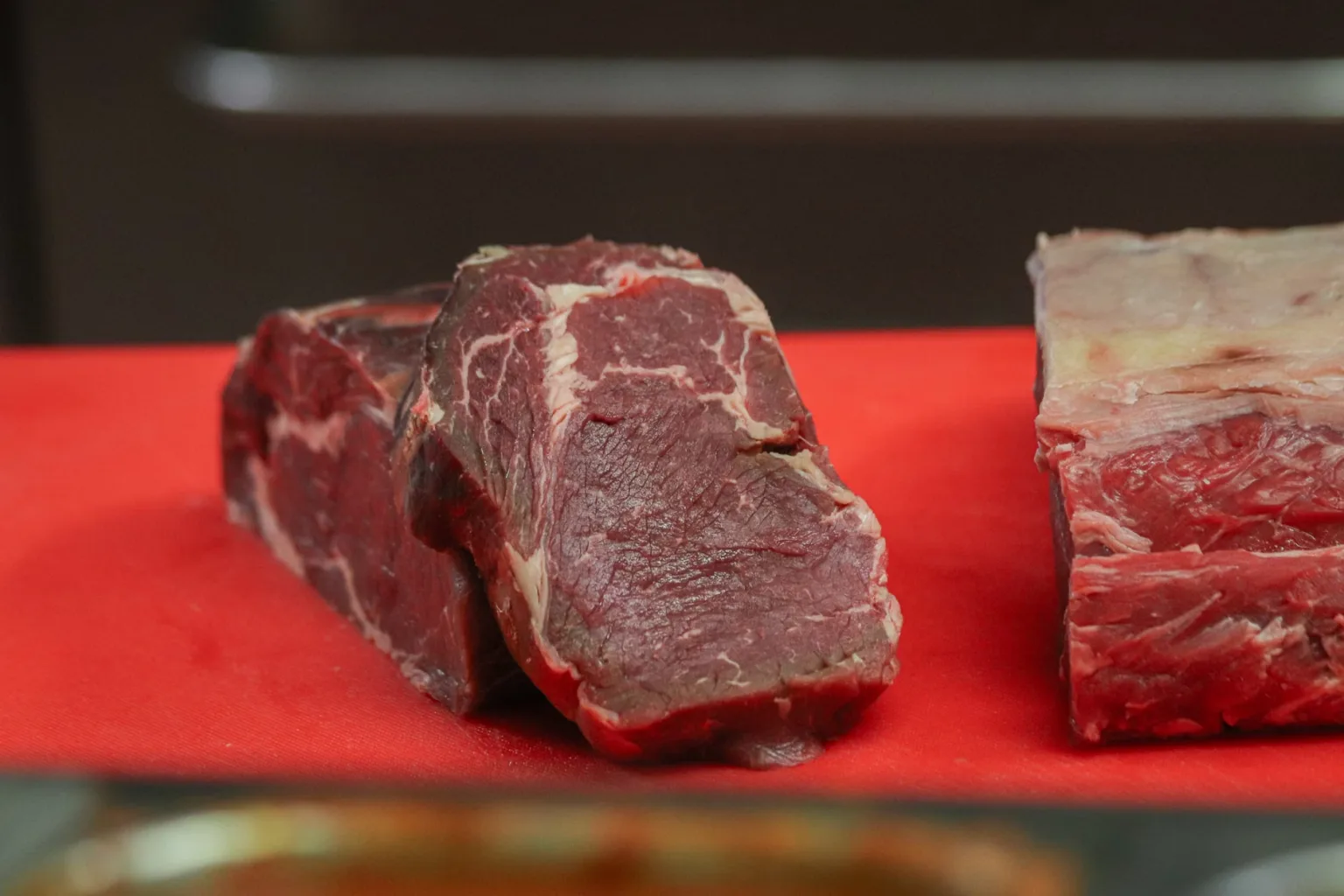
Beef roasting cut describes how a piece of beef may be used; it does not identify one particular anatomical cut. The label can refer to different beef cuts whose characteristics vary with the part of the animal, fat content and structure of the meat. A lean, tender piece will not behave in the same way as a more fibrous cut or one with more connective tissue. Some loin cuts are described as suitable for roasting, while other cuts are better suited to different preparations. Retail cut names can also differ from one country to another. Ask the seller to identify the exact cut and explain its recommended use before buying. This profile covers the broad category and does not assume that every piece sold under this description is interchangeable.
When to use it
Choose this ingredient when a recipe calls for a beef roasting joint and you can confirm that the available cut suits the planned method. For oven roasting or grilling, compare the seller’s guidance with the cut description; loin and tenderloin are among the cuts described as suitable for roasting, but they do not represent the whole category. If the package says only “beef roasting cut,” ask what specific cut it contains: names vary by location and do not, by themselves, establish texture, fat level or cooking result. For a particular recipe, knowing the cut matters more than assuming all beef cooks alike.
How to use it
Start by identifying the cut and checking whether your recipe calls for oven roasting, grilling or pan cooking; cooking guidance depends on the piece. Once you have a suitable cut, roast it whole or in portions as the recipe directs and serve it as a main dish. Salt, pepper and aromatic herbs are described as seasoning options for beef preparations; use them to suit the dish rather than assuming they are required. Marinating may be considered for more fibrous cuts, but it is not a universal fix, and this profile cannot establish a resting time. No cooking times or temperatures are given because the cut, thickness and equipment are unknown. Follow recipe and seller guidance for the specific piece, and consult the package for relevant storage and safe-use instructions.
Flavour and texture
Flavor and texture are not uniform across this category. The cut, amount of intramuscular fat and structure of the piece can affect juiciness and firmness; cuts with more marbling are often described as juicier, while a lean piece may be less juicy if prepared without regard to its characteristics. Ask which cut you are buying before predicting the result.
How to choose it
Ask for the exact cut name and whether it suits the method in your recipe. Beef cut names can vary between countries, so a broad label does not guarantee two pieces are equivalent. For packaged meat, check that the pack is closed and read the label: storage and use information may depend on how the product is presented.
Storage
The available evidence does not establish one storage duration or temperature for this broad category. Check the package label or ask the seller for guidance specific to the piece, and follow applicable storage and safe-use instructions for that product. If the meat is sold unpackaged, ask the retailer for specific advice rather than assuming every cut has identical instructions.
Substitutions
You can replace one piece with another beef cut only when the alternative suits the same preparation. Tenderloin and loin are cited among cuts that can be roasted, but they differ in texture and fat, so the result will not be identical. If the recipe relies on a particular cut, ask the seller which alternative is the closest fit; there is no universal equivalence among all beef cuts.
Common mistakes
A common mistake is treating “beef roasting cut” as the name of one specific cut. It is also easy to choose a method without checking whether the piece is lean, fibrous or fattier, or to assume cut names mean the same thing in every country. Identify the piece and adapt the recipe; do not apply one cooking time or temperature to the entire category.
Safety and allergens
Follow storage and safe-use instructions on the label when provided, and ask the seller if the meat is unpackaged or the cut is not clearly identified. This profile does not give cooking times or temperatures for an unspecified cut.
Culinary uses
- pieza principal para asar
- carne para cortar en lonchas y servir como plato principal o en bocadillos
Recommended techniques
- asado al horno, si el corte elegido es adecuado
- asado a la parrilla o plancha para cortes apropiados
- marinado como opción para cortes más fibrosos
Pairs well with
- patatas
- pimientos y cebolla
- sal, pimienta y hierbas aromáticas
Frequently asked questions
Is “beef roasting cut” one specific cut?
Not necessarily. It is a general use description that may cover different cuts with different textures and fat levels. Ask which piece it is.
Can any beef cut be roasted?
Do not assume so. Suitability depends on the cut and method. Confirm that the specific piece works for your recipe.
Can I substitute tenderloin or loin?
They may be options for a roasting preparation, but they are not identical to each other or to every cut sold for roasting.
Estimated nutrition
- Fat
- 70.9 g
- Saturates
- 29.4 g
- Carbohydrate
- 0 g
- Sugars
- 0 g
- Fibre
- 0 g
- Protein
- 8.21 g
- Salt
- 0.06 g
Sources and review
Automatically researched, cross-checked and validated content. Sources consulted:
- TIEMPO-TEMPERATURA.pdf aesan.gob.es
- En el etiquetado alimentario hay algunas menciones que son obligatorias eletiquetadocuentamucho.aesan.gob.es
- Client Challenge doi.org
- Gastronomía de México - Wikipedia, la enciclopedia libre es.wikipedia.org
- Tipos de carne de vacuno: categorías y cortes - Las Viandas de Julian lasviandasdejulian.es
- 【Carne De Res】▷ Recetas, Nutrición Y Consejos Para Ti elsastredelacarne.com
- ▷ ¿Qué significa carne de res? - Qué Ver y Visitar 🌍 queveryvisitar.com
- Descubre todo sobre la carne de res: usos, beneficios y curiosidades - Eleven Bistro elevenbistro.es
- ¿Qué es la Carne de Res? Guía Completa, Tipos y Beneficios - Mataderos Salamanca,S.L. mataderossalamanca.es
- 7 Tipos de Carne Para Asar › Descubre Los Mejores Cortes grillbox.mx
- Cortes de Carne ¿Cuáles son y para que se usan? filas.com.py
- ¿Qué tipo de carne es de res? Guía completa con todos los cortes que debes conocer cocinafacil.com.mx
- 215 recetas muy ricas de carne de res para asar compartidas por cocineros caseros- Cookpad cookpad.com
- Cómo Marinar Carne Para Asar: Técnicas Y Recetas Infalibles wildfork.mx
- Cómo marinar carne de res para asar: guía práctica y deliciosa carnesfinasguadalupe.com
- Estos son los cortes de carne más jugosos para asar: técnicas de preparación para lograr la parrilla perfecta en las fiestas de fin de año - Infobae infobae.com
- ¿Cuál es la mejor carne para asar? Guía de cortes y técnicas | Mejora tu Vida coppel.com
- Cortes de carne para asar solacero.com