- Category
- Meat
- State
- Fresh
- Usual unit
- unit
What it is
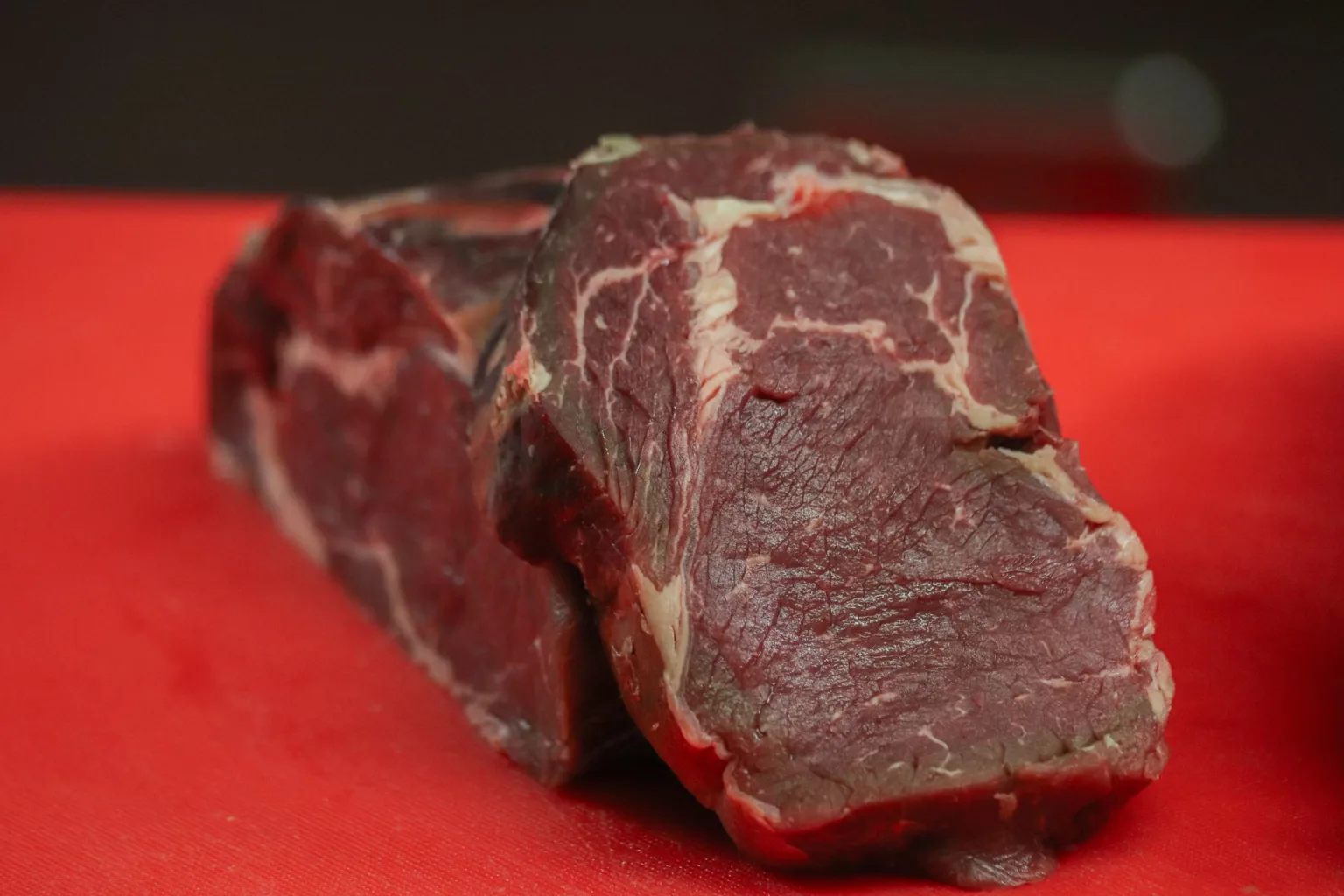
A beef steak is a portion of bovine meat cut to be cooked and served as an individual piece. The word “steak” does not identify one specific cut: steaks can come from different parts of the animal, and those cuts do not all behave alike in the kitchen. Available information describes some cuts as tender and juicy and others as leaner, firmer, or drier. For that reason, steaks should not automatically be treated as interchangeable or given the same cooking method. The general name alone does not tell you the exact cut or establish the characteristics of an individual piece. Ask which cut you are buying and choose a method that suits it. A cut for quick cooking may produce a different result from one intended for breading or a longer-cooked dish.
When to use it
Choose steaks when you want individual portions and can match the preparation to the cut. Tender, juicy cuts are suited to the pan or grill; some leaner cuts can be cooked briefly, while firmer pieces may be better for breading or stewing. A suitable cut can also be used for a roast-style preparation. Since “steak” describes a portion rather than one particular part of the animal, ask which cut you have before deciding how to cook it. If the cut is unknown, do not assume that all steaks suit the same method or cooking time.
How to use it
Identify the cut first, then choose an appropriate technique. Pan-searing and grilling are common ways to prepare steaks; breading may suit cuts commonly used that way. For roasting or stewing, follow directions appropriate to the cut rather than automatically applying instructions for a thin steak. Keep raw meat separate from ready-to-eat food, wash your hands, and clean utensils and surfaces that have touched it. Use a clean thermometer to check doneness. The cited food-safety guidance recommends a minimum internal temperature of 62.8 °C for beef, veal, pork, and lamb steaks, followed by a four-minute rest before cutting and eating. Refrigerate perishable food promptly.
Flavour and texture
Flavor and texture depend on the cut, so there is no single description that fits every steak. Available information describes some veal cuts as tender and juicy, and others as lean, firm, or comparatively dry. The thickness, visible fat, and preparation can also affect the result of a particular piece. Ask what cut you are buying so you can select a method that suits its texture instead of assuming that every steak will be equally tender.
How to choose it
Ask the butcher which cut the steak comes from and what cooking use is suitable. The available information shows that different parts of the animal are used for different preparations, including pan-cooking, grilling, breading, or stewing. Choose according to your planned method, not just the generic word “steak.” If the label does not identify the cut, ask before buying; cuts can differ in tenderness, juiciness, and fat.
Storage
Keep raw meat separate from other foods, especially ready-to-eat items, and refrigerate it promptly. The cited food-safety guidance recommends keeping a refrigerator at 4.4 °C or below. Prevent raw-meat juices from contacting food, clean plates, or utensils. Wash hands, cutting boards, knives, and surfaces after handling raw meat. The available evidence does not specify a storage life for this product, so follow the package directions and local food-safety guidance.
Substitutions
For a similar preparation, replace a steak with another beef cut suited to the same cooking method; a firmer or leaner cut may not be a direct substitute. Veal can be an option when a milder flavor is desired, although the available source describes that difference for veal generally and does not establish that every cut will behave the same way. Adapt the technique to the replacement cut.
Common mistakes
A common mistake is treating every steak as the same cut: pieces can differ in tenderness, juiciness, and recommended use. Another is serving cooked meat on a plate that held raw meat, or allowing raw juices to contaminate ready-to-eat food. Do not rely on appearance to establish the internal temperature; use a clean thermometer and follow suitable food-safety guidance.
Safety and allergens
Keep raw meat separate from ready-to-eat food, and wash hands, utensils, and surfaces after contact. Use a clean thermometer to check internal temperature; the cited guidance gives a minimum of 62.8 °C for steaks and a four-minute rest before cutting and eating. Refrigerate perishable food promptly.
Culinary uses
- main course
- quick-cooking protein
Recommended techniques
- pan-searing
- grilling
- breaded frying
- roasting
Pairs well with
- potatoes
- vegetables
- herbs
- pan sauces
Frequently asked questions
Do all beef steaks come from the same cut?
No. “Steak” describes a portion or presentation, and steaks can come from different parts of the animal. Ask which cut it is so you can choose a suitable method.
Which cooking methods can I use for beef steaks?
Pan-searing and grilling are common options. Some steaks are also breaded, roasted, or stewed; the particular cut helps determine which method is suitable.
How can I check that a steak has been cooked safely?
Use a clean thermometer. The cited guidance recommends a minimum internal temperature of 62.8 °C for steaks and a four-minute rest before cutting and eating.
Estimated nutrition
- Fat
- 12.88 g
- Saturates
- 5.29 g
- Carbohydrate
- 0 g
- Sugars
- 0 g
- Fibre
- 0 g
- Protein
- 27 g
- Salt
- 0.92 g
Sources and review
Automatically researched, cross-checked and validated content. Sources consulted:
- ¿Por qué la muerte es origen de miedos y tabúes? doi.org
- The Essential Glossary of Cooking Terms for the Culinary Arts - Escoffier escoffier.edu
- Cuatro Pasos Simples Para la Seguridad en los Alimentos | Home & Garden Information Center hgic.clemson.edu
- Agencia Española de Seguridad Alimentaria y Nutrición aesan.gob.es
- Nutrition After Your Transplant - Health Online healthonline.washington.edu
- Cortes De Ternera Y Usos Culinarios (I) • ISARO Gastronomía isarogastronomia.com
- Carne de ternera. ¿Por qué debemos consumirla? | MORALON moralon.es
- Ternera Gallega - USOS CULINARIOS terneragallega.com
- Culinary Arts - Culinary School with Housing Opportunity coloradomtn.edu
- Receta del mes – Estofado de ternera - Spend Smart Eat Smart spendsmart.extension.iastate.edu
- Thanksgiving Central | UNL Food | Nebraska food.unl.edu
- Factores determinantes del precio de la carne de ternera ageconsearch.umn.edu
- Tipos de filetes de ternera más exquisitos miguelvergara.com
- - YouTube youtube.com