- Category
- Herbs and spices
- State
- Dry
- Usual unit
- tablespoon
What it is
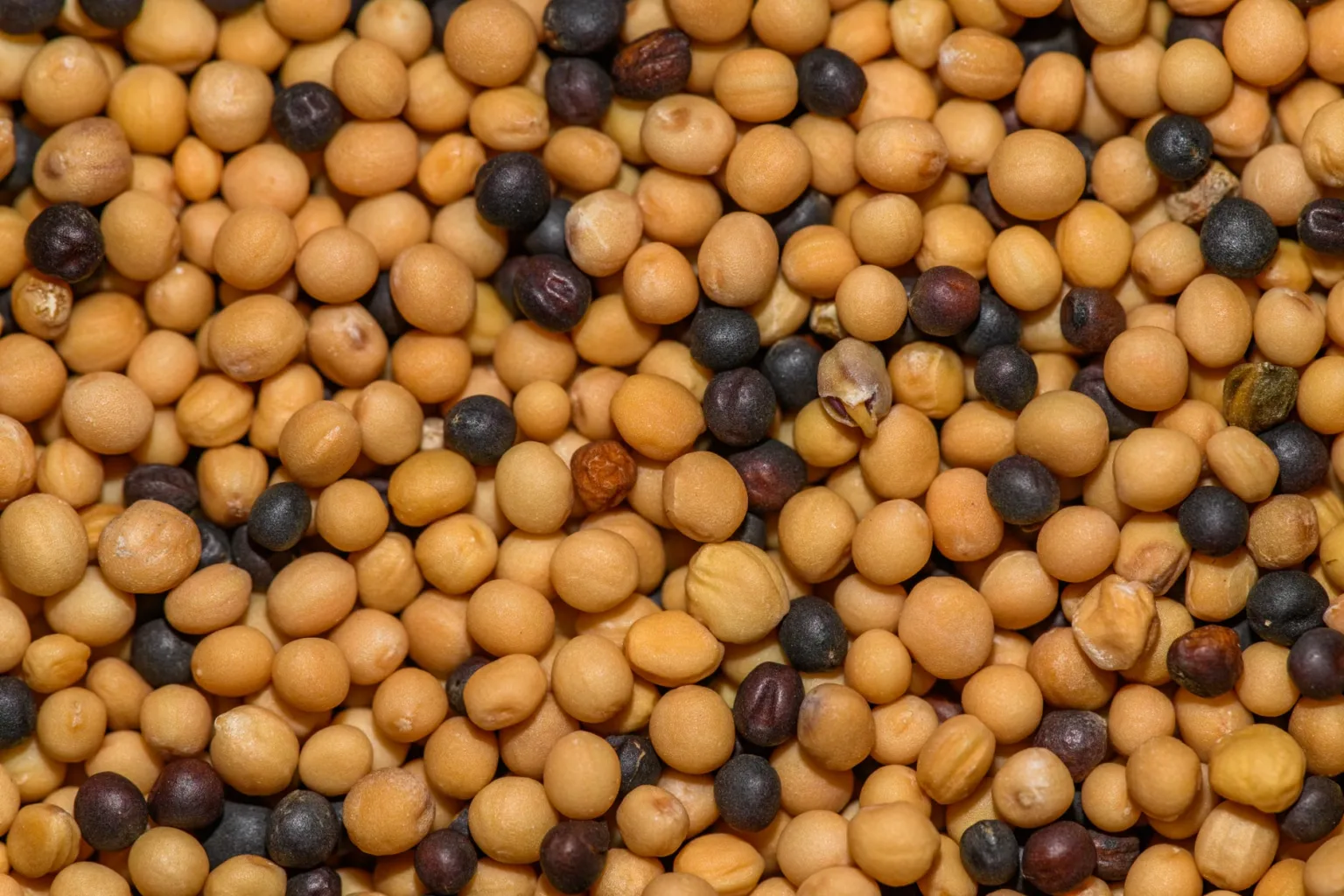
Black mustard seeds are the seeds of a mustard plant, used as a spice. They can be used whole, crushed or ground, and are also an ingredient for making prepared mustard. In their dry, unbroken state, their pungent flavor is not fully apparent; breaking the seeds and exposing them to liquid brings out that characteristic bite. Black mustard is described as more intense than white or brown mustard varieties. Seeds should not be confused with prepared mustard sauce: the sauce is made by processing seeds with liquids and other ingredients, so its flavor and composition can differ from those of the whole spice.
When to use it
Choose black mustard seeds when you want a pronounced mustard character rather than a restrained one. They suit curries, dals and other lentil dishes, as well as pickles and dressings. Use them whole when you want the seeds to remain intact, or crush them and combine them with liquid when you want to release their pungency. If a dish will cook for a long time, remember that heat can lessen the sharpness. For a more pronounced finish, consider adding the mustard toward the end of cooking rather than subjecting it to prolonged heat.
How to use it
Use the seeds whole, crushed or ground, depending on the texture and intensity you want. To develop their pungency, break or grind the seeds and mix them with a liquid; dry, intact seeds do not immediately deliver the same sharpness. You can also fry whole seeds in oil and use them as part of a tarka-style seasoning for lentils. Add them to curries, pickles or vegetable dishes, or mix ground mustard with liquid to make a mustard preparation. Prolonged cooking softens the pungent quality, so when you add the seeds can make a difference to the finished dish.
Flavour and texture
Black mustard is more intense and pungent than white or brown mustard. Dry, whole seeds have little immediately apparent pungency; crushing them and adding liquid develops it. Grinding makes the spice easy to blend into sauces and mixtures, while whole seeds retain their form in curries, pickles and other dishes.
How to choose it
First decide whether the recipe calls for whole seeds or prepared mustard: they differ in texture and composition. If buying a prepared sauce, check its label because it may include liquids, salt and other seasonings. If a recipe specifies black seeds, do not assume white or brown mustard will give the same intensity. Choose the form that suits the cooking technique, and check the product label for ingredient details.
Storage
The available information does not establish a specific storage method or shelf life for black mustard seeds. To avoid assuming undocumented conditions, follow the directions on the package and check the date supplied by the producer. Keep the product in its intended packaging and consult its instructions before storing or using it. If you buy prepared mustard instead of seeds, follow the storage directions for that particular product.
Substitutions
Brown or white mustard seeds can be alternatives, but they will not reproduce the exact intensity of black mustard: the white and brown varieties are described as less pungent. Choose one if a milder result is acceptable, and adjust to taste rather than relying on a fixed one-for-one conversion. You can also replace whole black seeds with ground black mustard when a finer texture suits the recipe. Add it gradually, since grinding makes the spice easier to distribute and helps release its pungency.
Common mistakes
Do not expect dry, intact black mustard seeds to deliver their full pungency immediately. Crush or grind them and expose them to liquid to develop it. Another mistake is cooking them for a long time when you want a strongly pungent result: heat can soften that quality. Remember too that black mustard is more intense than white or brown varieties, so a direct substitution can change the character of a dish.
Safety and allergens
Use clean utensils and work surfaces, and check the product label. The available evidence does not identify a specific safety warning for these seeds.
Culinary uses
- Spice for adding pungent heat
- Whole-seed seasoning for curries, lentil dishes and pickles
Recommended techniques
- Use whole seeds or crush and grind them
- Combine crushed seeds with liquid to develop pungency
- Fry whole seeds in oil for a tarka-style seasoning
Pairs well with
- Lentils and dals
- Cabbage, cauliflower and Brussels sprouts
- Vinegar-based dressings and pickles
Frequently asked questions
Are whole black mustard seeds pungent?
Their pungency develops mainly after the seeds are broken or ground and exposed to liquid; dry, intact seeds do not show it fully.
Can I substitute white or brown mustard seeds?
Yes, if a generally milder result is acceptable. Adjust the amount to taste because the varieties differ in pungency.
When should I add black mustard to a cooked dish?
Heat can reduce its pungency. Add it toward the end for a more pronounced result, or cook it with the dish for a softer profile.
Estimated nutrition
- Fat
- 36.2 g
- Saturates
- 1.99 g
- Carbohydrate
- 28.1 g
- Sugars
- 6.79 g
- Fibre
- 12.2 g
- Protein
- 26.1 g
- Salt
- 0.03 g
Sources and review
Automatically researched, cross-checked and validated content. Sources consulted:
- ¿Por qué la muerte es origen de miedos y tabúes? doi.org
- La guía definitiva de las mostazas: variedades, usos en cocina y cuáles tienen más azúcar directoalpaladar.com
- Vamos a Conservar Alimentos: Tomates extension.psu.edu
- Supervivencia Básica: Alimentos | Servicio de Extensión de OSU extension.oregonstate.edu
- Mostaza: origen, tipos, propiedades y usos en la cocina bonviveur.com
- Sevin 16oz Concentrate Label v20 ucanr.edu
- Memoria AESAN 2021 aesan.gob.es
- Weed Impede picol.cahnrs.wsu.edu
- Seasonal Produce Handouts | UNL Food | Nebraska food.unl.edu
- DAM texashistory.unt.edu
- How to Grow Mustard in Your Garden | USU extension.usu.edu
- Evaluación del efecto antimicrobiano natural de un ... bdigital.zamorano.edu
- Semillas de mostaza, negras, crudas (¿orgánicas?) | Fundación G+E diet-health.info
- ¿Qué tipos de mostaza existen? - Blog de La Parada de las Especias comprarespecias.net