- Category
- Herbs and spices
- State
- Dry
- Usual unit
- tablespoon
What it is
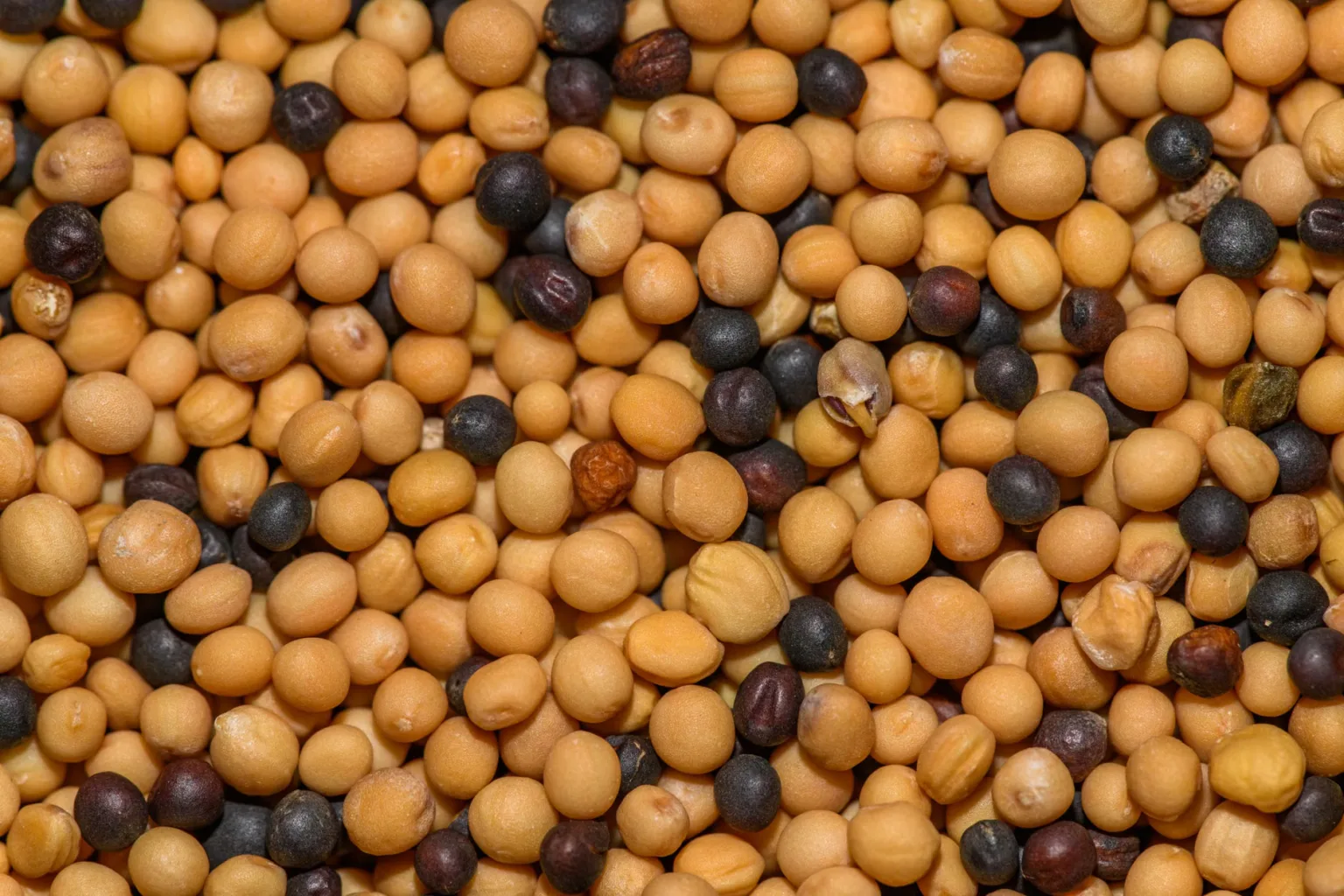
Black mustard seeds are the dried seeds of a mustard variety used as a spice. They differ from brown and white or yellow mustard seeds: culinary sources describe black mustard as particularly strong and pungent, brown as less forceful, and white or yellow as milder. The seeds can be used whole, crushed or ground. They should not be confused with prepared mustard sauce, which is made by combining whole or broken seeds with liquids and other ingredients.
When to use it
Choose these seeds when you want mustard to have a pronounced presence or want small grains and texture in a dish. They can season lentils, including preparations inspired by tarka, and pair with vegetables such as cabbage, cauliflower and Brussels sprouts. For a milder result, try brown or white mustard seeds instead. In cooked dishes, remember that heat can reduce mustard's characteristic pungency.
How to use it
Add the seeds whole to preserve their shape and provide texture; crush them to break them up, or grind them to distribute the seasoning more evenly. One described culinary use is to fry them in oil as part of a tarka and combine them with lentils. To make mustard paste or sauce, combine whole, ground or crushed seeds with a liquid such as water, vinegar, lemon juice or wine; salt and other seasonings may also be added. Moisture and breaking the seeds help develop pungency. Cooking can soften that pungency, so choose when to add the seeds according to the result you want.
Flavour and texture
Black mustard seeds are described as stronger and more pungent than brown and white varieties. Whole, they provide small, distinct grains and a crunchy texture; crushed or ground, they blend more readily into a dish. Mustard's pungency is not expressed in the same way in every form: moisture and breaking the seeds help develop it, while cooking can reduce it.
How to choose it
Check that you are buying whole black mustard seeds, rather than prepared sauce, ground mustard or a blend of varieties. Mustard seeds vary in intensity: black is more pungent than brown, while white or yellow is milder. Read the product name and ingredient list, especially if you want a single variety or a product without added seasonings.
Storage
Follow the storage directions on the manufacturer's package. The available evidence does not establish a specific shelf life, temperature or storage method for these seeds. Keep the package identification available so you can distinguish the variety or product and refer to its directions before use.
Substitutions
Brown or white mustard seeds can replace black seeds, but the result will be milder: brown is less pungent than black, and white or yellow is milder still. The substitute will not reproduce the characteristic strength of black mustard. Adjust to taste; the available evidence does not establish an equivalent measurement.
Common mistakes
Do not assume all mustard seeds have the same intensity: black is more pungent than brown and white or yellow. Do not confuse dried seeds with prepared mustard sauce, which contains liquids and other ingredients. Finally, do not expect the same pungency after cooking; heat can soften it.
Safety and allergens
Use a food-grade product and follow its package directions. The available evidence provides no specific official safety warning or basis for setting particular handling or storage conditions for these seeds.
Culinary uses
- Condimento entero para aportar intensidad y textura crujiente
- Ingrediente para mezclas de especias, salsas y aderezos
Recommended techniques
- Usar las semillas enteras
- Machacar o moler las semillas
- Freír brevemente en aceite como parte de una tarka
Pairs well with
- Lentejas
- Col
- Coliflor
- Coles de Bruselas
Frequently asked questions
Are black mustard seeds very hot?
They are described as stronger and more pungent than brown or white and yellow mustard. Their pungency also changes depending on whether they are whole, broken, moistened or cooked.
Can I use the seeds whole?
Yes. Mustard seeds can be used whole, crushed or ground. Whole seeds add texture, while crushed or ground seeds blend more into a preparation.
What can I use instead?
Try brown or white mustard seeds for a milder result. Their flavor will not be identical, and the available evidence does not establish an equivalent amount.
Estimated nutrition
- Fat
- 36.2 g
- Saturates
- 1.99 g
- Carbohydrate
- 28.1 g
- Sugars
- 6.79 g
- Fibre
- 12.2 g
- Protein
- 26.1 g
- Salt
- 0.03 g
Sources and review
Automatically researched, cross-checked and validated content. Sources consulted:
- The Essential Glossary of Cooking Terms for the Culinary Arts - Escoffier escoffier.edu
- La guía definitiva de las mostazas: variedades, usos en cocina y cuáles tienen más azúcar directoalpaladar.com
- Dictionary of Health Related Terms: English – Spanish hia.berkeley.edu
- Vamos a Conservar Alimentos: Tomates extension.psu.edu
- Mostaza: origen, tipos, propiedades y usos en la cocina bonviveur.com
- Sevin 16oz Concentrate Label v20 ucanr.edu
- Fresh Produce Recipe Book | Wsu s3.wp.wsu.edu
- "ALIGN=CENTER>LES TROIS MOUSQUETAIRES -- Los tres mosqueteros" people.duke.edu
- Alimentos para combatir los incendios forestales | Servicio de Extensión de OSU extension.oregonstate.edu
- Comité Científico aesan.gob.es
- UNIVERSITY OF CINCINNATI etd.ohiolink.edu
- Project MUSE -- Verification required! doi.org
- Martin and Jessie Glaberman Papers reuther.wayne.edu
- El Libro de Mormón y las Bendiciones Patriarcales: Las Reflexiones de un Patriarca Ordenado | Religious Studies Center rsc.byu.edu
- ¿Qué tipos de mostaza existen? - Blog de La Parada de las Especias comprarespecias.net
- Mostaza | PAPRIMUR paprimur.es