- Category
- Herbs and spices
- State
- Dry
- Usual unit
- g
What it is
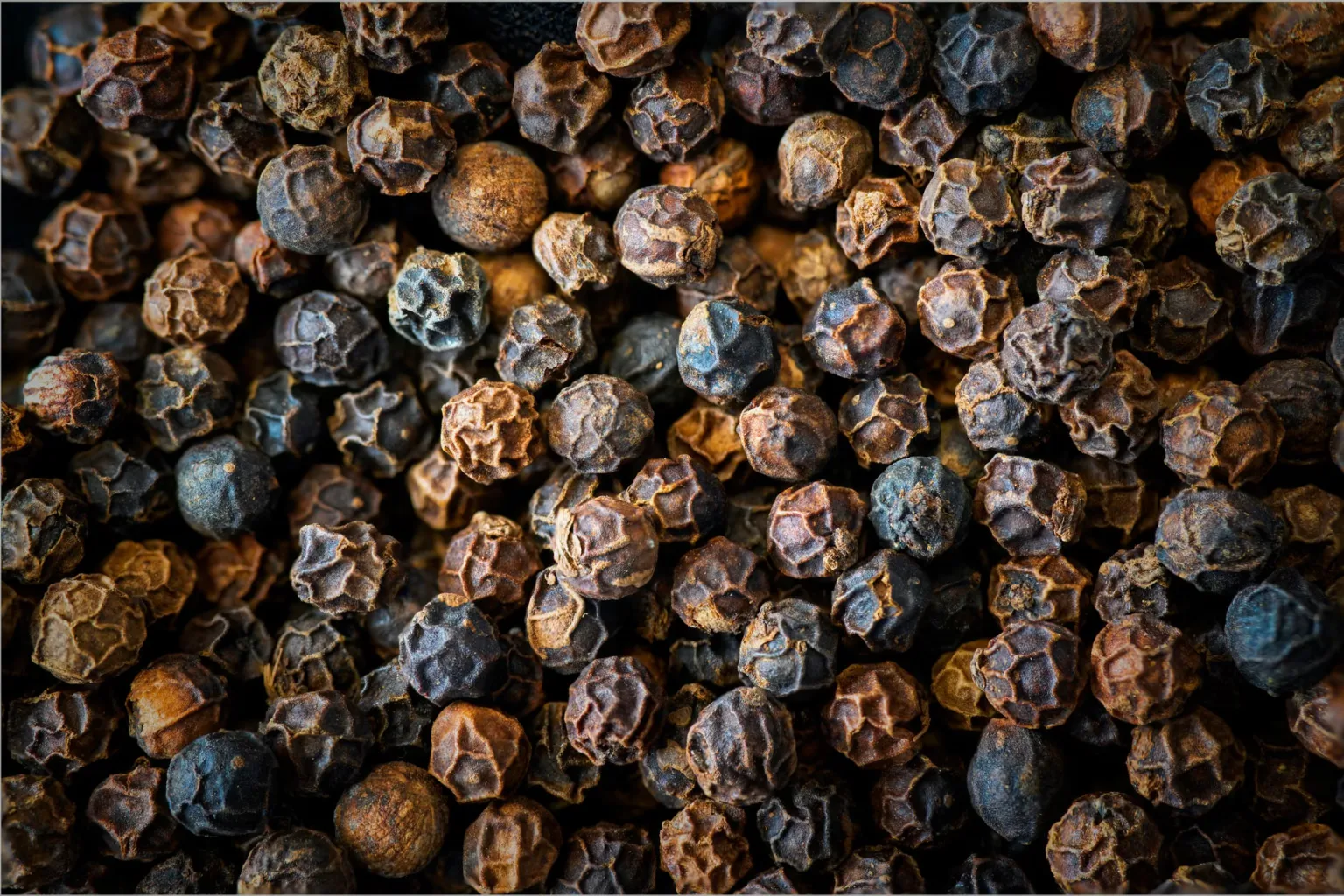
Black peppercorns are the dried fruits of the pepper plant. They are made from berries harvested before full ripeness and dried until dark and wrinkled. The plant belongs to the Piperaceae family. Black pepper is commonly described as intense, aromatic, pungent and slightly bitter. The whole dried berries can be used as they are or ground shortly before use. Buying them whole makes it possible to grind only what is needed and to choose a texture that suits the dish.
When to use it
Use black pepper when you want a recognizable aromatic heat in soups, stews, marinades, sauces, meat, poultry, fish or vegetables. Add it during cooking to blend its flavor into the dish, or at serving when you want its aroma to stand out more. It can also be tried in selected sweet preparations, particularly with dark chocolate or strawberries, where it gives a spiced contrast. Its intensity depends on the amount used and whether it is freshly ground, so add a little at a time and taste as you go.
How to use it
Grind the peppercorns just before use to bring out their aroma and control the texture: a coarse grind is more noticeable, while a fine grind distributes more evenly. Add black pepper during cooking when you want it integrated, or sprinkle it on at the end when you want its aroma to remain prominent. Whole peppercorns can also be briefly toasted before grinding. Use it with meat, poultry, fish, vegetables, soups, stews, marinades and sauces; for a less usual application, try a small amount with dark chocolate or strawberries.
Flavour and texture
Black pepper tastes warm, intense and pungent, with an aromatic character and a possible slight bitterness. The dried whole peppercorns are hard and wrinkled; grinding turns them into particles ranging from fine to coarse. Freshly ground pepper tends to be more aromatic than pepper that has been ground in advance, so adjust the amount to the flavor you want.
How to choose it
Choose whole, dry black peppercorns and check that the package is sealed and clearly identifies the contents as black pepper. Whole peppercorns let you grind only what you need and choose the texture at home. If you want a different flavor profile, note that white pepper has a milder aroma, while green pepper offers fresher notes.
Storage
Keep peppercorns in an airtight container protected from light to help preserve their aroma. Avoid leaving them exposed to air, and grind only as much as you plan to use: ground pepper loses aromatic compounds more quickly. The available evidence does not establish a universal storage duration, so also follow the package directions.
Substitutions
White pepper can stand in when a milder aroma is preferred, although its taste may be more pungent. Green pepper brings fresher, sweeter or fruitier notes and will change the character of the dish. Neither is an identical replacement; adjust the amount and taste before adding more.
Common mistakes
Grinding a large amount long before use can diminish its aroma, and leaving peppercorns exposed to air or light can also affect their flavor. Another common mistake is adding too much at once, allowing the pungency to dominate. Start with a small amount, taste and adjust; grind at the last moment when you want its fragrance to stand out.
Safety and allergens
The available material does not identify a specific safety warning for black peppercorns. Use them as a culinary spice, follow package directions and do not consume a product whose condition or identity you cannot verify.
Culinary uses
- Seasoning for savory dishes
- Aromatic finishing spice
- Flavor accent in selected sweet preparations
Recommended techniques
- Grind just before use
- Add during cooking or at serving
- Briefly toast whole peppercorns
Pairs well with
- Meat, poultry, fish and vegetables
- Soups, stews, marinades and sauces
- Dark chocolate and strawberries
Frequently asked questions
Is it better to buy whole or ground pepper?
Whole peppercorns can be ground just before use and to the texture you want; the aroma of pre-ground pepper may fade more quickly.
When should black pepper be added?
It can be added during cooking or at serving. Adding it at the end lets its aroma stand out more.
Can black pepper be used in sweet dishes?
Yes. It appears in selected sweet pairings, such as dark chocolate or strawberries, where a modest amount adds contrast.
Estimated nutrition
- Fat
- 0 g
- Saturates
- 0 g
- Carbohydrate
- 0 g
- Sugars
- 0 g
- Protein
- 0 g
- Salt
- 0 g
Sources and review
Automatically researched, cross-checked and validated content. Sources consulted:
- The Essential Glossary of Cooking Terms for the Culinary Arts - Escoffier escoffier.edu
- Pimienta: origen, tipos, propiedades y usos en la cocina bonviveur.com
- educational content to support healthful lifestyle practices sjsu.edu
- Vamos a Conservar Alimentos: Tomates extension.psu.edu
- Elaboración de Conservas a Presión (Pressure Canning) | VCE Publications | Virginia Tech pubs.ext.vt.edu
- FIRST LINE OF TITLE - University of Delaware udspace.udel.edu
- Harvest for Healthy Kids - Radishes wpcdn.web.wsu.edu
- Social Media Toolkit - Health & Well-Being health.extension.wisc.edu
- Alimentos para combatir los incendios forestales | Servicio de Extensión de OSU extension.oregonstate.edu
- Extracto en Polvo de Pimienta Negra doi.org
- Avocado Toast – Community Nutrition Education web.uri.edu
- Todo lo que necesitas saber sobre la pimienta: orígenes, cultivo y propiedades - Especias El explorador especiaselexplorador.com
- Pimienta negra en grano | Por qué incluirla en tus comidas jetextramar.com
- El ingrediente del mes: la pimienta negra – Kitchen Community kitchencommunity.wordpress.com