- Category
- Drinks
- State
- Liquid
- Usual unit
- ml
What it is
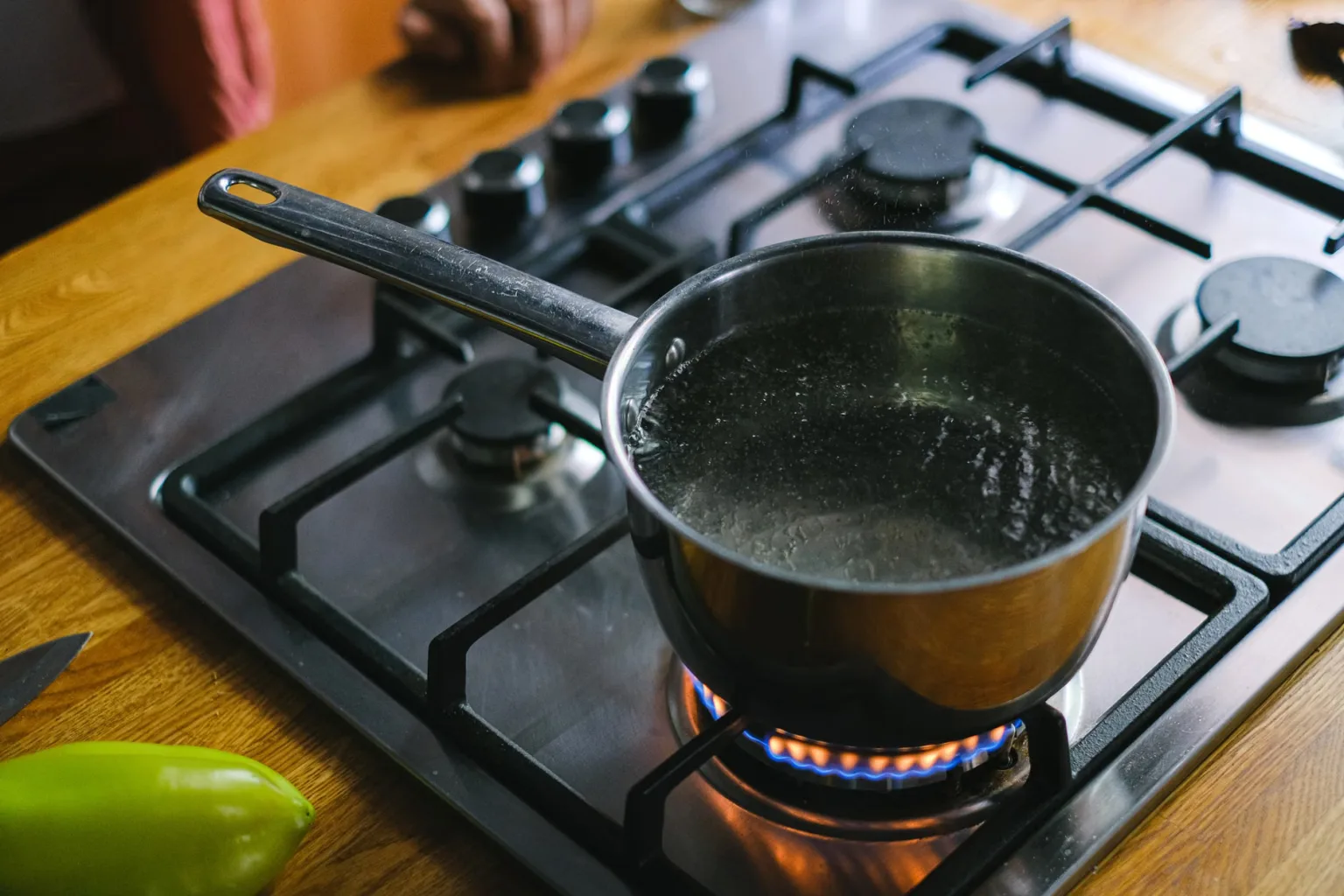
Boiling water is water heated until it reaches its boiling point. In cooking, it acts as a water-based medium that transfers heat to food, either through direct immersion or by producing steam. Boiling means cooking an ingredient immersed in water or broth; blanching involves brief contact with boiling water and may be followed by cooling in cold water. Poaching is different: it cooks food in liquid kept below the boil. Results vary with the food, its size, and the texture you want. These methods use water in different ways, so the terms are not interchangeable.
When to use it
Use boiling water when a recipe calls for cooking food by immersion or for briefly blanching an ingredient. It can suit vegetables and recipes that add food to water after it has heated. For gentler cooking, stop the liquid from boiling vigorously and keep it below the boiling point; this is poaching, not boiling. There is no universal cooking time: the time depends on the type and amount of food and the texture you are aiming for. Check the method specified by the recipe before choosing how hot the liquid should be.
How to use it
Heat the water until it boils if the recipe says to start with hot liquid, then add the food to be cooked. For boiling, keep the ingredient immersed in water or broth and adjust the cooking to the food and the result you want. For blanching, immerse the ingredient briefly; when the method calls for it, transfer it to cold water afterward. For poaching, use liquid below the boiling point rather than a vigorous boil. You can also cook with water as steam, keeping the food out of direct contact with the liquid. Cooking time is not the same for every ingredient, so follow a suitable recipe rather than relying on a single fixed duration.
Flavour and texture
Water by itself has little distinctive flavor, so the result depends largely on the food and the liquid used. During boiling or blanching, contact with water and the length of cooking can affect texture; overcooking can reduce culinary quality. Poaching cooks food in liquid without keeping it at a boil. Steaming is another water-based technique and does not require direct contact between the food and the liquid.
How to choose it
Boiling water is not a separate product to select at a shop; it is made by heating water. Choose water suitable for culinary use and prepare the amount the recipe needs. Before you start, check whether the method calls for boiling, blanching, poaching, or steaming: these are different techniques and do not always use water in the same way. Do not assume that every preparation requires water to boil for the same length of time.
Storage
This profile covers water as it is heated or used in cooking, not a packaged product with a storage life. The available evidence does not establish specific storage times or conditions for boiling water. Prepare the amount you plan to use and follow the recipe instructions for the food being cooked. If you keep water or a cooked preparation afterward, consult storage guidance appropriate to that preparation rather than assuming that boiling alone determines how it should be stored.
Substitutions
Broth can replace water in an immersion cooking method when the recipe allows for added flavor. For preparations that accept other liquids, the sources also describe fumet or milk for certain cooking methods. These are not interchangeable in every recipe: check that the alternative liquid suits the food and the intended technique. Steam is not a direct liquid substitute; it is another way of cooking with water.
Common mistakes
A common mistake is treating boiling, blanching, and poaching as the same process. Boiling uses immersion in water or broth; blanching is brief, while poaching takes place below the boil. Another mistake is using one fixed cooking time without considering the food, its quantity, and the desired texture. For steaming, the food should not touch the liquid if you want to use that technique.
Safety and allergens
Handle hot water and hot containers carefully, and avoid splashes. The available evidence provides no specific handling guidance for boiling water; follow suitable cooking instructions for each food.
Culinary uses
- Medio acuoso para cocinar alimentos
- Líquido para escaldar o blanquear ingredientes
Recommended techniques
- Hervir por inmersión
- Escaldar o blanquear
- Escalfar en un líquido por debajo de la ebullición
- Generar vapor para la cocción
Pairs well with
- Verduras para escaldar o blanquear
- Pescado para escalfar
Frequently asked questions
Is boiling water the same as poaching liquid?
No. Boiling uses liquid at a boil; poaching requires keeping the food in liquid below the boiling point.
How long should I boil food?
There is no single time for every food. It depends on the ingredient, its amount, and the texture you want.
Can I steam food using boiling water?
Yes. Steam comes from water, but the food should not touch the liquid directly for the method to count as steaming.
Estimated nutrition
- Fat
- 1.36 g
- Saturates
- 0.23 g
- Carbohydrate
- 11.7 g
- Sugars
- 0.46 g
- Fibre
- 1.7 g
- Protein
- 2.37 g
- Salt
- 0.12 g
Sources and review
Automatically researched, cross-checked and validated content. Sources consulted:
- Métodos de cocción de alimentos | Aprende Institute aprende.com
- Client Challenge doi.org
- Nutrition After Your Transplant - Health Online healthonline.washington.edu
- Understanding the Canning of Food - UA Cooperative Extension extension.arizona.edu
- | National Center for Home Food Preservation nchfp.uga.edu
- informe anual de indicadores - agricultura, pesca y alimentación servicio.mapa.gob.es
- Preserving foods: Fruit juice and apple cider | Servicio de Extensión de OSU extension.oregonstate.edu
- Áreas de Seguridad Alimentaria aesan.gob.es
- Expanded Food and Nutrition Education Program (EFNEP) | Community Nutrition | Extension/College of Agriculture, Health & Natural Resources | University of Connecticut communitynutrition.cahnr.uconn.edu
- acorns and manzanita cider in search of the original “california ... cshe.berkeley.edu
- Tags | VCE Publications | Virginia Tech pubs.ext.vt.edu
- - YouTube youtube.com
- Cocción en medio acuoso ( I ) afuegolento.com