- Category
- Bread and dough
- State
- Fresh
- Usual unit
- unit
What it is
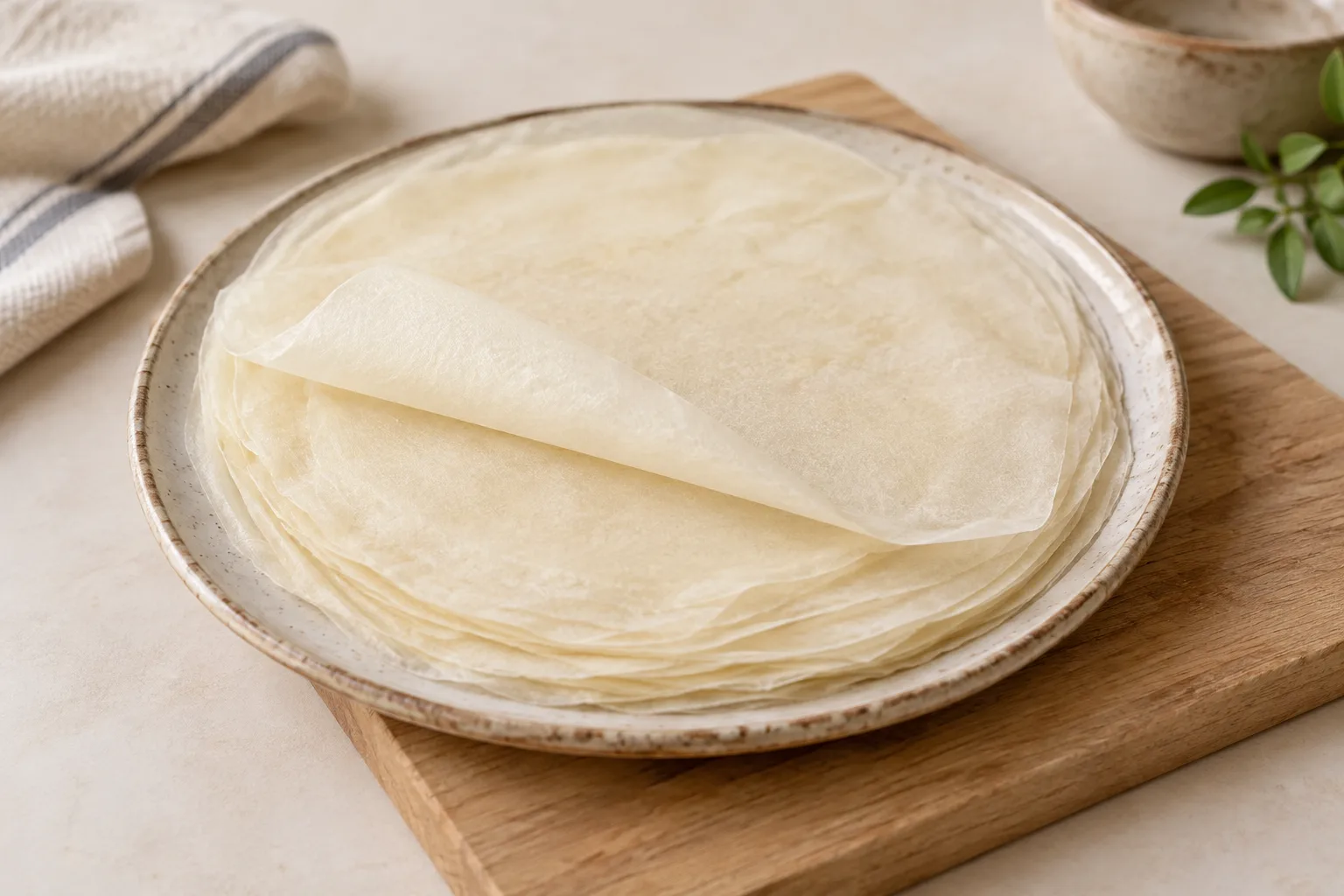
A brik pastry sheet is a thin wheat-based dough sheet sold ready to fill, fold or cook. Available descriptions commonly identify wheat semolina, water and salt as its base, though formulations vary; some versions include oil, and some industrial products may contain soy lecithin or citric acid. Brik is similar to filo but not identical: it is often described as somewhat thicker, more hydrated and more robust. Depending on the product, sheets may be round, square or rectangular.
When to use it
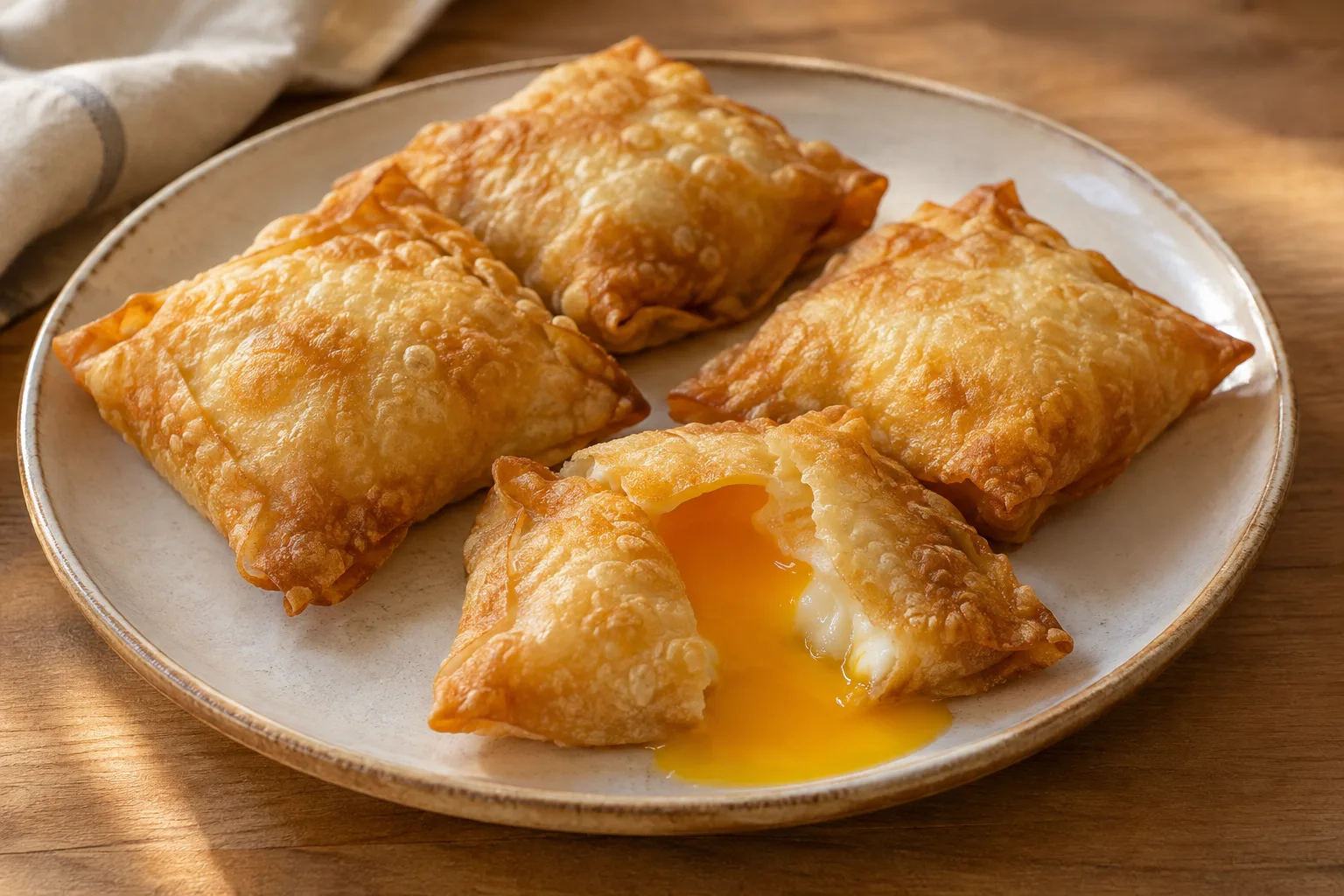
Choose brik when you want a thin wrapper that can turn crisp around a filling, or when making parcels, rolls, triangles, tartlet cups or a light base for a savory or sweet dish. It suits both sweet and savory preparations. Its comparatively robust character can be useful when a recipe calls for a single sheet, although the result depends on the product and preparation.
How to use it
Prepare the filling before opening the sheets, then work with one sheet at a time and keep the rest covered to limit exposure to air. Add a moderate amount of filling, fold or roll the sheet, and seal or shape it as needed. Cook the parcels by baking, frying or using a pan with little or no fat. Several sheets can be layered for a base or crisp structure; lightly brushing them with oil or melted butter can help them hold together. Avoid an excessively wet filling, which can soften the pastry.
Flavour and texture
The sheet has a fairly neutral taste, so it works with a wide range of fillings and seasonings. Once cooked, it can be thin and crisp; comparative descriptions characterize it as more rustic and robust than filo. Thickness, hydration and the final texture vary by brand and recipe. Dried or damaged sheets may crack while being handled.
How to choose it
Look for flexible sheets without visible tears and with intact packaging. Brik is commonly sold in the refrigerated section, though packaging and format vary by maker and shop. Read the ingredient list and allergen information: wheat is commonly the base, and some industrial products may include soy lecithin or other additives. Check the sheet shape and size against your recipe.
Storage
Follow the package directions for the product you buy and refrigerate it if instructed. Keep the package tightly closed to limit air exposure, which can dry the sheets and make them prone to breaking. Remove only the sheets you need and cover the rest again promptly. Available sources mention freezing these pastry sheets as an option but do not establish one universal storage period or method for every product; follow the label.
Substitutions
Filo is the closest substitute: the two can be interchanged in many preparations, but filo is generally thinner and more delicate, while brik may be more robust when a recipe uses a single sheet. Homemade brik sheets are another option, though they have to be made individually. Adjust the folding and number of layers to the pastry you are using.
Common mistakes
Leaving the package open while preparing the filling can dry the sheets and make them break. A very wet filling can soften the pastry. Another pitfall is assuming filo and brik behave identically: thickness and strength vary. Do not assume every product has the same ingredients; check its label.
Safety and allergens
Check the specific package for ingredients, allergens and storage instructions. Formulations vary, and some industrial versions contain soy lecithin.
Culinary uses
- Envolver rellenos salados o dulces
- Crear capas y bases crujientes para aperitivos, tartas y cestitas
Recommended techniques
- Hornear
- Freír
- Cocinar en sartén con poca grasa o sin ella
- Doblar, enrollar o formar paquetes y cestitas
Pairs well with
- Verduras
- Carne
- Pescado y marisco
- Frutas y frutos secos
Frequently asked questions
Are brik and filo pastry the same?
No. They are similar and can replace one another in many recipes, but brik is often somewhat thicker and more robust, while filo is usually thinner and more delicate.
How can I stop the sheets from breaking as I work?
Prepare the filling first, remove only the sheets you need, and keep the remaining sheets covered with the package closed so they do not dry out.
What shapes can I make with a brik sheet?
You can wrap fillings into parcels, rolls or triangles, shape cups, or use the sheets as a base or in crisp layers.
Sources and review
Automatically researched, cross-checked and validated content. Sources consulted:
- ¿Por qué la muerte es origen de miedos y tabúes? doi.org
- Su Propio Cultivo | Servicio de Extensión de OSU extension.oregonstate.edu
- Azahares 2024 uafs.edu
- Pasta brick | Qué es, tipos. origen y usos culinarios codinafoods.com
- Pasta brick | Gastronomía & Cía gastronomiaycia.com
- ¿Qué puedo hacer con la masa filo y la pasta brick? | El Comidista | Gastronomía | EL PAÍS elpais.com
- Pasta Filo o philo, ideal para hacer dellciosas recetas eladerezo.com
- - YouTube youtube.com
- Cocinar y Congelar Artículos de la Despensa de Alimentos extension.psu.edu
- Identificación de Hierbas Problemáticas | Integrated Pest Management | College of Agriculture, Health and Natural Resources | University of Connecticut ipm.cahnr.uconn.edu
- Home | San Diego Miramar College sdmiramar.edu
- El cuaderno de recetas elcuadernoderecetas.blogspot.com