- Category
- Vegetables
- State
- Fresh
- Usual unit
- unit
What it is
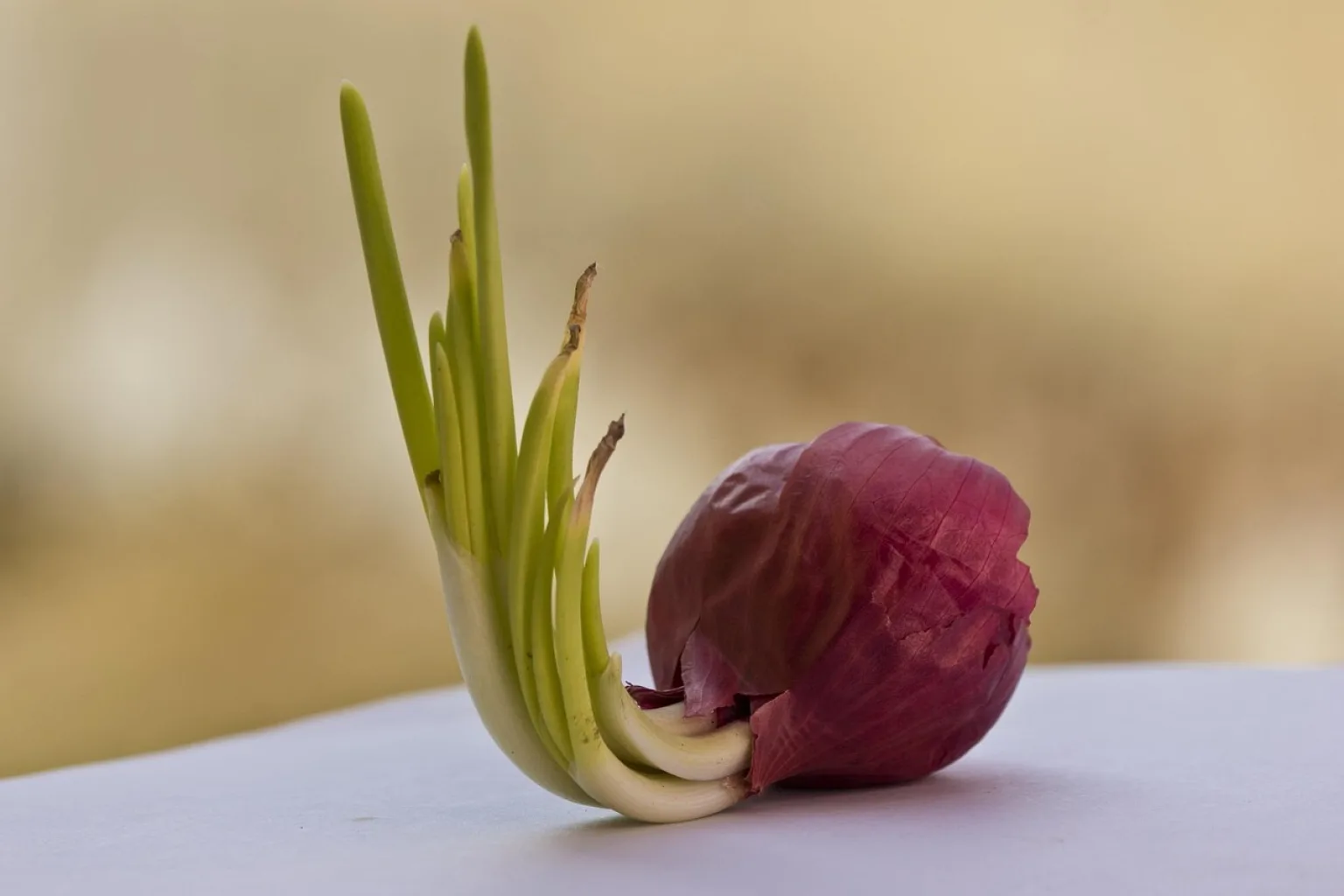
Bulb onion, also called common or table onion, is the edible bulb of the onion plant. It consists of overlapping, fleshy layers. White, yellow and red or purple onions are commonly described in the supplied culinary evidence, with differences in sharpness, sweetness, aroma and texture; these qualities can vary from one onion to another. Bulb onion should not automatically be treated as the same ingredient as scallion or shallot, which are also used in cooking but have distinct forms and profiles. In the kitchen, onion can be a main ingredient or a flavor base. It can be served raw or added to hot dishes, and its flavor and texture change with the variety and cooking method. Choose it for the result you want rather than assuming every onion behaves identically.
When to use it
Use raw onion when you want crunch and a noticeable savory bite in salads, tacos, sandwiches or other cold dishes. For a flavor base in soups, rice dishes, sauces and stews, chop or slice it and cook it with the other ingredients. Onion also pairs with meat, fish and seafood, and works in vegetable and egg dishes. Red or purple onion is often recommended for raw preparations; yellow onion is described as versatile for cooked recipes, while white onion may offer a milder profile and crisp texture. These are culinary suggestions, not strict rules. Choose according to the flavor and texture you prefer and the role the onion plays in the dish.
How to use it
Remove the outer skin and cut the onion with a clean knife into dice, rings or thin strips to suit the recipe. For a salad, taco or sandwich, serve it raw and choose a cut that works with the other ingredients. For sofrito-style bases, soups, rice dishes and stews, chop or slice it and cook it with the rest of the preparation. You can also fry or roast onion as a side, or pickle it to serve with snacks and other dishes. The culinary evidence describes these uses but does not provide universal cooking times or temperatures; follow the specific recipe and cook to the texture you want. If you change varieties, expect possible differences in sweetness, sharpness and texture.
Flavour and texture
Onion can taste mild or sweet, or more pronounced and sharp, depending on the type and individual bulb. Raw onion can add a crisp bite and a more noticeable flavor; white onion is described as crisp and mild, while red or purple onion is often suggested for fresh dishes. Yellow onion is considered versatile and may taste sweet in some preparations. Cooking softens its texture and changes its flavor, so the same onion can taste quite different in a salad and a stew.
How to choose it
Choose a variety to suit the dish: red or purple for fresh, colorful preparations; yellow for versatile use; and white when you want a milder profile and a crisp texture. Flavor descriptions are general guidance, since varieties and individual onions can differ. Buy the type specified by a recipe when its flavor or appearance matters; otherwise, choose according to preference. The supplied evidence does not establish verified criteria for firmness, skin condition or blemishes, so avoid treating unsupported selection advice as a fact.
Storage
The supplied evidence does not specify storage conditions, shelf life or preservation methods for bulb onions. For that reason, this profile cannot give a specific temperature, container or time limit without adding information from outside the evidence. Follow package or retailer directions when available and check the onion before use. Once cut, follow storage guidance provided with the product or recipe; do not assume that advice for a whole onion also applies to a cut one.
Substitutions
Shallot can be an option when a milder, aromatic flavor is desired, but it is not identical to bulb onion and will change the character of a dish. You can also choose another bulb-onion variety: red or purple for fresh dishes, yellow for versatile use, or white for a milder, crisp result. Scallion offers a different profile and may suit some fresh preparations. None of these alternatives guarantees the same flavor, texture or amount as the original ingredient.
Common mistakes
Do not assume every onion has the same sweetness, sharpness or texture, or that color alone determines the result. Variety and preparation both matter. Another common mistake is expecting a substitute to be identical: shallot, scallion and bulb onion are distinct choices. Finally, do not assume there are universal cooking times or temperatures for onion; follow the recipe and the texture you want.
Safety and allergens
The supplied evidence identifies no onion-specific safety warning. Handle bulb onion as fresh produce and follow applicable food-hygiene and storage instructions. No storage duration or special preservation method is given here because the sources do not establish one.
Culinary uses
- Base aromática para sofritos, sopas y guisos
- Ingrediente crujiente o de sabor vivo en preparaciones frescas
- Acompañamiento asado, salteado o encurtido
Recommended techniques
- Cortar en rodajas, plumas o dados
- Consumir cruda en ensaladas, sándwiches o tacos
- Saltear, freír, asar o cocinar en guisos
- Encurtir para servir como acompañamiento
Pairs well with
- Carnes, pescados y mariscos
- Arroz, sopas y guisos
- Ensaladas, tacos y sándwiches
- Verduras y preparaciones con huevo
Frequently asked questions
Can bulb onion be eaten raw?
Yes. Raw onion is used in salads, tacos, sandwiches and other cold preparations. Red or purple onion is often suggested for these uses, but choose the flavor you prefer.
How do white, yellow and red onions differ in cooking?
The supplied descriptions present white onion as milder and crisp, red or purple onion as suited to fresh preparations, and yellow onion as versatile. These are guides; individual onions can vary.
What can I substitute for bulb onion?
You can choose another bulb-onion variety or consider shallot or scallion according to the recipe. A substitution may change the dish's sweetness, sharpness, texture and aroma.
Estimated nutrition
- Fat
- 0.19 g
- Saturates
- 0.03 g
- Carbohydrate
- 7.34 g
- Sugars
- 2.33 g
- Fibre
- 2.6 g
- Protein
- 1.83 g
- Salt
- 0.04 g
Sources and review
Automatically researched, cross-checked and validated content. Sources consulted:
- Client Challenge doi.org
- Tipos de cebolla y su utilización en la cocina | Blog Bernad Refrigeración josebernad.com
- educational content to support healthful lifestyle practices sjsu.edu
- Dictionary of Health Related Terms: English – Spanish hia.berkeley.edu
- Supervivencia Básica: Alimentos | Servicio de Extensión de OSU extension.oregonstate.edu
- Glimpses of an 18th century Colonial Kitchen in Manila archium.ateneo.edu
- Nutrition Education Program extension.purdue.edu
- La cebolla, la base de la gastronomía española - Enrique Romay eromay.com
- Publicaciones de Seguridad alimentaria aesan.gob.es
- De Compras para la salud: Comidas para una persona ask.ifas.ufl.edu
- La cebolla, ingrediente básico en la cocina | Recetas Nestlé recetasnestle.com.co
- La cebolla cabezona: origen, cultivo y usos | Pancha sazonadorespancha.com
- Descubriendo los secretos de la cebolla friolisa.es