- Category
- Bread and dough
- State
- Fresh
- Usual unit
- unit
What it is
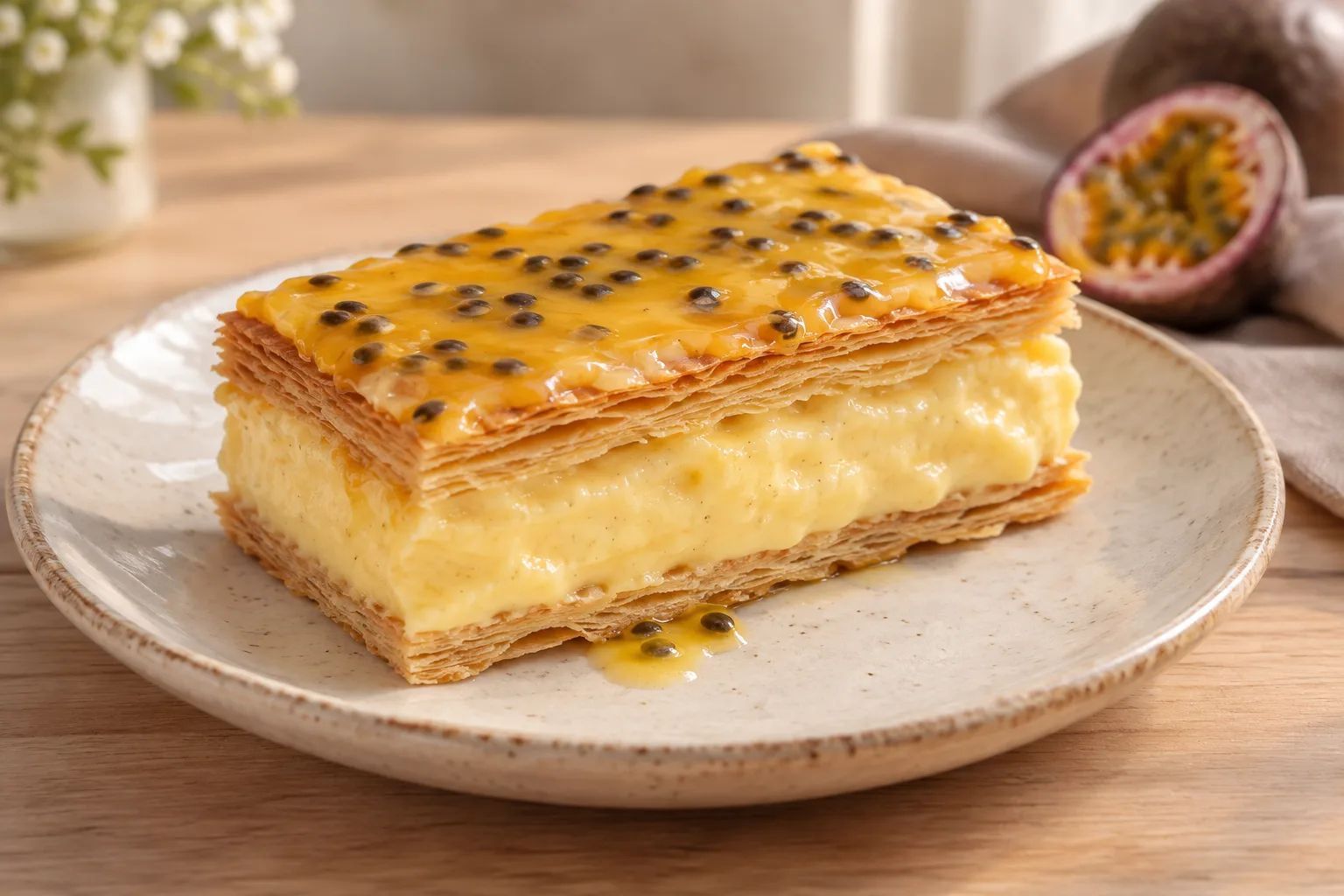
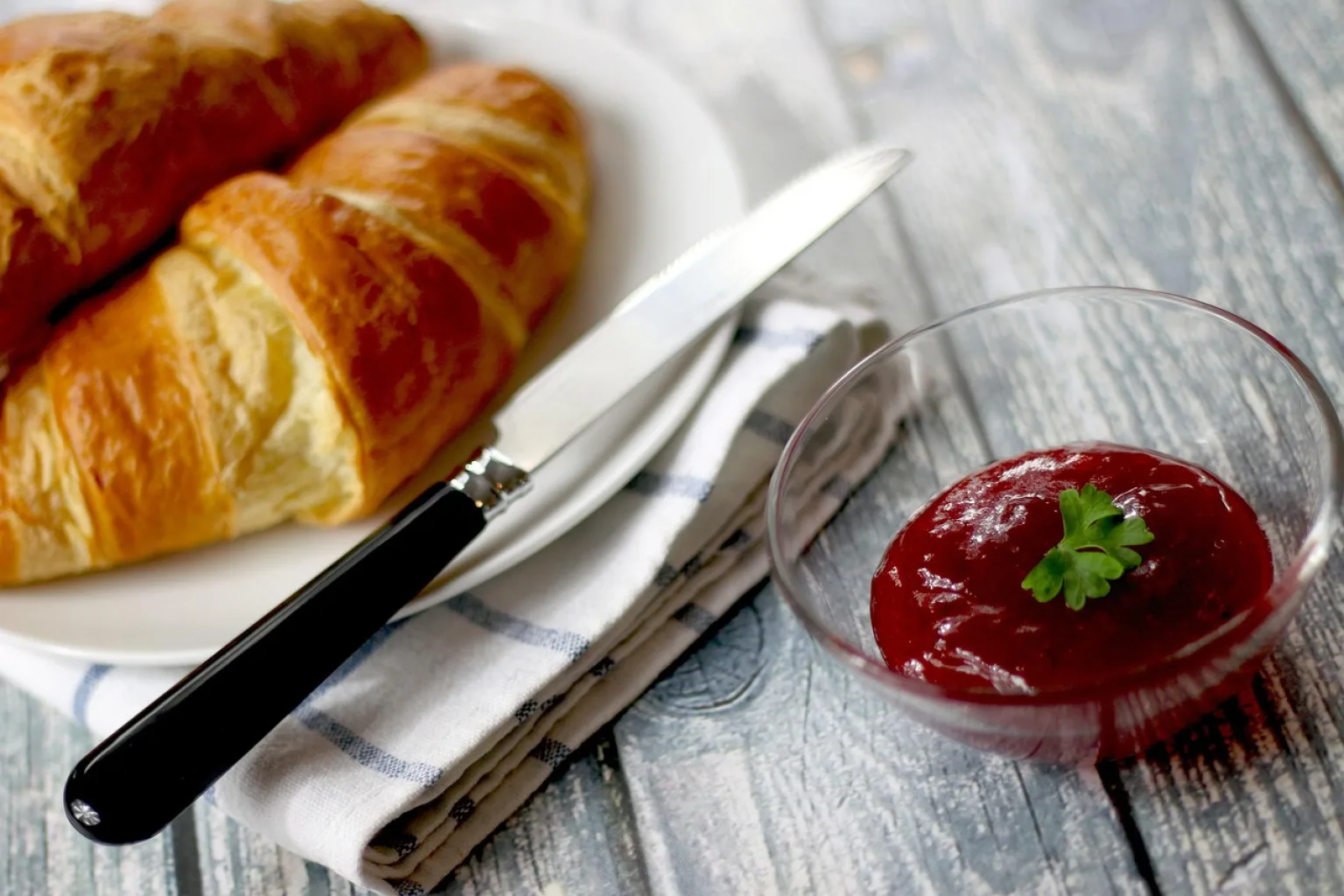
Butter puff pastry is a laminated dough in which butter is layered between sheets of dough. During baking, moisture in the dough turns to steam and the layers separate, creating a light, crisp structure. Puff pastry is used for pies, tarts, filled pastries and other dishes. There are several methods: in common puff pastry, the dough encloses the fat; in inverted puff pastry, the fat encloses the dough. Quick and half-puff versions are also described. As a result, volume and texture can vary with the method, and not every product called puff pastry has the same composition. Check the product label when you specifically want a butter-based version.
When to use it
Choose it when a recipe calls for a crisp, layered base or covering, in either sweet or savory cooking. It can support other ingredients as the base of a tart, or enclose them in filled pastries. It can also be baked as a feature in its own right, such as sugar-topped pieces or multi-layered desserts. Choose the form that fits the dish: an open base leaves ingredients visible, while an enclosing pastry hides the filling inside. Products may be common, inverted, quick or half-puff pastry, and those variations do not necessarily produce the same result.
How to use it
Check the package instructions first, since the supplied evidence does not establish one procedure for every product. For pastry made from scratch, the sources describe rolling and folding repeatedly to create alternating layers of dough and fat. In a recipe, roll it out as a base and add other ingredients on top, or wrap it around a filling before baking. The sources also describe its use in tarts, pies, filled pastries, palmiers and savory dishes. Baking develops thin layers and a crisp texture, but quick or half-puff versions may differ from common puff pastry. Do not assume that every type needs the same number of folds or will rise to the same volume.
Flavour and texture
Butter gives this named version its defining fat, though the supplied sources do not describe specific flavor notes. Puff pastry is known for thin, overlapping layers that separate during baking and become crisp. The result varies by method: inverted puff pastry is described as less voluminous and more melting in the mouth, while quick and half-puff versions also differ from common puff pastry.
How to choose it
Look for a label that specifies butter puff pastry if you want that version, and check the package to identify the pastry type and its usage instructions. The sources describe common, inverted, quick and half-puff pastry, which produce different results; the general name alone does not guarantee identical ingredients or texture. If you need pastry for a particular recipe, compare the format and directions stated on the package.
Storage
The supplied evidence does not establish storage conditions, shelf life or preservation methods for butter puff pastry. Follow the package directions and any specific manufacturer instructions after opening. Do not infer a storage period from the pastry type: the sources discuss preparation and culinary uses, but give no storage guidance for commercial products.
Substitutions
If butter puff pastry is unavailable, the sources describe puff pastry made with other fats, including margarine or lard, as well as inverted, quick and half-puff versions. These remain puff-pastry options, but they are not guaranteed to have the same flavor, volume or texture. Check the ingredient information on the package and choose according to the result your recipe needs.
Common mistakes
Do not assume all puff pastry is identical: the fat and lamination method can change its composition and outcome. Another common misstep is expecting quick or half-puff pastry to behave exactly like common puff pastry. Folding and alternating dough with fat create the layered structure, so avoid applying directions that do not match the product label.
Safety and allergens
The supplied evidence contains no ingredient-specific official safety warning. Follow the handling and cooking directions on the package.
Culinary uses
- Base para tartas y pasteles
- Envoltura para rellenos dulces o salados
- Masa para piezas hojaldradas horneadas
Recommended techniques
- Estirar y plegar
- Hornear para obtener capas separadas
- Rellenar o usar como base
Pairs well with
- Azúcar
- Chocolate
- Manzana
- Rellenos salados
Frequently asked questions
What creates the layers in puff pastry?
Sheets of dough and fat separate during baking as moisture produces steam, forming the pastry’s characteristic layered structure.
Can I use puff pastry for savory food?
Yes. The sources describe puff pastry for both sweet and savory preparations, either as a base or as a wrapper for ingredients.
Is quick puff pastry the same as common puff pastry?
Not necessarily. The sources describe it as a simpler variation with a different result from genuine or common puff pastry.
Estimated nutrition
- Fat
- 26.7 g
- Saturates
- 15 g
- Carbohydrate
- 36.7 g
- Sugars
- 36.7 g
- Fibre
- 0 g
- Protein
- 3.33 g
- Salt
- 1.08 g
Sources and review
Automatically researched, cross-checked and validated content. Sources consulted:
- ¿Por qué la muerte es origen de miedos y tabúes? doi.org
- The Essential Glossary of Cooking Terms for the Culinary Arts - Escoffier escoffier.edu
- La masa de hojaldre y su reinado - Escuela de Turismo escuelaturismopirineos.com
- Tipos de hojaldre, tipos y sus principales características estudiahosteleria.com
- Opciones optativas | Culinary Institute Lenotre culinaryinstitute.edu
- Spanish Food Report Card - USC Chan chan.usc.edu
- Hojaldre - Wikipedia, la enciclopedia libre es.wikipedia.org