- Category
- Vegetables
- State
- Canned
- Usual unit
- Variable
What it is
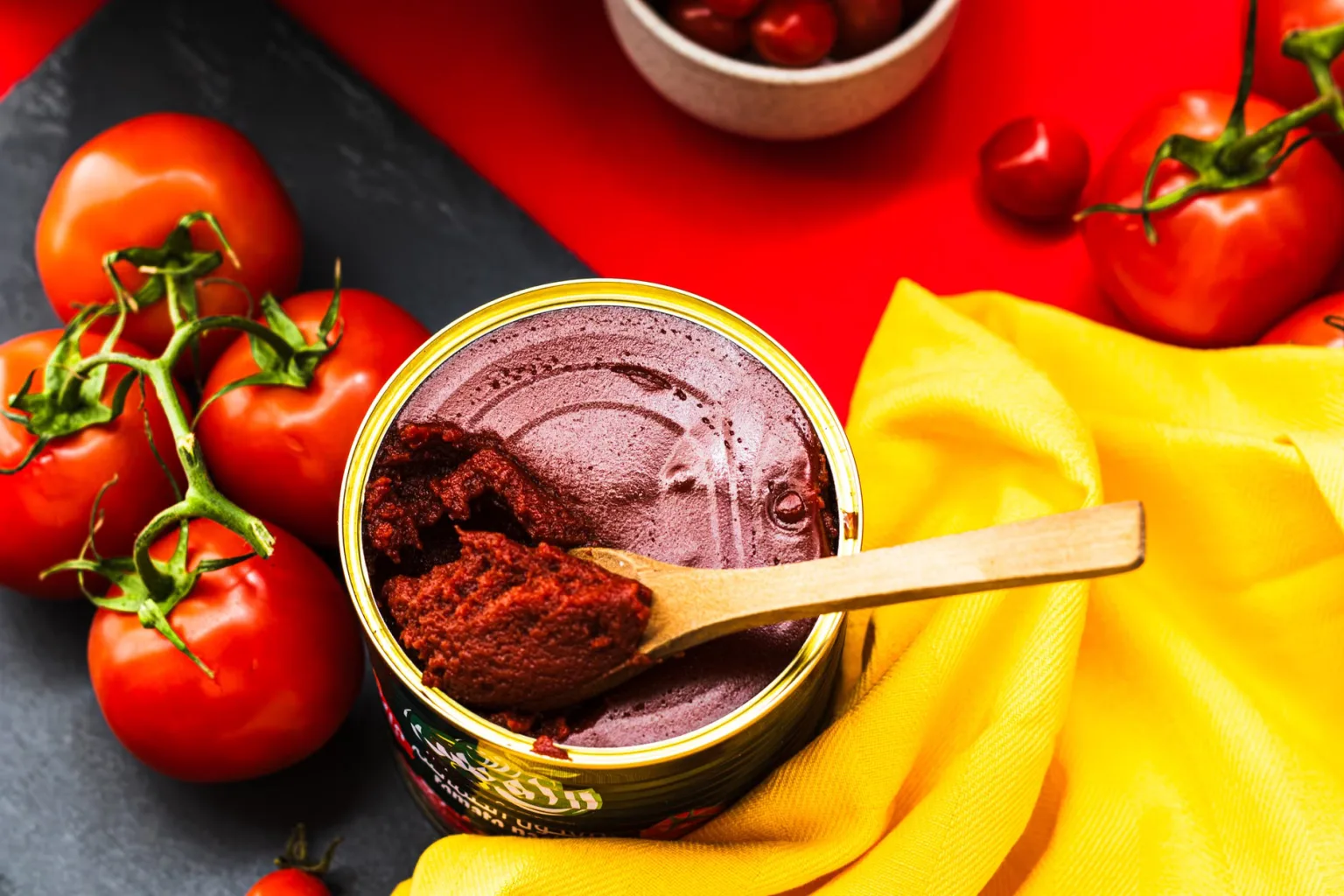
Canned tomatoes are tomatoes packaged for use beyond their fresh form. Common culinary formats include whole peeled tomatoes, chopped tomatoes, and passata, a smoother tomato preparation. These formats are not identical in the kitchen: whole tomatoes let you control how much you break them up, while chopped tomatoes and passata need less preparation to create a uniform base. Some products may contain ingredients in addition to tomatoes, so check the label rather than assuming every can or package contains tomato alone. This profile focuses on practical cooking uses, especially sauces and other cooked preparations.
When to use it
Use canned tomatoes when you want a ready-to-cook tomato ingredient for a sauce or another cooked dish, or when you want to choose the texture before you begin. Whole peeled tomatoes are useful when you want to leave some pieces or break them up as they cook; chopped tomatoes start in smaller pieces, and passata gives a smoother base. Cooking can evaporate some of the liquid and make a sauce more concentrated. The right choice still depends on the recipe: follow any specific format or proportion it calls for and check the product label.
How to use it
Check the label first so you know the format and whether the product includes anything besides tomatoes. For a textured sauce, add whole peeled tomatoes to the pan and break them up with a spoon as they heat, or crush them beforehand for smaller pieces. Chopped tomatoes can be added as they are, while passata works well when you want a smoother starting point. Cook the mixture gradually and allow some liquid to evaporate if you want a more concentrated sauce. Garlic or onion can be used as part of the base, and pasta is one suitable pairing. Adjust the texture to your recipe rather than assuming every format needs the same treatment.
Flavour and texture
Flavor and texture depend on the format and on the ingredients listed on the label. Whole tomatoes retain pieces that can remain distinct or be broken up during cooking; chopped tomatoes are already in pieces, while passata is more uniform. Cooking off liquid makes the preparation more concentrated and changes its consistency. Choose the format according to whether you want a chunky sauce, recognizable pieces, or a smooth base.
How to choose it
Choose the format that suits the result you want: whole tomatoes give you control over how much to break them up, chopped tomatoes save that step, and passata provides a smooth base. Read the product name and ingredient list; do not assume all products are identical or contain only tomatoes. If a recipe specifies a particular format, check that the package matches. Use the label as the reference for any product-specific storage and use instructions.
Storage
Check the product label for storage and use instructions rather than assuming every package has the same requirements. Packaged food information may give specific directions where needed. If you plan to store the contents after opening, look for the applicable instruction on the label or from the manufacturer and follow it instead of relying on a general time limit that may not suit that product.
Substitutions
Whole peeled tomatoes can be replaced with chopped tomatoes if you are comfortable with a different starting texture and adjust how much you break them up. Passata can replace chopped tomatoes when you want a smoother preparation. These are swaps among canned tomato formats, not a guarantee that every product is equivalent; check the label and adapt the texture to your recipe.
Common mistakes
A common mistake is treating whole tomatoes, chopped tomatoes, and passata as interchangeable without accounting for their different starting textures and preparation needs. It is also unwise to assume that a product contains only tomatoes or that every package has the same storage instructions. Check the ingredient list and the product directions before cooking or storing it.
Safety and allergens
Read the label and follow the manufacturer's directions for use and storage; instructions can differ by product and presentation.
Culinary uses
- Base para salsas y guisos
- Ingrediente de despensa para preparaciones cocinadas
Recommended techniques
- Cocinar a fuego suave para concentrar el sabor
- Deshacer los tomates enteros durante la cocción o triturarlos antes de cocinar
Pairs well with
- Ajo
- Cebolla
- Pasta
Frequently asked questions
Which format works for a chunky sauce?
Whole peeled tomatoes let you control how much you break them up. Chopped tomatoes also provide pieces, while passata starts out more uniform.
Can I replace chopped tomatoes with passata?
Yes, if a smoother sauce suits your recipe. The starting texture will differ, so check the product and its ingredients against the recipe.
How should I store canned tomatoes?
Follow the storage and use directions on the package. Do not assume one instruction applies to every product.
Estimated nutrition
- Fat
- 0.25 g
- Saturates
- 0.03 g
- Carbohydrate
- 3.47 g
- Sugars
- 2.55 g
- Fibre
- 1.9 g
- Protein
- 0.79 g
- Salt
- 0.29 g
Sources and review
Automatically researched, cross-checked and validated content. Sources consulted:
- En el etiquetado alimentario hay algunas menciones que son obligatorias eletiquetadocuentamucho.aesan.gob.es
- Canning Tomatoes and Tomato Products food.unl.edu
- Romanica Olomucensia : «¿Qué pinga es esto?». Usos disfemísticos en el español de Cuba doi.org
- Los 6 mejores tipos de tomate y cómo usarlos en cocina mercadosantamariadelacabeza.es
- Agencia Española de Seguridad Alimentaria y Nutrición aesan.gob.es
- En Español | UC Master Food Preserver ucanr.edu
- - YouTube youtube.com
- Vamos a Conservar Alimentos: Tomates extension.psu.edu
- Salsa de Tomate y Chile Verde (Spanish) - National Center for Home Food Preservation nchfp.uga.edu
- Conservación de Tomates - Illinois Extension extension.illinois.edu
- Elaboración de conservas de tomates y productos de tomates | University of Idaho uidaho.edu
- Canning tomatoes and tomato products | OSU Extension Service extension.oregonstate.edu
- Sabor de Espańa: Spanish Date Night | In-Person, Hybrid, and Online Programs | Continuing Education | Programs and Courses | Hudson County Community College hccc.edu
- Elaboración de conservas de tomates y productos de tomates | WSU Extension Publications | Washington State University pubs.extension.wsu.edu
- Conservas caseras de tomates | Extensión UMN es.extension.umn.edu
- El tomate en conserva: del tomate pelado al concentrado de tomate - Panepanna panepanna.es