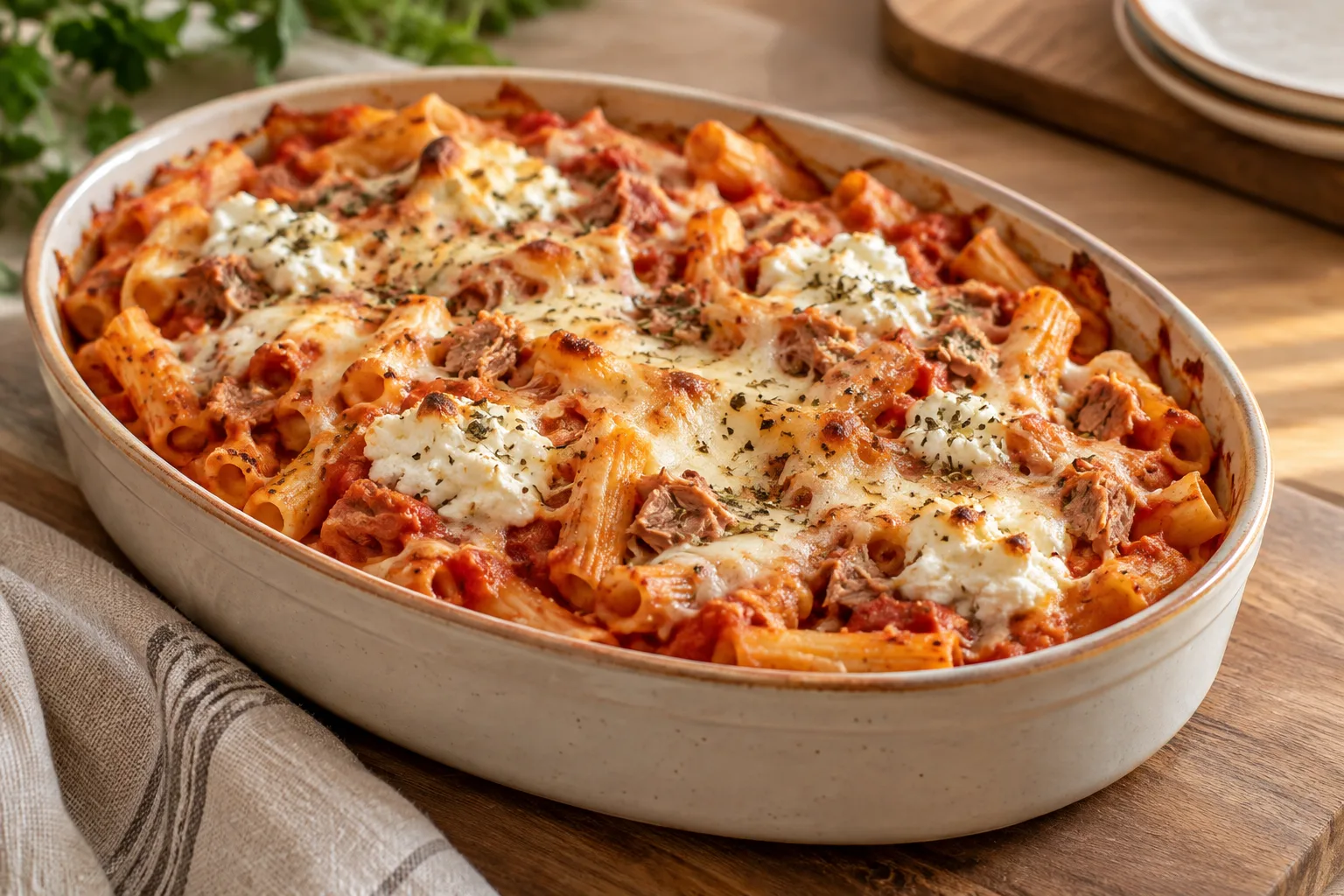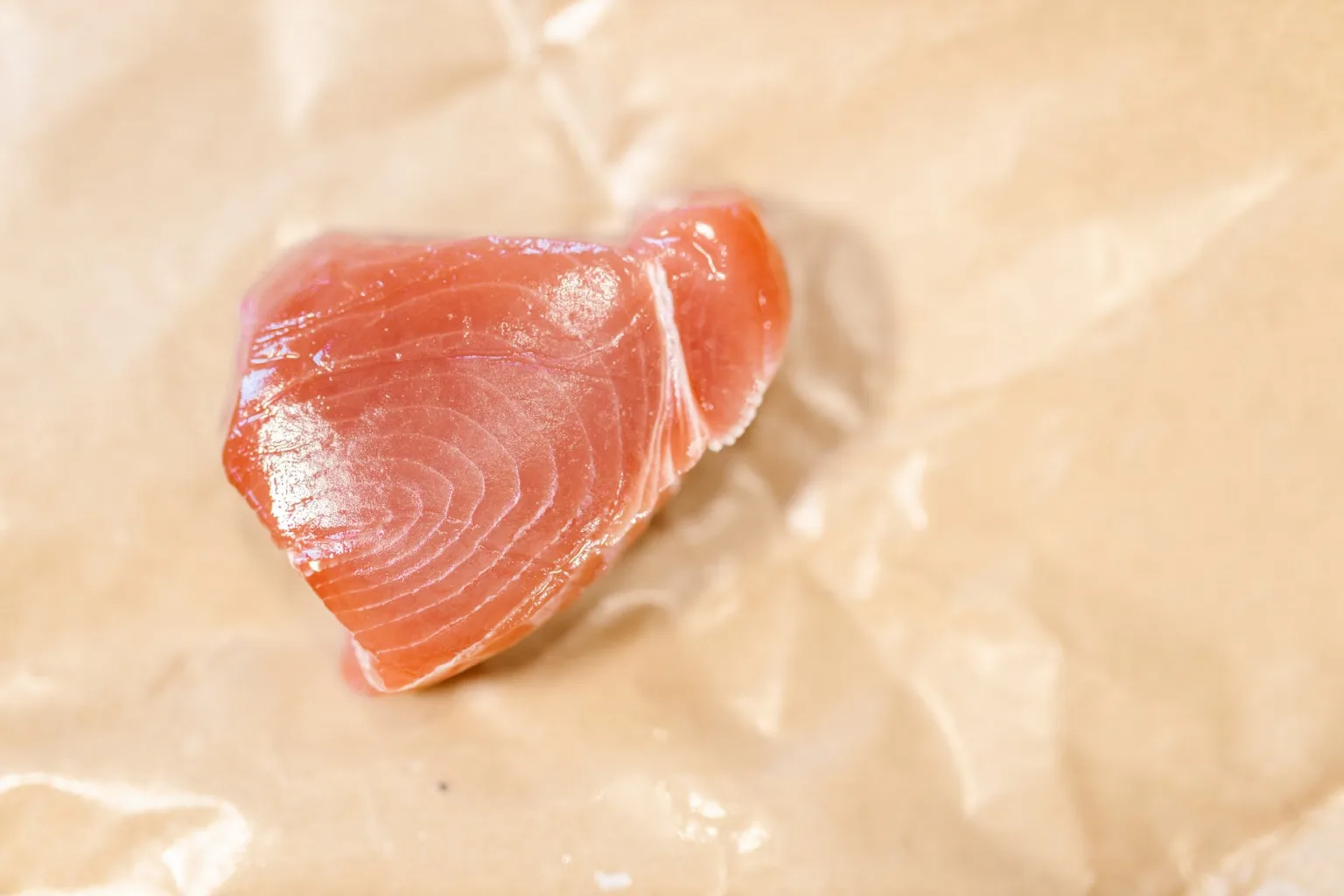
- Category
- Fish and seafood
- State
- Canned
- Usual unit
- g
What it is
Canned tuna is tuna prepared and sold in a sealed container for preservation. It does not come in just one form: it may be sold as solid pieces, chunks or flakes, and the packing liquid may be water or oil. The tuna species and the appearance of the flesh can also vary, so check the product name and ingredient list rather than assuming all cans are alike. It is ready to use in cold preparations such as salads and sandwiches, and it can also be added to mixed dishes. The amount of liquid and the size of the pieces affect how the tuna blends into a dish and the texture of the finished mixture.
When to use it
Use canned tuna when you want to add prepared fish to a salad, sandwich or bean dish without cooking a separate piece of fish for that meal. Larger pieces can remain distinct, while flakes blend readily into a more even mixture. Choose water-packed or oil-packed tuna according to the result you want and the recipe instructions. For a salad, combine it with celery and a creamy dressing, or serve it with beans and other accompaniments. Check the label to find out which tuna product and form you are buying.
How to use it
Read the product name and ingredient list to identify the form and packing liquid. If a recipe calls for drained tuna, open the container and drain the liquid before using it. Break the fish apart with a fork or separate it into the size of pieces you need; mix gently if you want to keep some pieces visible. For a simple salad, combine it with celery, mayonnaise and yogurt, fold in grapes gently, and serve over lettuce leaves. You can also combine it with beans, onion and pickled vegetables as part of a composed salad. Follow the storage and use instructions on the package.
Flavour and texture
Flavor and texture are not identical across all canned tuna: they can vary with the species, cut and form of the product. Larger pieces remain more distinct in a dish, while flakes distribute easily through a mixture. The packing liquid also affects the character of the finished dish: water-packed tuna does not contribute the same liquid as oil-packed tuna. Check the label and, when flavor or texture matters to your recipe, choose the form that best suits it.
How to choose it
Read the product name and ingredient list to check the tuna species and form offered. Decide whether solid pieces, chunks or flakes suit your dish: larger forms stay more recognizable, while flakes blend more easily. Check whether the tuna is packed in water or oil, since the liquid changes the mixture and can affect the recipe’s result. Consult the label for storage, durability and use instructions.
Storage
Follow the storage and durability instructions printed on the package, as they can depend on the particular product. The label may also give special storage or use conditions. Do not apply one universal storage time to every canned tuna product, or assume that instructions remain the same after opening. If you are unsure how to store a specific product, consult the manufacturer’s information on its label.
Substitutions
You can swap water-packed tuna for oil-packed tuna, or the reverse, but the packing liquid may change the result; drain it if the recipe calls for drained fish. You can also choose solid pieces, chunks or flakes according to the texture you want. These options affect how the tuna blends in, so they may not produce identical results; adjust the mixture and dressing to the form available.
Common mistakes
Do not assume that every can contains the same tuna species, cut or packing liquid: check the label. Another common mistake is adding the liquid when a recipe calls for drained tuna, or mixing too vigorously when you want visible pieces. When changing forms, consider how the difference may affect the texture and balance of the dish.
Safety and allergens
Check the label for ingredients, declared allergens, durability and storage or use instructions. Tuna is fish; anyone with a fish allergy should carefully check the package information and avoid eating the product if they cannot confirm it is suitable for them.
Culinary uses
- Ready-to-use salad and sandwich ingredient
- Savory addition to bean dishes and composed salads
Recommended techniques
- Drain before mixing when the recipe calls for drained tuna
- Flake or break into pieces and fold gently into other ingredients
Pairs well with
- Celery, mayonnaise, yogurt, grapes and lettuce
- Cannellini beans, onion, giardiniera and olive oil
Frequently asked questions
Is canned tuna available in water and oil?
Yes. The packing liquid may be water or oil; check the label to identify it and drain the tuna if your recipe calls for drained fish.
What is the difference between chunks and flakes?
Chunks retain more recognizable pieces, while flakes mix into other ingredients more readily. Choose the form that suits the texture you want.
How should I store a particular can of tuna?
Follow the storage and durability instructions on that product’s label. Do not assume every product has the same directions, especially after opening.
Estimated nutrition
- Fat
- 8.08 g
- Saturates
- 1.65 g
- Carbohydrate
- 0 g
- Sugars
- 0 g
- Fibre
- 0 g
- Protein
- 26.5 g
- Salt
- 0.12 g
Sources and review
Automatically researched, cross-checked and validated content. Sources consulted:
- En el etiquetado alimentario hay algunas menciones que son obligatorias eletiquetadocuentamucho.aesan.gob.es
- Vamos a Conservar Alimentos: Ingredientes Utilizados en las Conservas Preparadas en Casa extension.psu.edu
- Romanica Olomucensia : «¿Qué pinga es esto?». Usos disfemísticos en el español de Cuba doi.org
- el mercado de los túnidos en españa mapa.gob.es
- (DOC) elaboracion de conserva de atun.docx academia.edu
- Cocinar alimentos de forma segura en casa | Extensión de la UMN es.extension.umn.edu
- Tuna - National Center for Home Food Preservation nchfp.uga.edu
- Brebajes de Cactus: Cómo Preparar y Utilizar las Tunas y Pencas de Nopal | New Mexico State University - BE BOLD. Shape the Future. pubs.nmsu.edu
- Albacore Tuna Conserva Salad | Oregon State University seagrant.oregonstate.edu
- Ensalada de atún | University of Maryland Extension extension.umd.edu
- Atún en conserva - Wikipedia, la enciclopedia libre es.wikipedia.org
- Atún en Conserva - enconserva.com enconserva.com
- Tipos de atún en conserva - Dunia Food atunensobre.es
- Tipos de atún en conserva: Guía definitiva - Levapack levapack.com
- El atún y su consumo.- Grupo Gastronómico Gaditano grupogastronomicogaditano.com
- Atún en conserva: detalles que debes conocer | Consumer consumer.es
- Diferencias de atún en conserva: cómo elegir el mejor catalalata.com