- Category
- Nuts and seeds
- State
- Fresh
- Usual unit
- g
What it is
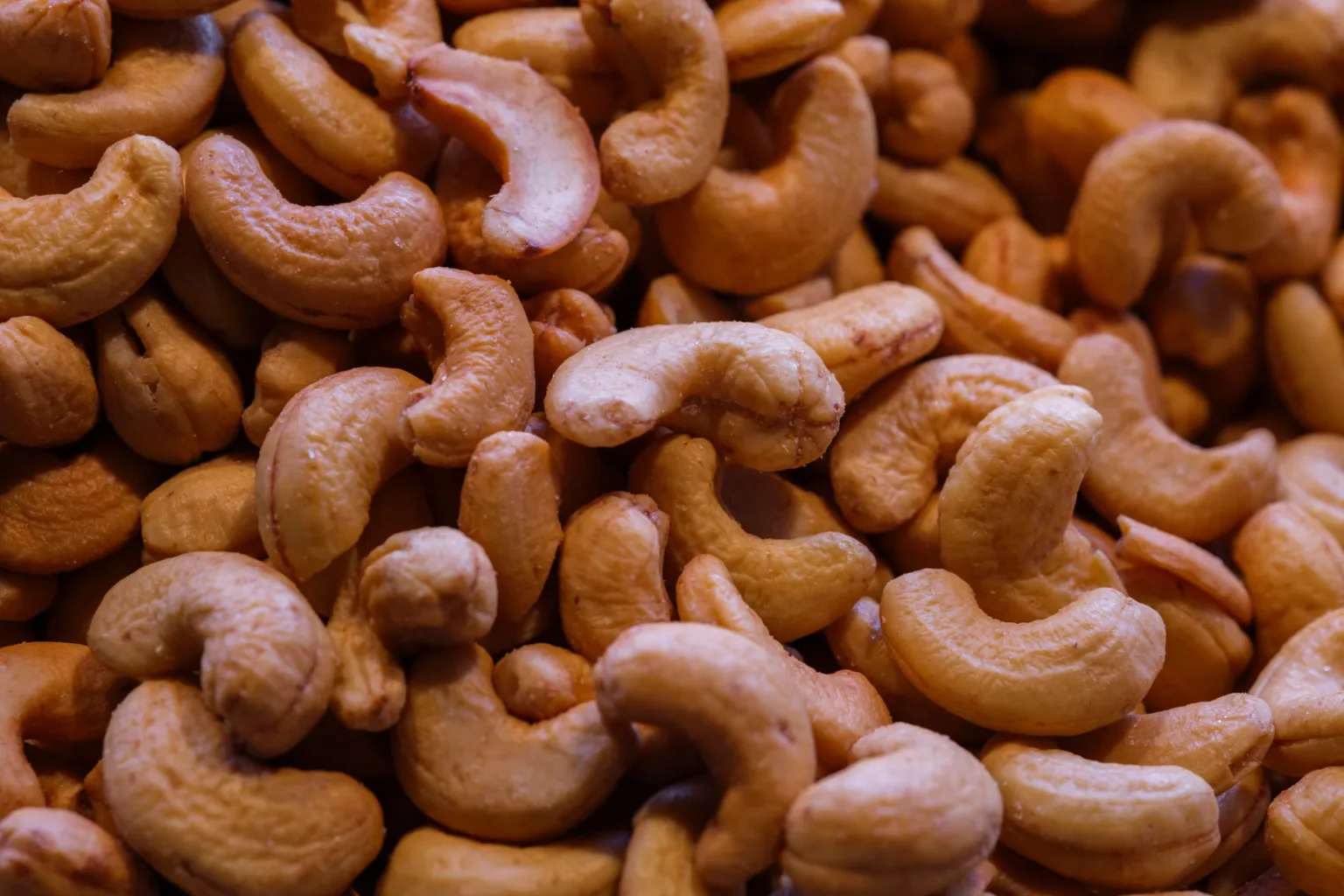
Cashews are the edible seeds of the cashew tree. They develop inside a shell attached to the end of a fleshy structure commonly called the cashew apple. In cooking, they are usually sold shelled and can be used whole, chopped or blended. Although they are commonly called nuts, describing them as seeds is more precise. Their texture makes them useful for creamy preparations when soaked and blended, while whole or chopped pieces can provide a crisp contrast in a dish.
When to use it
Use cashews when you want a mild, slightly sweet flavor and either a creamy or crunchy texture, depending on how they are prepared. Whole or chopped cashews work as a snack or a finishing touch; blended cashews can add body to sauces, dressings and spreads. They also appear in drinks, smoothies and baked goods. In savory recipes they can accompany creamy preparations or bring contrast; in sweet recipes they can be blended into mixtures or used as a topping. Choose the form according to whether you want noticeable pieces or a smooth, even result.
How to use it
For a cream or sauce, soak the cashews and blend them until they reach the texture you want; add liquid gradually to control thickness. A culinary source describes this approach for cashew cream and cashew drinks, but does not give a universal soaking time. For a smoother result, blend thoroughly and scrape down the sides of the container when needed. You can also chop the cashews and add them near the end to preserve distinct pieces, or serve them whole as a snack. One source describes roasting as part of the traditional process for making the seed edible; follow the instructions on the product you buy and in your recipe.
Flavour and texture
Cashews are commonly described as mild, buttery and slightly sweet. Whole cashews can offer a crisp bite; once soaked and blended, they become a creamy base for sauces, drinks and spreads. The size of the pieces and the degree of blending make a major difference to the texture. The specific result also depends on whether the product is whole, chopped or roasted, and whether other ingredients have been added.
How to choose it
Choose a format to suit the recipe: whole or chopped cashews for snacking and topping, or plain cashews for blending into creams and sauces. Check the package to see whether they are roasted, salted, seasoned or mixed with other ingredients, and inspect the product before use. The available evidence does not establish objective freshness criteria, quality grades or a buying season; do not infer these from color or size alone.
Storage
Store cashews according to the package directions and protect them from moisture and strong odors to help maintain their quality. Seal the package after each use. The available evidence does not provide a shelf life or official temperature conditions for this product, so a universal storage duration or method should not be assumed. Follow any specific directions on the package.
Substitutions
Cashew cream can provide a creamy function in spreads and dressings, while a cashew drink can work in some recipes that accept a plant-based drink. Neither is an exact substitute: they can change thickness, flavor and the final result. If a recipe calls for whole or chopped cashews for texture, a cream or drink will not provide the same effect.
Common mistakes
Do not blend every cashew if the recipe needs crunchy pieces; reserve some to add at the end. When making a cream, avoid adding all the liquid at once, since that makes the thickness harder to control. Check whether the product is already salted or seasoned before adjusting the seasoning, and do not assume every package has the same roast or format.
Safety and allergens
Check the product package for its ingredients and any product warnings. If you have questions about a food allergy or a particular product, seek qualified advice; this profile cannot assess individual risk.
Culinary uses
- Aperitivo o tentempié
- Ingrediente para cremas, salsas y untables
- Aporte de textura en preparaciones dulces y saladas
Recommended techniques
- Remojar y triturar para obtener preparaciones cremosas
- Moler o triturar para preparar cremas y bebidas
- Picar y añadir al final para conservar trozos
Pairs well with
- Batidos y preparaciones de repostería
- Salsas, aderezos y untables
- Frutas, tostadas y platos de pasta
Frequently asked questions
What are cashews?
They are the edible seeds of the cashew tree. In cooking, they are used whole, chopped or blended.
How do you make cashew cream?
One method described in the sources is to soak and blend cashews until creamy. Add liquid gradually to control the thickness.
Can cashews be used in both sweet and savory recipes?
Yes. Culinary sources describe them in drinks, smoothies and baked goods, as well as in savory creams, sauces and dressings.
Estimated nutrition
- Fat
- 45.7 g
- Saturates
- 8.57 g
- Carbohydrate
- 28.6 g
- Sugars
- 5.71 g
- Fibre
- 5.7 g
- Protein
- 17.1 g
- Salt
- 1.28 g
Sources and review
Automatically researched, cross-checked and validated content. Sources consulted:
- REGLAMENTO (UE) No 1169/2011 DEL PARLAMENTO ... eletiquetadocuentamucho.aesan.gob.es
- Client Challenge doi.org
- Publicaciones de Seguridad alimentaria aesan.gob.es
- Leches a base de plantas: nuez de marañón (anacardo)1 ask.ifas.ufl.edu
- Salsa de Anacardo Alfredo - myLLU - Loma Linda University myllu.llu.edu
- Food & Fun Afterschool - Super Snacks Parent Handout hsph.harvard.edu
- Los estudiantes de artes culinarias de ECC participan en el concurso anual de recetas becadas Fisher Nuts | ECC es.elgin.edu
- Copy of Ladas Winter Garden Recipes Weeks 1&3 pediatrics.columbia.edu
- Despensa de alimentos - Educación continua de North Orange noce.edu
- Anacardos: historia, origen y su papel en la gastronomía mundial elpaladar.es
- Anacardos: qué son, beneficios y usos en cocina bonviveur.com
- Anacardos: origen y principales usos | Just Spices | JUST SPICES ® justspices.es