- Category
- Vegetables
- State
- Fresh
- Usual unit
- g
What it is
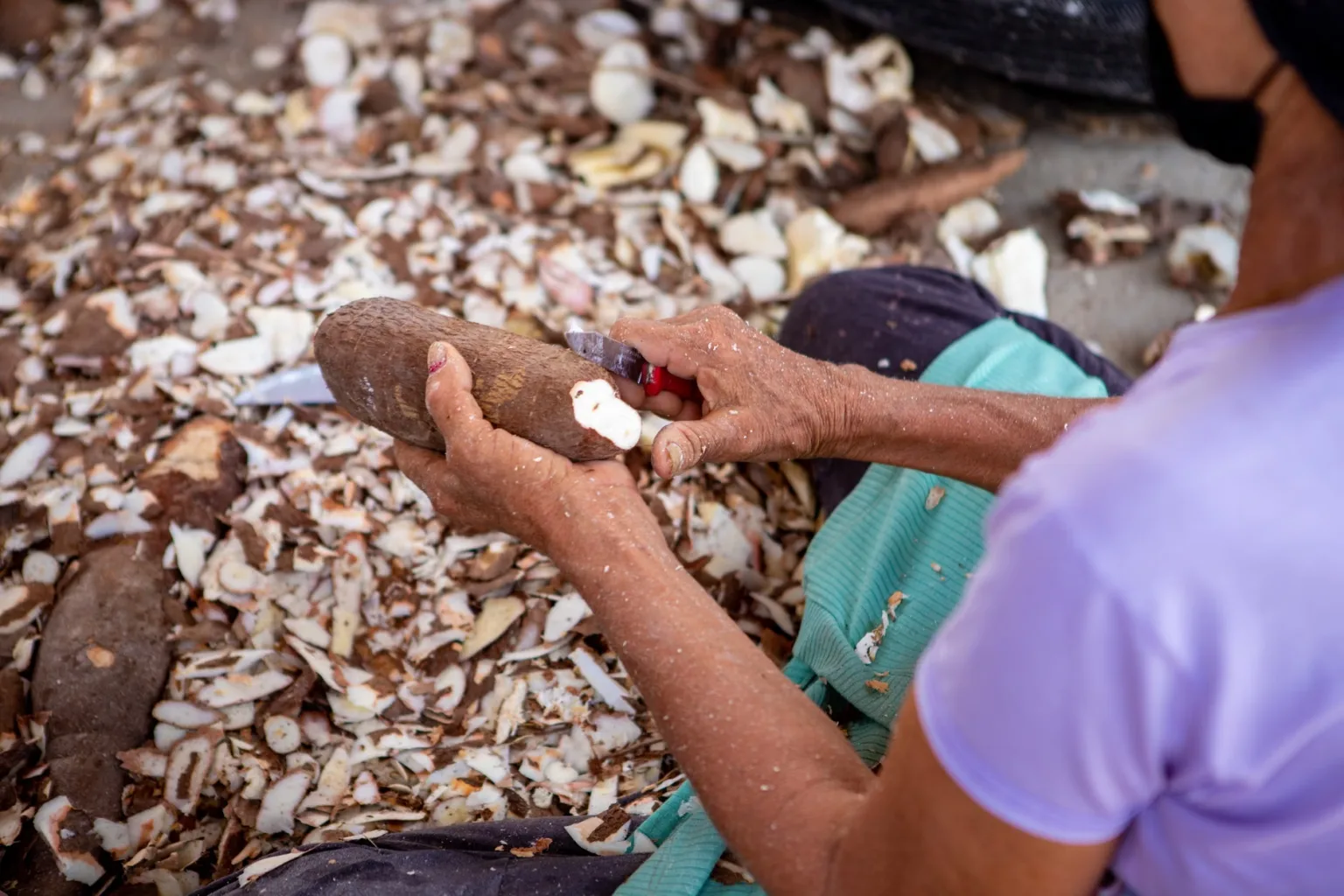
Cassava, also called yuca or manioc, is an edible root sold fresh and used as a starchy ingredient. It has a brown, fibrous outer skin and a pale interior; after cooking, the flesh can become tender and somewhat translucent. In cooking it can play a role similar to potato: serve it cooked as a side, mash it into a purée, or add it to cooked dishes. Cassava flour and tapioca starch are also made from cassava, but they are different products and do not work as direct replacements for fresh root in every recipe. This profile refers to the fresh root, not flour or tapioca.
When to use it
Choose fresh cassava when you want a starchy side other than potato, a base for purée, or an ingredient for soups and stews. It can be served with meat, fish, or other vegetables, and it also suits baked or fried preparations. For baking or dough recipes, check whether the ingredient list specifies fresh root, cassava flour, or tapioca starch: these are different forms with different functions. Cassava can also be used in sweet dishes with ingredients such as coconut milk.
How to use it
Remove the outer skin and cut the root into manageable pieces before cooking. Cassava can be boiled or simmered until tender; it can also be baked, fried, roasted, or sautéed, depending on the dish. To serve it as a side, cut it into portions and pair it with meat, fish, or vegetables. Once cooked, it can be mashed into a purée or added to soups and stews. If a recipe calls for cassava flour or tapioca starch, use the specified product rather than directly replacing it with pieces of fresh root. Follow package directions when using a processed product.
Flavour and texture
Cassava has a mild, unobtrusive flavor that works with a range of seasonings and accompaniments. The uncooked root is starchy and firm; after cooking, it becomes tender and can be mashed. The finished texture varies with the cut, the product, and the cooking technique, so check for doneness rather than assuming every piece will turn out the same.
How to choose it
Look for a root clearly sold as fresh cassava, yuca, or manioc. Its skin is typically brown and fibrous, so a smooth, potato-like surface is not the expectation. Inspect the product before buying and check whether the store is selling fresh root or a peeled product. Frozen cassava, cassava flour, and tapioca are different formats; use the directions provided for the particular product you buy.
Storage
The available evidence does not establish a universal storage period for fresh cassava, so avoid relying on an exact shelf-life estimate. Follow the seller’s or package’s directions and inspect the root before cooking. A reference recipe uses peeled frozen cassava, but that alone does not establish a home-freezing method or storage duration. For packaged flour, starch, or frozen root, follow the manufacturer’s storage instructions.
Substitutions
Potato can replace cassava in some side dishes or purées because the two can play a similar starchy role, though their flavor and results will differ. Cassava flour or tapioca starch is a suitable alternative only when the recipe specifically calls for those products or a compatible function; neither directly replaces pieces of fresh root. Match the substitute to the form and purpose in the recipe rather than assuming root, flour, and starch behave alike.
Common mistakes
A common mistake is treating fresh root, cassava flour, and tapioca starch as though they were the same ingredient. Unevenly sized pieces can also cook to different textures. Do not assume one technique or cooking time suits every size and product form: check the texture and follow the recipe or package directions.
Safety and allergens
The official evidence provided contains no cassava-specific warning or preparation instructions. Consult your local official food-safety authority and the product directions; this profile does not establish a safe preparation method.
Culinary uses
- Starchy vegetable side dish
- Base for purées, soups and stews
- Ingredient for baked goods and desserts
Recommended techniques
- Boiling or simmering
- Baking
- Frying
- Roasting or sautéing
Pairs well with
- Meat
- Fish
- Other vegetables
- Coconut milk in sweet preparations
Frequently asked questions
Is fresh cassava the same as tapioca?
No. Cassava is the root; tapioca is a product made from its starch. A recipe may call for one or the other, and they should not be swapped automatically.
How can I serve cassava?
It can be cooked and served as a side, mashed into a purée, or added to soups and stews. It can also be baked or fried when the recipe calls for those methods.
What can I use instead of fresh cassava?
Potato can work in some side dishes or purées. Cassava flour and tapioca are appropriate only for recipes that call for those forms or a compatible function.
Estimated nutrition
- Fat
- 0.97 g
- Saturates
- 0.97 g
- Carbohydrate
- 33 g
- Sugars
- 0 g
- Fibre
- 1 g
- Protein
- 3.88 g
- Salt
- 0.13 g
Sources and review
Automatically researched, cross-checked and validated content. Sources consulted:
- Client Challenge doi.org
- Agencia Española de Seguridad Alimentaria y Nutrición aesan.gob.es
- Noticias del Exterior : boletín de información internacional ... mapa.gob.es
- Y is for Yuca sites.psu.edu
- Latin Cooking with Daisy Martinez | Institute of Culinary Education ice.edu
- Oven-Fried Yucca | Diabetes | Illinois Extension | Illinois extension.illinois.edu
- News Archives - Nutrition Coordinating Center (NCC) ncc.umn.edu
- Search or Print: Andrew F. Smith Collection of Cookery Ephemera: NYU Special Collections Finding Aids findingaids.library.nyu.edu
- Recipe1M+: A Dataset for Learning Cross-Modal ... dspace.mit.edu
- Yuca | www.cocinista.es cocinista.es
- Yuca: origen, propiedades y beneficios de este alimento | El arte de comer bien | mentta mentta.com
- Yuca: propiedades y beneficios del tubérculo (y cómo utilizar el ingrediente en la cocina) directoalpaladar.com
- La yuca, alimento prehispánico - Historia de la Cocina y la Gastronomía historiacocina.com
- La yuca, de los mayas a la conquista de nuestra cocina | El Diario Montañés eldiariomontanes.es