- Category
- Herbs and spices
- State
- Dry
- Usual unit
- Variable
What it is
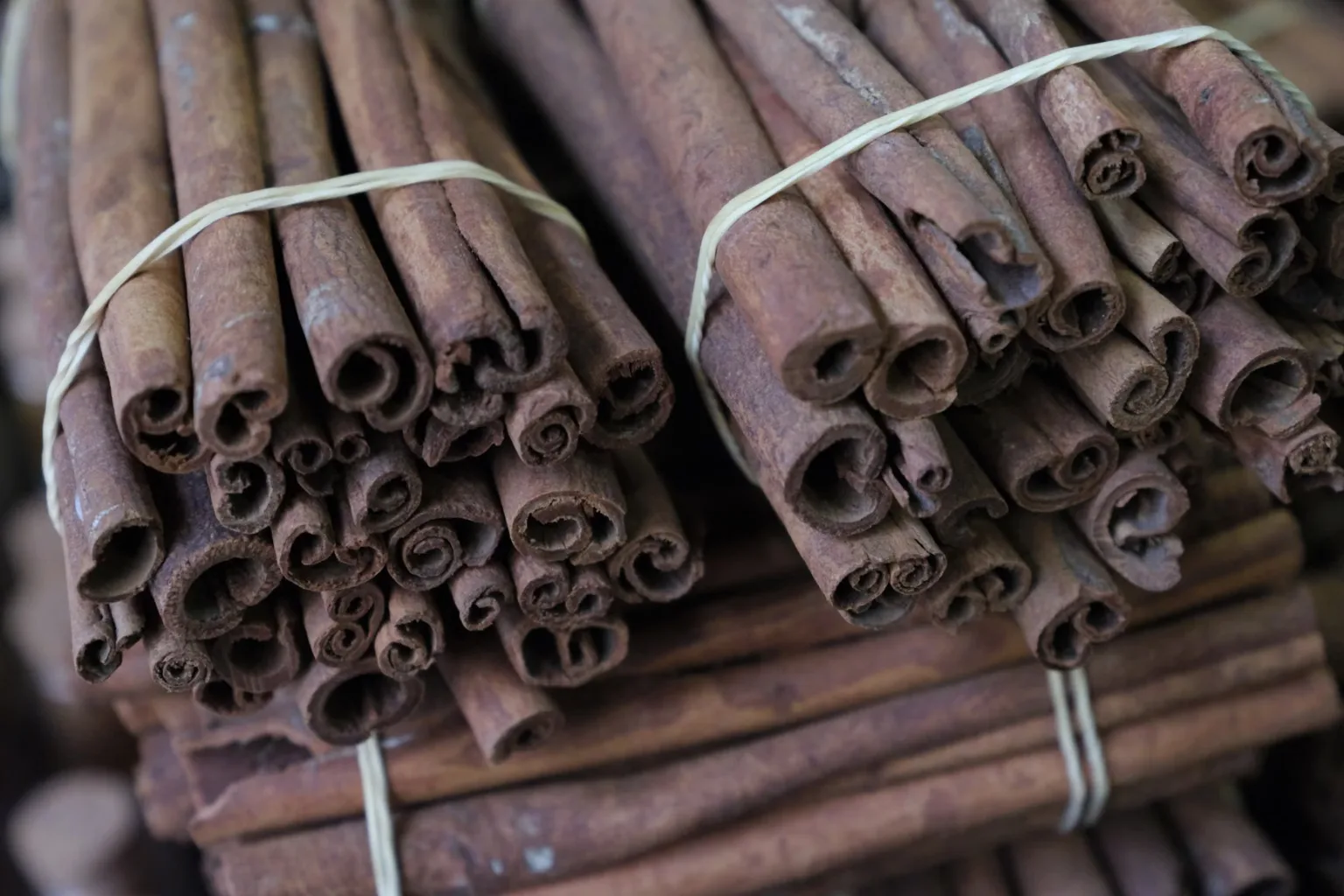
Ceylon cinnamon is a spice made from dried bark of a tree identified in the supplied sources as Cinnamomum verum or Cinnamomum zeylanicum. The bark is peeled and curls into tubes or layers as it dries; it is then sold whole or ground. It is distinct from cassia cinnamon, another type of cinnamon described in the sources as more intense and rougher in flavor. In cooking, a whole piece can flavor liquids through infusion or maceration, while ground cinnamon can be mixed directly into doughs, spice blends, sauces and drinks. The name “Ceylon” is associated in the sources with Sri Lanka, but the product label is the practical way to identify the variety.
When to use it
Choose Ceylon cinnamon when you want a sweet, warm and delicate note that does not overwhelm the other ingredients. It can be used in baking, desserts and other baked goods, as well as coffee and other drinks. The supplied sources also list it as a seasoning for curry, stews and soups, where its aroma can complement savory ingredients. A whole quill is useful when you want to infuse or macerate a liquid and remove the bark afterward; ground cinnamon works when you want the flavor distributed through dough or a mixture. Product intensity can vary, so start modestly and adjust to taste.
How to use it
Use a whole quill to flavor liquids: add it to the drink or preparation you want to scent by infusion or maceration, then remove it before serving if you do not want bark fragments. In coffee and other drinks it lends a warm aromatic note; in stews, soups or curry, add it during preparation so its aroma can mingle with the other ingredients. Ground cinnamon can be stirred directly into doughs, creams, fillings, spice blends, sauces and drinks. Mix it evenly to avoid clumps or concentrated patches of powder. The supplied sources do not establish universal quantities or cooking times, so adjust the amount to the recipe and taste the result according to the format and intensity of the cinnamon you have.
Flavour and texture
Its profile is described as sweet, warm and delicate, with some sources noting a slightly citrus-like aroma. Compared with cassia, it is presented as less rough and less bitter, although flavor can vary between products. Whole cinnamon consists of rolled bark; ground cinnamon is a fine powder that blends readily into doughs and liquids. The dried bark can be crumbled into a preparation, but whole and ground forms do not behave identically: a quill flavors gradually, while powder becomes part of the dish.
How to choose it
Check that the package identifies the product as Ceylon cinnamon and, when provided, look for a botanical name such as Cinnamomum verum or Cinnamomum zeylanicum. It is sold whole in rolled pieces or as ground powder; choose whole bark for infusion or maceration and powder for direct mixing into doughs, blends or drinks. The sources describe whole bark as thin and rolled, but do not provide a universal quality test or a guarantee that applies to every brand. Follow the product-specific information and do not identify the variety by color alone.
Storage
The available sources describe dried bark and its retail formats but do not specify storage conditions or shelf life. To protect quality, follow the instructions on the package and keep it closed as directed by the manufacturer. There is not enough evidence here to recommend a particular duration, temperature or special storage method. If the product has no instructions, ask the seller or manufacturer rather than assuming that guidance for another form also applies.
Substitutions
Cassia cinnamon can stand in when a recipe calls for a cinnamon-like flavor, but the sources describe cassia as more intense and rougher; adjust the amount to taste. Another ground cinnamon may also provide a related note, though it may not match Ceylon’s delicate profile. If a recipe relies on a whole quill for infusion or maceration, ground powder is not an exact replacement: it changes the texture and remains mixed into the liquid.
Common mistakes
Do not treat Ceylon cinnamon and cassia as identical: the sources distinguish their flavor profiles and describe cassia as more intense and rougher. Do not swap a quill and ground powder without considering the result: a quill flavors liquid and can be removed, while powder becomes part of the preparation. Avoid assuming every brand has the same intensity or that an unspecified marketing name alone confirms the variety.
Safety and allergens
The supplied sources do not include a specific official safety warning for Ceylon cinnamon. Use it as a culinary ingredient and follow the package directions; do not treat promotional claims as medical advice.
Culinary uses
- Especia aromática para preparaciones dulces
- Condimento cálido para platos salados y bebidas
Recommended techniques
- Infusionar la rama en líquidos
- Macerar la rama para aromatizar
- Incorporar canela molida directamente a masas, mezclas y preparaciones
Pairs well with
- Repostería y productos horneados
- Café y otras bebidas
- Curry, guisos y sopas
- Postres
Frequently asked questions
Is Ceylon cinnamon the same as cassia?
Not exactly. The sources describe them as distinct cinnamon types and characterize cassia as more intense and rougher in flavor.
Can I use Ceylon cinnamon in savory food?
Yes. The sources mention curry, stews and soups as well as desserts, drinks and baked goods.
When should I use a quill rather than ground cinnamon?
A quill is useful for infusing or macerating liquids and can be removed; ground cinnamon is mixed directly into doughs, blends and drinks.
Estimated nutrition
- Fat
- 0 g
- Saturates
- 0 g
- Carbohydrate
- 81 g
- Sugars
- 76.2 g
- Protein
- 0 g
- Salt
- 0 g
Sources and review
Automatically researched, cross-checked and validated content. Sources consulted:
- ¿Por qué la muerte es origen de miedos y tabúes? doi.org
- Canela de Ceilán: Origen, Usos y Beneficios - Blog iO.GENIX tienda.iogenixnutrition.com
- Todo sobre canela : origen, tipos, usos y beneficios - Spice and Colour spiceandcolour.com
- OSU WordPress Outage | Technology | Oregon State University blogs.oregonstate.edu
- Name: 00000046 docrep.library.vanderbilt.edu
- E Lle, 11. digitalcollections.sdsu.edu
- La obra poetica de Jose de Jesus Dominguez estudio ... academicworks.cuny.edu
- El Libro De Todos Los Moles campusstore.miamioh.edu
- Canela ceylan paprimur.es