- Category
- Meat
- State
- Fresh
- Usual unit
- unit
What it is
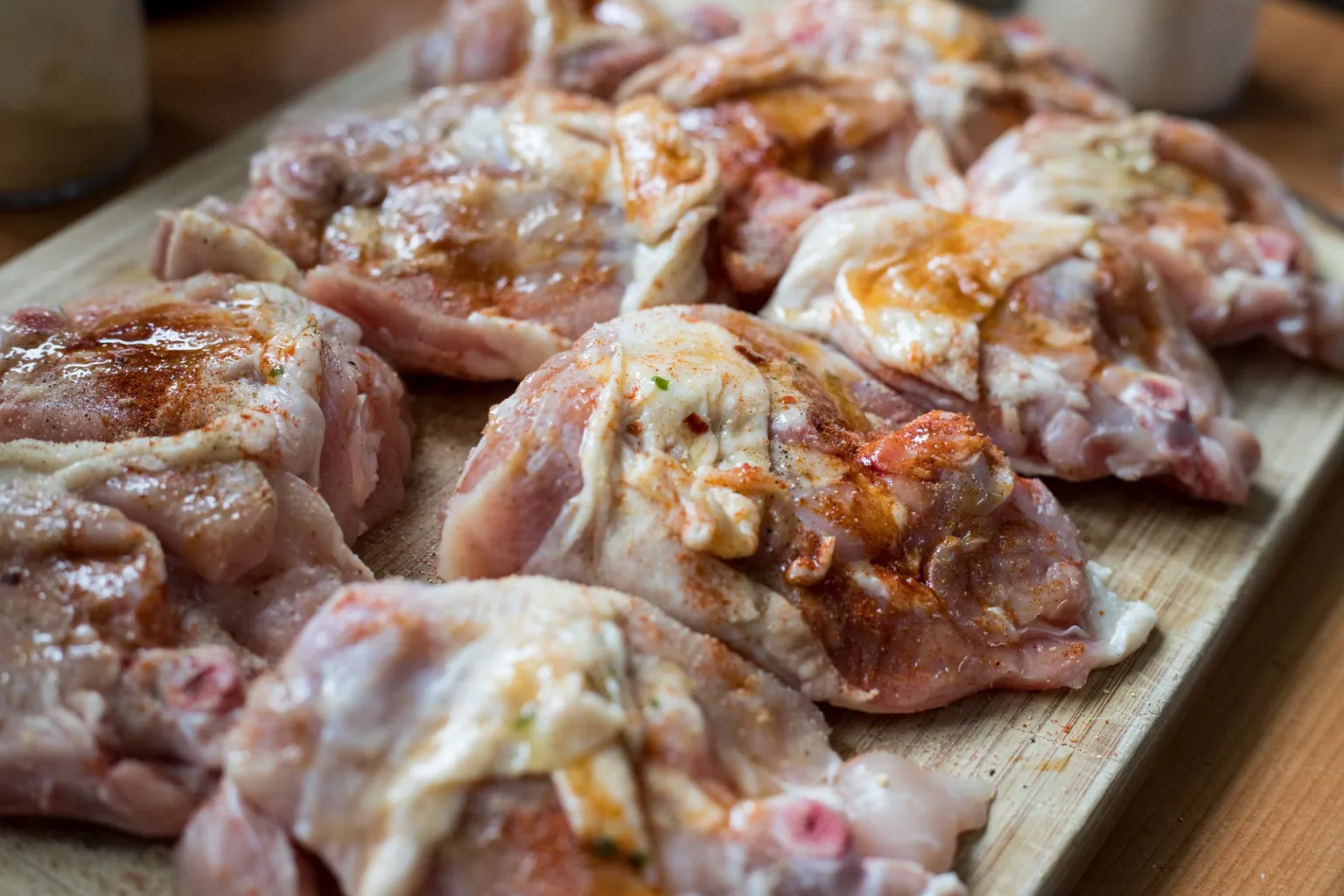
Chicken thighs are a poultry cut sold in different forms: bone-in and skin-on, or boneless and skinless. That distinction matters when choosing a recipe. Skin-on pieces can be browned, while boneless pieces are convenient to cut, marinate or cook in a pan. In casserole dishes, thighs can be seared first and finished in liquid; they are also used roasted, grilled or served with sauce. The culinary sources describe the cut as juicy and tender, although the result depends on the piece and how it is cooked. The different forms should not be treated as interchangeable for every technique or cooking time.
When to use it
Choose chicken thighs when you want a poultry cut for a sauced dish, braise or browned main course with a side. Their documented uses include casserole recipes with onion, garlic, carrot or mustard, as well as oven and grill preparations. Bone-in, skin-on pieces can suit recipes that call for browning the surface; boneless, skinless thighs are convenient for marinating, cutting or serving without bones at the table. Choose the form for the recipe rather than relying on the cut name alone.
How to use it
Pat the surface dry if you plan to brown the pieces, and season as your recipe directs. For a braise or sauce, sear the thighs in a casserole, set them aside, cook aromatics in the same vessel, then return the meat with the chosen liquid to finish cooking. You can also roast or grill them; the available recipes show combinations with garlic, herbs, citrus and marinades, but do not establish one universal cooking time. Make sure the meat is thoroughly cooked and adapt the method to the size and form of the pieces rather than relying only on the outside colour. Serve with vegetables, rice, couscous or potatoes, and finish the sauce or dressing to taste.
Flavour and texture
Culinary sources describe chicken thighs as juicy and tender, and some recipes praise their flavour in comparison with breast. The skin can be browned for a toasted, crisp surface; the inside and final texture depend on the cut’s form and the cooking method. Onion-and-carrot sauces, mustard with herbs, and garlic-and-lime dressings are documented options, not inherent flavours of every piece.
How to choose it
First decide whether you need bone-in, skin-on thighs or boneless, skinless ones: both forms appear in the available recipes and suit different uses. Skin-on pieces can be browned in a suitable pan; boneless thighs are convenient to marinate, cut and serve. Check the product label and package condition, and choose a form that fits the dish you plan to make.
Storage
The evidence available for this profile does not establish specific storage times or conditions for raw chicken. Follow the package directions and the seller’s storage instructions, and do not leave raw meat unrefrigerated while preparing other ingredients. After handling raw chicken, clean hands, utensils and surfaces before moving on to other foods.
Substitutions
Other chicken cuts, such as drumsticks or breast, can replace thighs, but do not assume they cook in the same way. Breast is explicitly used as an alternative in recipes, and drumsticks also appear in braised dishes. Adapt the method and make sure the replacement cut is thoroughly cooked.
Common mistakes
Do not assume bone-in, boneless and breast pieces need identical handling. Avoid judging doneness only by the browned exterior, and do not use hands or utensils that touched raw chicken on other foods without cleaning them first.
Safety and allergens
Handle raw chicken carefully and keep it separate from ready-to-eat foods. After touching it, wash hands and clean surfaces, boards and utensils with soap and water; cook the meat thoroughly before serving. No specific temperature or cooking time is given here.
Culinary uses
- main protein
- ingredient for braises and sauced dishes
- ingredient for grilled or pan-cooked meals
Recommended techniques
- searing and braising
- roasting
- grilling or pan-frying
- marinating
Pairs well with
- onion, garlic and carrot
- mustard, herbs and cream
- lime, ginger and honey
- rice, couscous or potatoes
Frequently asked questions
Are chicken thighs sold bone-in or boneless?
The recipes consulted use both bone-in, skin-on thighs and boneless, skinless thighs. Choose the form that suits the preparation and how you plan to serve it.
Which cooking methods can I use?
The available recipes include browning followed by cooking in sauce or a casserole, as well as roasting and grilling. The best method depends on the form of the meat and the result you want.
What can I serve with chicken thighs?
Recipes pair them with vegetables, rice, couscous or potatoes. Onion-and-carrot sauces, mustard and herb sauces, and garlic-and-citrus dressings are also documented options.
Estimated nutrition
- Fat
- 17.9 g
- Saturates
- 5.36 g
- Carbohydrate
- 0 g
- Sugars
- 0 g
- Fibre
- 0 g
- Protein
- 15.2 g
- Salt
- 0.18 g
Sources and review
Automatically researched, cross-checked and validated content. Sources consulted:
- ¿Por qué la muerte es origen de miedos y tabúes? doi.org
- Quédate en casa y cocina: Propuestas de nuestros alumni (Pollo de corral a la mostaza con verduras de temporada salteadas) cordonbleu.edu
- Qué es (y qué no es) la estadística, usos y abusos de una disciplina clave en la vida de los países y las personas | Estudios económicos doi.org
- Trabajo electrónico aesan.gob.es
- Vamos a Conservar Alimentos: Sopas extension.psu.edu
- Revista MG Mundo Ganadero mapa.gob.es
- Contramuslos de pollo en salsa. Receta fácil y sana recetasdecocina.elmundo.es
- - YouTube youtube.com
- Cocinar contramuslos de pollo - Carnicería El Carni carniceriaelcarni.com
- Contramuslos de pollo en salsa, una receta de lo+fácil webosfritos.es
- Contramuslos de pollo con cuscús exprés genial - Cocina y Aficiones cocinayaficiones.com
- Contramuslos de pollo al ajo y lima | Cocido de Sopa cocidodesopa.com
- Contramuslos de pollo con miel, jengibre y un toque de lima gastroamantes.com
- La sorprendente técnica para cocinar contramuslos de pollo crujientes y súper jugosos fácilmente directoalpaladar.com