- Category
- Herbs and spices
- State
- Dry
- Usual unit
- Variable
What it is
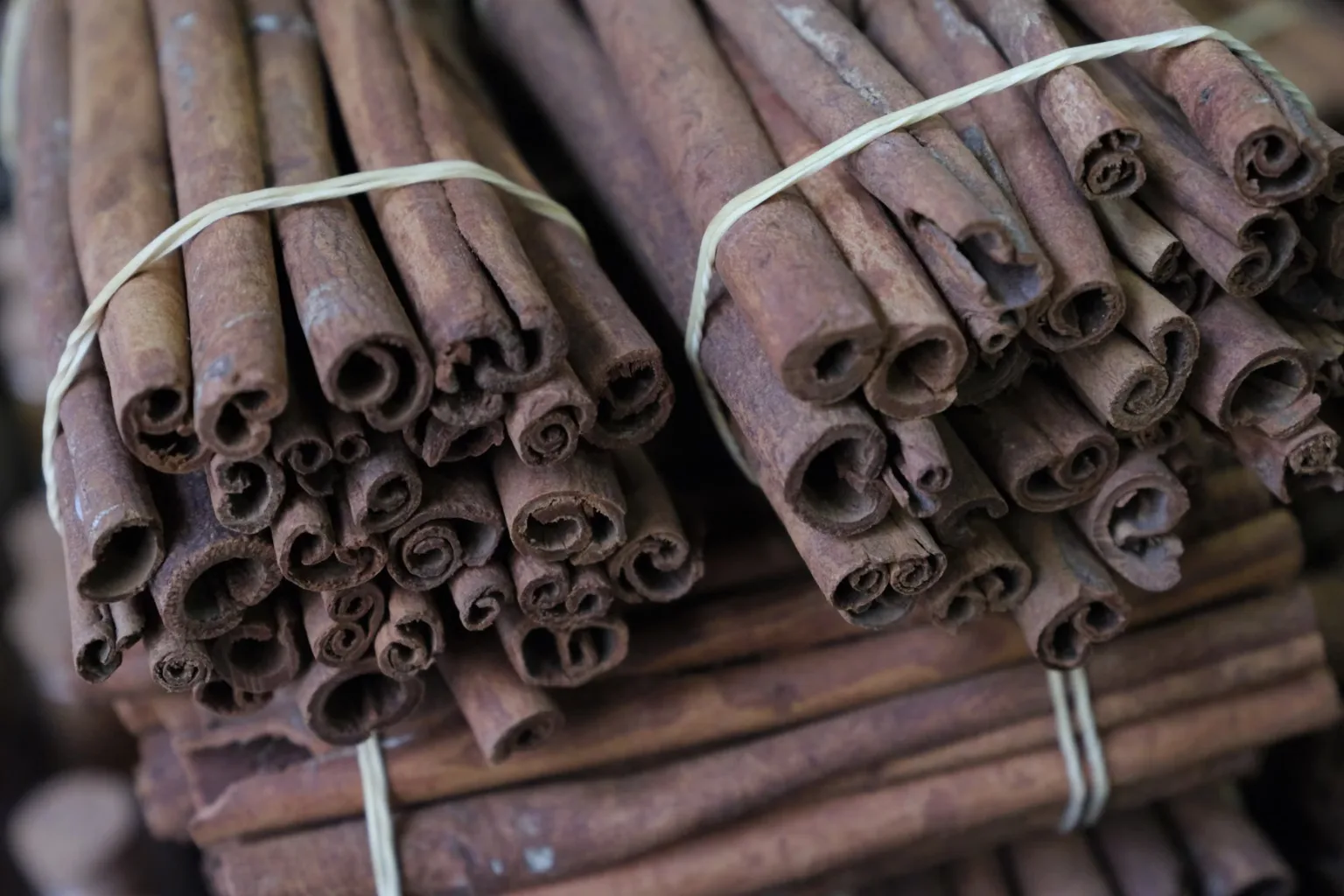
Cinnamon is a spice made from the dried inner bark of trees in the genus Cinnamomum. In cooking, it is commonly sold as rolled pieces or sticks and as ground powder. Commercial varieties do not all look or taste exactly alike: some are described as delicate and sweet, while others are more intense, pungent or robust. The name cinnamon therefore does not guarantee an identical flavor in every product. A stick retains the shape of dried bark; ground cinnamon is a powdered form that is easy to mix into food or use as a finish. It is a spice, not a fresh fruit or leafy herb, and its main culinary role is to contribute aroma and flavor.
When to use it
Use cinnamon when you want to add a recognizable warm aroma to a sweet preparation such as a cake, cookie, dessert or drink. It can also be used in savory cooking: culinary sources mention flavoring meat and rice preparations with it. Choose a stick when you want a whole piece to lend flavor to a drink or cooked preparation; ground cinnamon is convenient for mixing with other ingredients or sprinkling over a finished dish. Since varieties can differ in strength, taste and adjust to the product you have.
How to use it
Cinnamon is sold as sticks and as ground powder. To flavor a liquid preparation, add a whole stick while it cooks or rests, then remove it before serving if you do not want the piece left in the dish. To distribute the flavor evenly, mix ground cinnamon into a batter or other ingredients, or sprinkle a little over a finished dessert or drink. It can also be used in baking, fruit preparations, meat dishes, rice, tea and infusions. Start with a modest amount and taste before adding more: varieties described in the sources range from delicate to strongly flavored. A stick and powder are different forms, so do not assume that equal amounts are interchangeable without adjusting the recipe.
Flavour and texture
Cinnamon is known for a fragrant aroma and a warm taste that may be perceived as sweet, delicate, spicy or mildly pungent. Varieties do not all taste alike: some are described as mild with floral notes, while others are stronger and more robust. A stick is rolled dried bark; ground cinnamon is fine and easy to mix or sprinkle. Stick color and thickness also vary between types.
How to choose it
Decide first whether you want sticks or ground cinnamon: a stick can be used whole, while powder is easy to distribute or sprinkle. If variety matters to your recipe, look for it to be identified on the package, since the sources describe differences in aroma, strength, color and appearance. Some types have thin, light-colored sticks; others are thicker and darker. Check that the package is closed and that the product looks consistent with the form stated on the label.
Storage
Keep dry cinnamon in a well-closed package and follow the manufacturer's storage directions. Avoid leaving it exposed to moisture or open beside strong odors, since it is an aromatic spice. Keep sticks and ground cinnamon clearly identified so you can use the form suited to each recipe. The available evidence does not establish a specific shelf life or exact storage conditions, so no duration should be invented.
Substitutions
Sticks and ground cinnamon are different forms of the same spice and can serve different roles in a recipe. Powder is convenient for mixing or sprinkling; a stick can flavor a preparation as a whole piece. If you change forms, do not assume that one amount directly equals the other: adjust gradually and taste. The supplied sources do not support other spices as flavor-equivalent substitutes.
Common mistakes
A common mistake is assuming every cinnamon variety has the same strength or flavor. The varieties described can be delicate, sweet, pungent or robust, so taste before adding more. It is also easy to confuse the role of a whole stick with that of powder: a stick can flavor and then be removed, while powder is mixed in or sprinkled on. Do not treat their amounts as equivalent without adapting the recipe.
Safety and allergens
The supplied official food-safety source does not give a cinnamon-specific warning. Use cinnamon as a culinary ingredient and follow the package directions. Do not assign medical effects to the spice or use it as a treatment.
Culinary uses
- Aromatic seasoning for sweet preparations
- Flavoring for savory dishes and drinks
Recommended techniques
- Add a cinnamon stick to flavor a liquid or simmered preparation, then remove it before serving if desired.
- Sprinkle ground cinnamon over a finished dessert or drink.
Pairs well with
- Pastries, cakes, desserts and fruit preparations
- Meat or rice dishes, teas and other hot or cold drinks
Frequently asked questions
Is cinnamon sold as sticks and powder?
Yes. The sources describe both forms: rolled dried bark sold as sticks and ground cinnamon sold as powder.
Is cinnamon only for desserts?
No. Along with baking and drinks, the sources mention savory uses, including meat and rice preparations.
Do all cinnamon varieties taste the same?
No. The varieties described differ in intensity and may taste delicate, sweet, pungent or robust.
Estimated nutrition
- Fat
- 0 g
- Saturates
- 0 g
- Carbohydrate
- 0 g
- Sugars
- 0 g
- Protein
- 0 g
- Salt
- 0 g
Sources and review
Automatically researched, cross-checked and validated content. Sources consulted:
- Client Challenge doi.org
- The Essential Glossary of Cooking Terms for the Culinary Arts - Escoffier escoffier.edu
- Agencia Española de Seguridad Alimentaria y Nutrición aesan.gob.es
- Conocé más sobre la canela, tipos y recetas | Recetas Nestlé recetasnestle.com.ar
- Todo sobre canela : origen, tipos, usos y beneficios - Spice and Colour spiceandcolour.com
- Canela: Tipos, Usos Funcionales y Propiedades | Alveus alveus.eu
- My Sweet Mexico | Institute of Culinary Education ice.edu
- Atlantic World Foodways Conference | Atlantic World Research Network awrn.uncg.edu
- Assessing the Use of Social Cognitive Theory Components ... wastedfood.american.edu
- Improving Cooking Skills, Lifestyle Behaviors, and Clinical ... digitalcommons.library.tmc.edu
- Detailed Agenda - MOIAI Short Course - University of Florida, Institute of Food and Agricultural Sciences - UF/IFAS agronomy.ifas.ufl.edu
- The East Side Table Make-at-Home Meal-Kit Program is ... z.umn.edu
- Neanderthal Cooking and the Costs of Fire journals.uchicago.edu
- Review Article The food environment in Latin America drexel.edu
- Canela, la especia más usada en nuestra cocina - Cocina y Aficiones cocinayaficiones.com
- Canela: propiedades, usos y potencial de mercado en la industria alimentaria | Foodcom S.A. foodcom.pl