- Category
- Dairy and eggs
- State
- Other
- Usual unit
- g
What it is
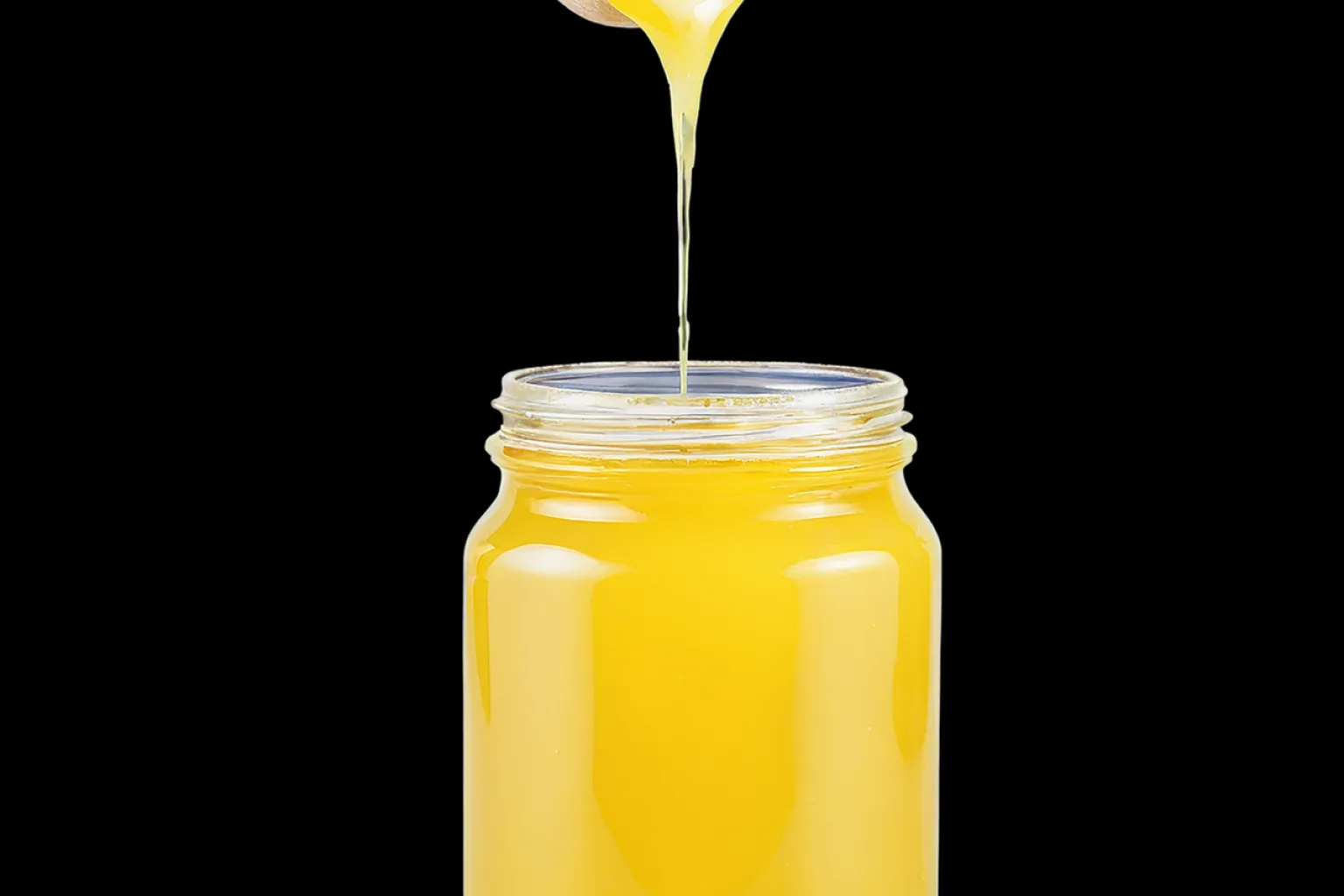
Clarified butter is made by heating butter and separating its fat from water and milk solids. Ghee belongs to the same family, but it is usually heated for longer so the solids brown before they are removed, giving the fat a more toasted character. The names are sometimes used interchangeably, but they do not always describe exactly the same product. They are sold in different forms, and texture can change with temperature: the fat may be liquid during cooking and solidify as it cools. Both come from milk, so they should not be confused with vegetable fats.
When to use it
Choose clarified butter or ghee when you want a butter-derived cooking fat that tolerates heat better than ordinary butter, such as for sautéing, frying, or browning. Clarified butter has a milder flavor and suits dishes where you want other ingredients to stand out; ghee brings a more toasted, nut-like note. Both can also be used in some doughs, cakes, and emulsified sauces. They are not interchangeable without a flavor change in every recipe: consider whether you want a subtle buttery profile or a more pronounced one.
How to use it
Use it as a cooking fat to sauté vegetables, fry, or brown ingredients; add an amount appropriate to the recipe and keep an eye on the food, since a more heat-tolerant fat does not prevent ingredients from burning. Ghee can add a toasted note to rice, curries, and other spiced dishes. In baking, substitute it for the stated fat only when the recipe accommodates clarified butter and the difference in flavor and composition will not undermine the expected result. It is also used in emulsified sauces, where clarified fat can be more stable than ordinary butter. Do not assume that all products labeled ghee have the same flavor or texture.
Flavour and texture
Clarified butter usually has a milder flavor, while ghee is heated longer and develops toasted, slightly sweet notes that can suggest nuts. Both are rich in fat and may be liquid during cooking or solid after cooling. Color and toastiness vary by product and method; check the aroma and appearance before adding either to a delicate preparation.
How to choose it
Read the product name and ingredient list to confirm that you are buying clarified dairy fat rather than a plant-based product with a similar name. Choose clarified butter for a milder flavor and ghee when you want toasted notes. Also check the milk information and the package’s storage directions. Do not assume that removing most milk solids means that all dairy components are absent.
Storage
Follow the package directions because products and recommendations can vary. Some versions are kept outside the refrigerator, while others may require refrigeration, particularly depending on the surrounding conditions. Keep the container closed and avoid introducing wet or dirty utensils; do not use the product if its smell or appearance changes unexpectedly. Fat may solidify as it cools, which alone does not indicate spoilage.
Substitutions
Ordinary butter can replace it in some recipes, but it contains water and milk solids and behaves differently at higher cooking temperatures. Vegetable oil may work when a recipe allows a change of cooking fat, but it will not reproduce buttery flavor or ghee’s toasted notes. Choose according to the cooking use and flavor you want.
Common mistakes
Treating clarified butter and ghee as invariably identical is a common mistake: ghee is usually heated longer and tastes more toasted. Another is assuming that removing milk solids makes the product suitable for someone with a milk allergy. Do not ignore package storage directions or assume that a heat-tolerant fat makes it impossible to burn food.
Safety and allergens
This is a product derived from milk. If you have a milk allergy, do not assume it is safe because it is clarified: check the package and consult a health professional. Use clean utensils and follow the manufacturer’s storage instructions.
Culinary uses
- Grasa para cocinar y dorar
- Ingrediente graso para repostería y salsas emulsionadas
Recommended techniques
- Saltear
- Freír
- Hornear
- Dorar
Pairs well with
- Arroz
- Verduras
- Curris y platos especiados
Frequently asked questions
Are clarified butter and ghee the same?
They are very similar but not always identical. Ghee is usually heated longer, browning the solids and developing more toasted notes.
Can I cook at higher heat than with ordinary butter?
Removing milk solids makes clarified fat more heat-tolerant than ordinary butter. Still, monitor cooking and keep food from burning.
Is ghee suitable for someone with a milk allergy?
Do not assume that it is. It is made from butter or milk fat, and clarification does not establish that the product is free of every milk component; check the label and consult a professional.
Estimated nutrition
- Fat
- 100 g
- Saturates
- 60 g
- Carbohydrate
- 0 g
- Sugars
- 0 g
- Fibre
- 0 g
- Protein
- 0 g
- Salt
- 0 g
Sources and review
Automatically researched, cross-checked and validated content. Sources consulted:
- ¿Por qué la muerte es origen de miedos y tabúes? doi.org
- Client Challenge doi.org
- Gastronomía de la India - Wikipedia, la enciclopedia libre es.wikipedia.org
- DISEÑO DE UN PRODUCTO ALIMENTICIO PARA EL ... upcommons.upc.edu
- Los secretos del ghee, más que una mantequilla clarificada - Blog Conasi conasi.eu
- Todo sobre el ghée, el nuevo alimento de moda del 2025 elle.com
- Mantequilla ghee | Propiedades, beneficios y tipos codinafoods.com
- Qué es el ghee (y cómo se hace) | Consumer consumer.es
- Ghee - Wikipedia, la enciclopedia libre es.wikipedia.org
- Cómo hacer ghee y mantequilla clarificada en casa evamuerdelamanzana.com
- ¿Qué es el ghee? Todo sobre el alimento de moda | El arte de comer bien | mentta mentta.com
- La mantequilla clarificada beurrespa.es
- Mantequilla clarificada: qué es, cómo usarla y cómo hacerla en casa bonviveur.com