- Category
- Dairy and eggs
- State
- Fresh
- Usual unit
- g
What it is
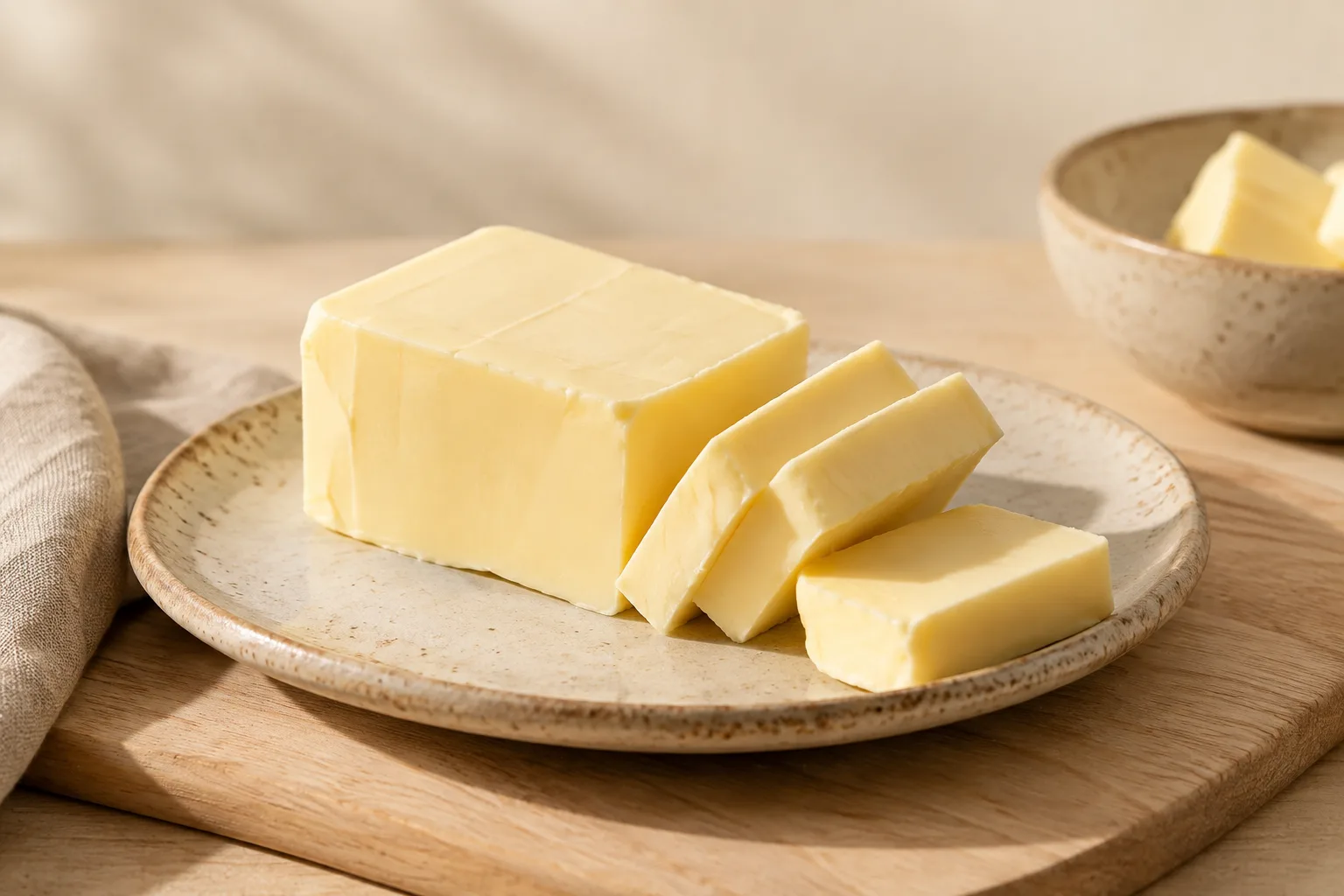
Butter is made from milk fat and water by churning cream and working the resulting mass. “Cold” describes how the butter is being used, rather than a separate kind of butter: it is used while still cold when a recipe calls for it to hold its shape during mixing. In sablé dough, for example, it is rubbed into flour until the mixture looks sandy before the other ingredients are added. Consistency can vary from one product to another, so not all butter feels equally firm when handled. Butter may be salted or unsalted; account for that difference when adding it to a recipe.
When to use it
Choose cold butter when instructions say to add it without melting, especially for doughs where the fat is rubbed or crumbled into flour. It is also useful when a recipe calls for it to be measured and added in pieces as part of a specified method. It is not the right form when a recipe asks for softened or melted butter: those forms behave differently. In savoury cooking, butter can be used for sautéing or sweating ingredients, although its starting temperature matters less than following the method given.
How to use it
Cut or divide the amount you need and work it as the recipe directs, without letting it soften if the technique depends on it being cold. For sablé dough, rub the butter into the sifted flour until the mixture looks sandy; then add the remaining ingredients and mix only as much as needed to make a smooth dough. Cold butter can also be added in pieces to a preparation when the method specifies it. For other uses, such as sautéing vegetables or enriching a sauce, follow the recipe: it may call for melted or softened butter, and cold butter should not be substituted for that form without checking the method.
Flavour and texture
Butter brings a rich, dairy-like flavour; products can differ in taste and consistency according to how they are made. When cold, it usually feels firm and holds its shape better than softened or melted butter. Rubbing it into flour can create a sandy-looking mixture, useful for certain doughs. Salted butter contributes salt as well as its own flavour, while unsalted butter lets you control separately how much salt goes into the recipe.
How to choose it
Check that the package identifies the product as butter and note whether it is salted or unsalted, since that difference can affect a recipe. Choose an intact package and read the manufacturer’s instructions. For use cold in dough, look for a piece that is firm and holds its shape; consistency can vary between products and does not necessarily indicate a defect.
Storage
Check and follow the storage directions on the package, and put the butter away again after measuring what you need. Keep its wrapper closed to limit exposure to odours from other foods. The available evidence does not establish a storage period or specific temperature for this butter; follow the manufacturer’s directions for those details.
Substitutions
For sautéing or sweating, olive oil can replace butter when the recipe allows a change of fat; the final flavour and texture will differ. It is not an automatic substitute in pastry dough, where cold butter helps create texture as it is worked into flour. Before making a swap, check that the recipe allows another fat and change the method only when supported by reliable instructions.
Common mistakes
Do not automatically replace cold butter with softened or melted butter when the recipe depends on rubbing it into flour: these forms are different and change how the mixture is handled. Avoid working dough more than necessary when the recipe calls for minimal mixing. Also check whether the butter is salted before adding more salt.
Safety and allergens
Butter is a dairy product and contains milk. Follow the package directions for storage and do not use it if it shows clear signs of spoilage.
Culinary uses
- Aporta sabor y riqueza a masas y productos de repostería
- Grasa para saltear, rehogar y enriquecer salsas
Recommended techniques
- Frotar o desmenuzar la mantequilla fría con la harina hasta obtener una textura arenosa
- Añadirla fría y mezclar lo mínimo posible para conservar la textura buscada en la masa
Pairs well with
- Pan tostado y mermelada
- Verduras como champiñones y puerro
- Hierbas y especias para preparar mantequillas compuestas
Frequently asked questions
What does cold butter mean in a recipe?
It means using the butter cold, without deliberately melting or softening it, to follow the stated technique. In some doughs it is rubbed into flour until the mixture looks sandy.
Can I use cold butter instead of softened butter?
Not automatically. Cold, softened and melted butter behave differently; use the form specified by the recipe.
Can salted butter be used for baking?
It can be used if the recipe allows it, but remember that it already adds salt. Unsalted butter makes it easier to control added salt separately.
Sources and review
Automatically researched, cross-checked and validated content. Sources consulted:
- Client Challenge doi.org
- Mantequilla - Wikipedia, la enciclopedia libre es.wikipedia.org
- La importancia de la mantequilla en la cocina friolisa.es
- educational content to support healthful lifestyle practices sjsu.edu
- Nutrition After Your Transplant - Health Online healthonline.washington.edu
- Agricultura revista agropecuaria, ISSN: 0002-1334 mapa.gob.es
- Comité Científico aesan.gob.es
- Recetas del chef Benjamin Estienne cordonbleu.edu
- UCCE efforts improve quality of and demand for fresh ... ucanr.edu
- How do I keep milk products safe and fresh? | University of Nevada, Reno unr.edu
- FSHN14-05s/FS275: De Compras Para la Salud: Mariscos ask.ifas.ufl.edu
- Usos culinarios de la mantequilla – Mantequilla Lorenzana mantequillalorenzana.com
- Conoce todos los usos de la mantequilla | Naturarla | Arla arlafoods.es