- Category
- Vegetables
- State
- Fresh
- Usual unit
- g
What it is
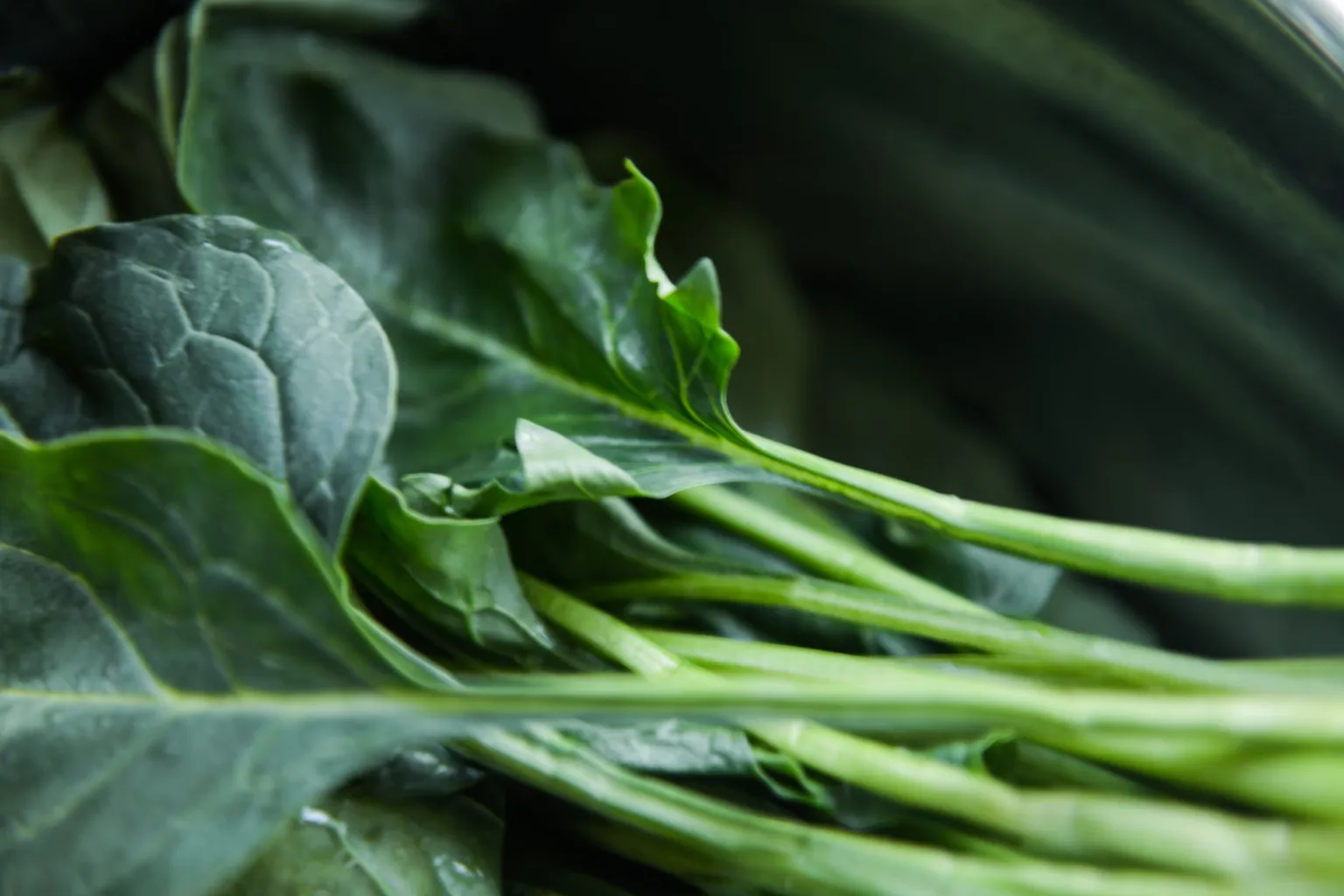
Collard greens are an open-leaf cabbage, unlike head-forming cabbage, which grows into a compact head. The name can refer to different open-leaf cabbages, so appearance and texture vary between products. The collards described here have large, dark, smooth leaves with visible veins and thick stems. The leaves are the part most commonly used. Their flavor is pronounced and their texture can be fibrous and firm, making them a natural fit for cooking in liquid or adding to stews. In some places, related open-leaf cabbages are sold under regional names, so the exact leaf shape and thickness may differ.
When to use it
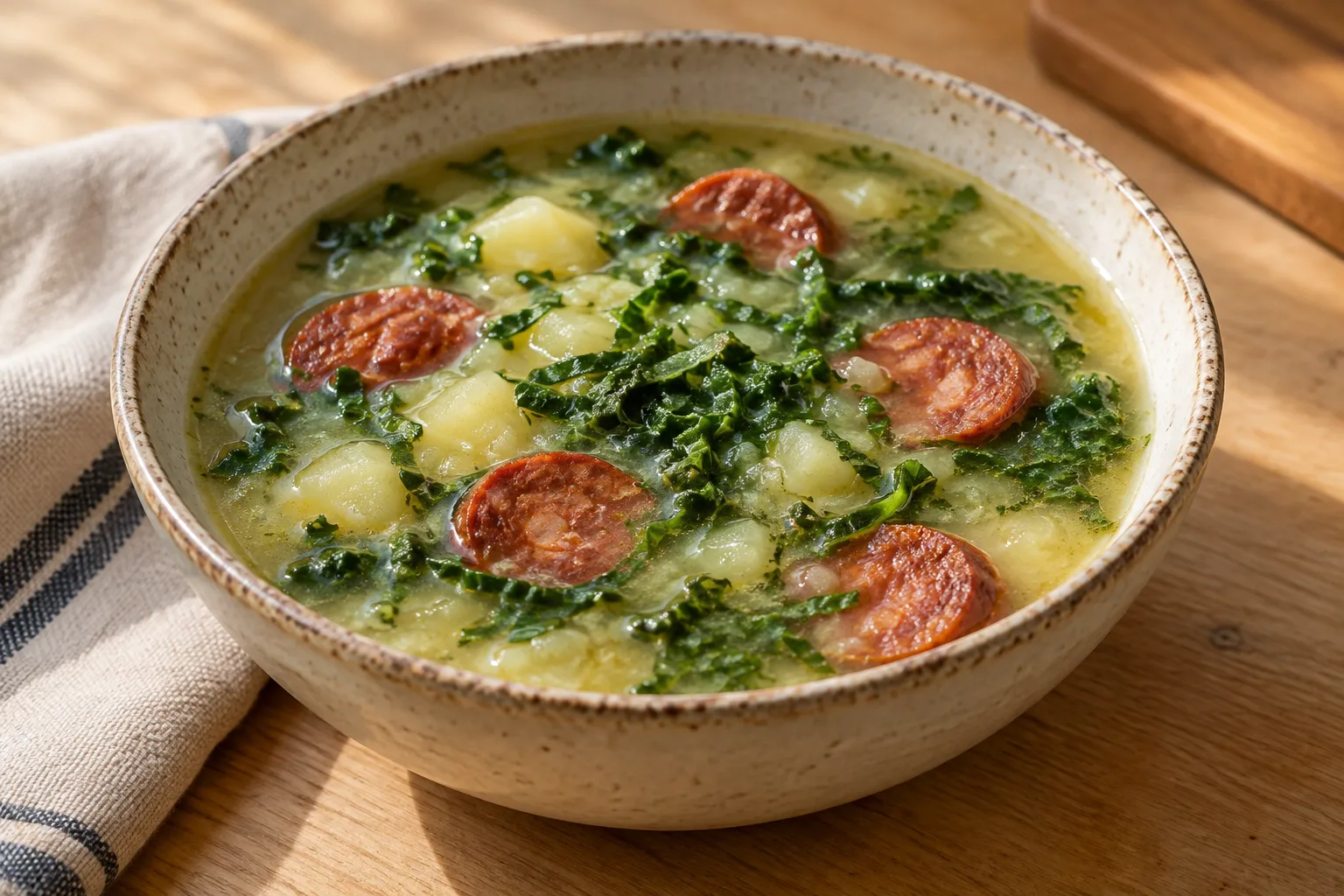
Choose collard greens when you want a bold leafy vegetable in soup, broth or stew, or when you need greens that can cook alongside beans and other vegetables. They also suit rice dishes and vegetable sautés. Their leaves are firmer than delicate salad greens, so do not expect them to soften with only a brief touch of heat. Leaf size and stem thickness vary, so cut and cook them to suit the particular bunch and the texture you want. They are especially useful when a dish can accommodate a substantial, cooked leafy green.
How to use it
Separate the leaves and wash them carefully one by one to remove visible soil and debris. Drain and slice or chop them. If the ribs or stems are especially thick, remove them or cut them smaller so they cook more evenly with the leaves. Add the greens to soups, broths and stews with beans, potatoes or other vegetables. They can also be boiled and then combined with rice, added to a vegetable sauté or served as a cooked side. Collards can be fibrous and firm, so check the texture as they cook and continue until it suits your dish. There is no single cooking time that applies to every leaf, variety and recipe.
Flavour and texture
Collard greens have a pronounced, vegetal flavor, described as sweeter than kale, and firm, fibrous leaves with prominent ribs. The stems are often thicker than the leaf blades. Variety, cutting and cooking all affect the finished texture, which can remain substantial or become more tender depending on the preparation. Their strong character works well in brothy dishes and alongside other ingredients with distinct flavors.
How to choose it
Look for fresh, intact, dark-green leaves without obvious signs of spoilage. Leaf size, thickness and appearance can vary because the name collard greens is used for open-leaf cabbages with differing characteristics. If you plan to cook stems and leaves separately, choose a bunch whose size and proportions are convenient for your recipe. The available evidence does not establish a season that applies everywhere; availability depends on the region and market.
Storage
The available information identifies collard greens as a fresh ingredient but does not give a precise shelf life or storage conditions. Follow the label or seller's guidance and keep visibly spoiled leaves away from those in good condition. Wash the leaves before preparation; if you wash them ahead, drain them well and avoid storing them wet in a sealed container. The evidence here is not sufficient to recommend a specific storage period.
Substitutions
In soups and stews that can accommodate other leafy greens, kale can fill a similar role; chard may also work when you want a leaf to cook in liquid. Neither is an exact match, and either can change the flavor, thickness and firmness of the dish. Cut the substitute to suit its size and check its texture as it cooks. Choose a replacement for the cooking role, not simply for its color.
Common mistakes
Do not treat fibrous collard leaves like delicate greens that need only a brief cook; adjust the cut and cooking until the texture suits the dish. Another common misstep is washing the bunch without separating the leaves, which can leave soil between them. Thick ribs may need a smaller cut or separate handling for even cooking. No single cooking time fits every variety and recipe.
Safety and allergens
The supplied evidence contains no official collard-specific safety warning. As a general precaution, wash the leaves with potable water before preparation and discard parts with obvious spoilage. Follow local food-safety guidance.
Culinary uses
- Leafy vegetable for soups, broths and stews
- Cooked green served as a side or added to mixed vegetable dishes
Recommended techniques
- Wash the leaves separately, drain and chop before cooking
- Boil or simmer until tender; add to soups, stews or vegetable sautés
Pairs well with
- White beans and potatoes in soups or stews
- Rice, chickpeas and other vegetables
Frequently asked questions
Are collard greens the same as cabbage?
They are related, but collards have open leaves and do not form the compact head associated with head cabbage. The name can also cover more than one open-leaf cabbage.
Which part of collard greens is eaten?
The leaves are the main edible part. Thick stems can also be cooked, but cut them smaller or handle them separately if you want an even texture.
What dishes can I make with collard greens?
They work well in soups, broths, stews and cooked vegetable dishes. You can also combine them with beans, rice or other vegetables.
Estimated nutrition
- Fat
- 0 g
- Saturates
- 0 g
- Carbohydrate
- 3.45 g
- Sugars
- 0 g
- Fibre
- 2.3 g
- Protein
- 2.3 g
- Salt
- 0.08 g
Sources and review
Automatically researched, cross-checked and validated content. Sources consulted:
- Client Challenge doi.org
- Dictionary of Health Related Terms: English – Spanish hia.berkeley.edu
- Sevin 16oz Concentrate Label v20 ucanr.edu
- A cross-cultural analysis of nausea, vomiting, and diet ... cdr.lib.unc.edu
- Fresh Produce Recipe Book | Wsu s3.wp.wsu.edu
- Idea & Resource Kit communityhealth.ucsd.edu
- Printed Directory OSU Stillwater directory.okstate.edu
- Healthy Adults New | Healthy Family Connecticut | College of Agriculture, Health & Natural Resources/Extension | University of Connecticut healthyfamilyct.cahnr.uconn.edu
- Berza: qué es, propiedades, valor nutricional y usos en la cocina de esta verdura bonviveur.com
- - YouTube youtube.com
- Berza, plato típico de Cádiz cadiz.cosasdecome.es
- Deliciosa receta de berza jerezana - La Española Aceites laespanolaaceites.com
- Disfruta del un potaje con mayúsculas: la berza gitana | RTVE.es rtve.es