- Category
- Pulses
- State
- Other
- Usual unit
- cup
What it is
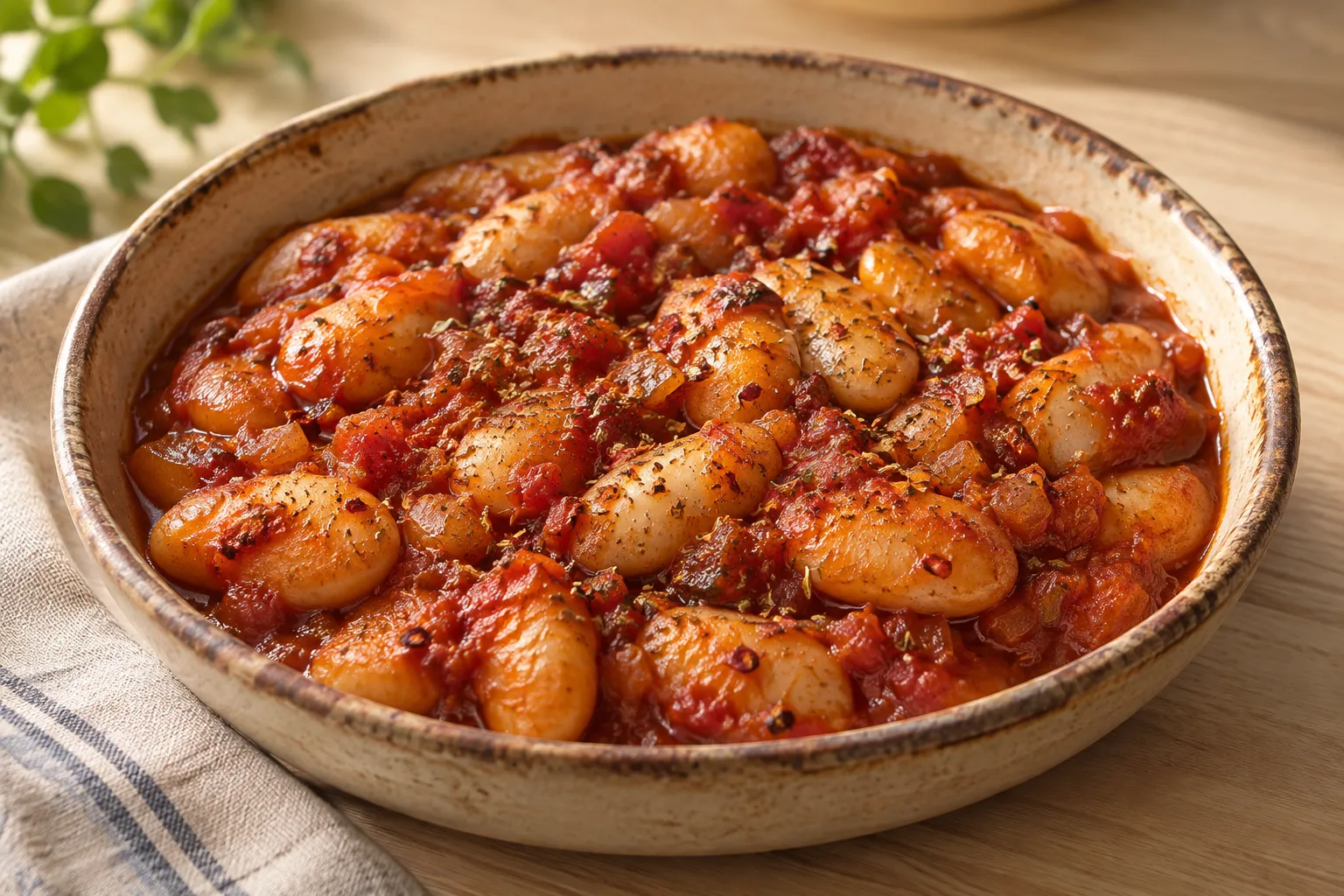
Cooked giant beans are beans that have already been cooked and are ready to add to a recipe or serve as part of a meal. The name describes a large size, but it does not identify a specific bean variety or establish how the beans were cooked or packaged. Beans belong to the Fabaceae family and vary widely in size, shape and colour; large white beans include varieties known as judiones. In cooking, beans are used in dishes such as stews, rice preparations, salads and creams. Since these beans are already cooked, the usual aim is to add them to a dish, combine them with other ingredients or heat them according to the recipe and any instructions on the package. The exact handling depends on the product in hand.
When to use it
Use cooked giant beans when you want to add cooked beans to a meal without starting with dried beans. Their size works well when you want the beans to stand out in a salad, stew or rice dish. They can also be included in a cream or served with other ingredients in a vegetarian preparation. Choose whether to leave them whole, add them to a preparation with liquid or crush them according to the appearance and texture you want. Bean variety and product format can affect firmness, so judge the beans themselves and follow any specific directions on the package.
How to use it
First check the product format and follow package directions if provided; the available information does not establish whether a particular product is canned, refrigerated or packaged another way. Add the beans whole to a salad or rice dish, or stir them into a stew as part of a preparation with other ingredients. For a creamier texture, mash or purée them and use them as the base of a creamy dish. When adding them to a hot preparation, handle them in a way that preserves their shape if that is what you want. Pair them with grains, vegetables or other ingredients in the dish, then adjust the seasoning. A universal heating time cannot be specified without knowing the particular product and its package instructions.
Flavour and texture
Their large size gives these beans a noticeable presence and makes them suitable for serving whole or crushing for a different texture. Variety, degree of cooking and product format can all affect firmness, so the name alone does not guarantee a uniform result. Taste the beans before deciding whether to keep them whole in a salad or blend them into a creamier preparation.
How to choose it
Read the product name and description to confirm that the beans are cooked and large, and check the format shown on the package. “Giant” does not by itself identify a particular bean variety. If the label provides use or storage directions, review them and check that the package is intact.
Storage
The available evidence does not establish one storage time or temperature that applies to every format of cooked giant beans. Follow the label directions for an unopened package and for leftovers, since products may be sold in different formats. Do not assume a can, jar and refrigerated package should all be stored the same way after opening.
Substitutions
Other cooked beans, including other white beans, can replace them when the exact size is not essential. Bean varieties differ in shape, size and texture, so the result will not be identical. For a similarly prominent appearance, choose an alternative of comparable size; if the recipe needs a smoother texture, mash or purée the substitute.
Common mistakes
Do not assume all cooked beans have the same firmness, packaging or storage directions, and do not treat “giant” as the name of a specific variety. Avoid applying a fixed heating time without checking the package or testing the texture. Do not mash the beans if you want them to retain their shape in a salad.
Safety and allergens
Follow the package directions for handling, heating and storage. If directions are missing or the product format is unclear, consult the manufacturer or an official food-safety source.
Culinary uses
- Base o ingrediente sustancioso para ensaladas y platos de arroz
- Ingrediente para guisos y cremas
Recommended techniques
- Incorporar a ensaladas
- Añadir a guisos o platos de arroz
- Triturar o aplastar para preparar una crema
Pairs well with
- Arroz y otros cereales
- Verduras y otros ingredientes de guiso
- Carnes utilizadas en guisos de alubias
Frequently asked questions
Are cooked giant beans vegetables or legumes?
They are cooked beans and belong to the legume group. Green beans eaten with their pod are a different product.
What dishes can I make with them?
Add them to salads, stews, rice dishes or creamy preparations. Keep them whole or mash them to suit the texture you want.
Can I substitute other beans?
Yes. Other cooked beans can work, although their size and texture may change the dish’s appearance and consistency.
Sources and review
Automatically researched, cross-checked and validated content. Sources consulted:
- Client Challenge doi.org
- The Essential Glossary of Cooking Terms for the Culinary Arts - Escoffier escoffier.edu
- Conoce las judías verdes, sus caracteristicas y como cocinarlas con 5 recetas cocinayaficiones.com
- Las alubias o habichuelas: origen, variedades, beneficios y recetas para cocinar la legumbre más extendida del mundo directoalpaladar.com
- Judías: variedades y propiedades para tu salud lavanguardia.com
- Cómo conseguir que las judías verdes queden tiernas y sabrosas: 15 recetas rápidas y llenas de sabor hola.com
- "ALIGN=CENTER>LES TROIS MOUSQUETAIRES -- Los tres mosqueteros" people.duke.edu
- Mucho honra storage.lib.uchicago.edu
- Revitalizing Youth in the Body Politics of Contemporary ... deepblue.lib.umich.edu
- Antes de ir a YouTube youtube.com
- La judía — Canela Limón Chile canelalimonchile.com
- Citrus - Wikipedia, la enciclopedia libre es.wikipedia.org