- Category
- Grains, flour and pasta
- State
- Dry
- Usual unit
- g
What it is
The familiar form of couscous is made from durum wheat semolina and water, shaped into small granules that are cooked or hydrated. Although it is often stocked beside grains, it is considered a type of pasta rather than a grain like rice. The product most commonly sold in stores is precooked and dried, so it is usually quick to prepare; traditional couscous is steamed. Sizes and product styles differ, and the name is also used for larger pearl-shaped products that may need a different method. Identify the variety and follow the package directions rather than assuming every product cooks alike. Standard wheat couscous contains gluten. If you need to avoid gluten, check the ingredient list and allergen information for the specific product.
When to use it
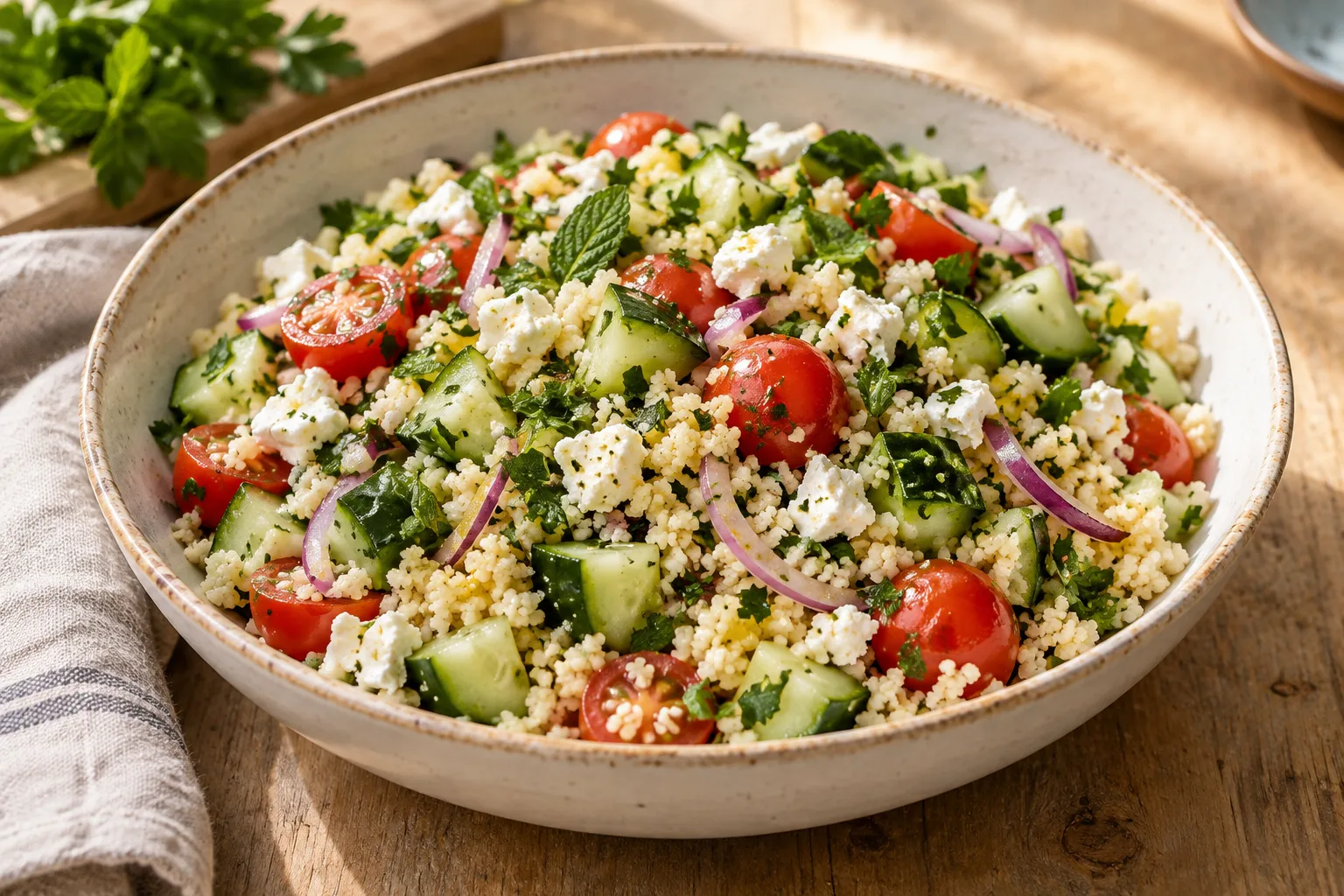
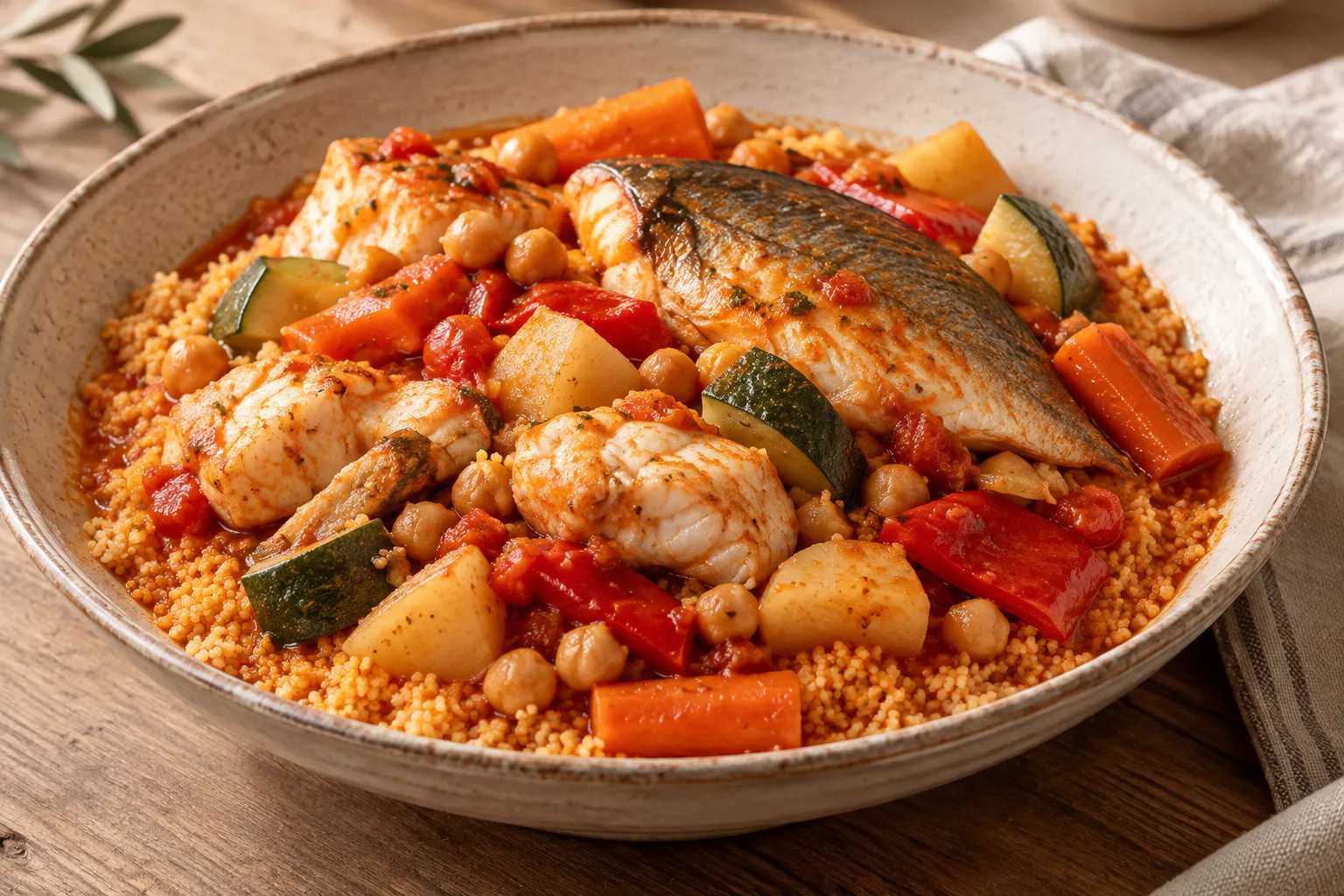
Use couscous when you want a mild-flavored base to round out a meal or accompany a stew. Small precooked couscous is convenient for cold salads, side dishes, and meals with vegetables or legumes. It can also anchor a main dish with meat or fish, or be added to soups and stews. Larger varieties have a chewier texture and may suit dishes where you want the grains to be more noticeable. Before choosing a preparation, check whether the product is instant, traditional, or pearl-style: size and processing affect how it should be cooked.
How to use it
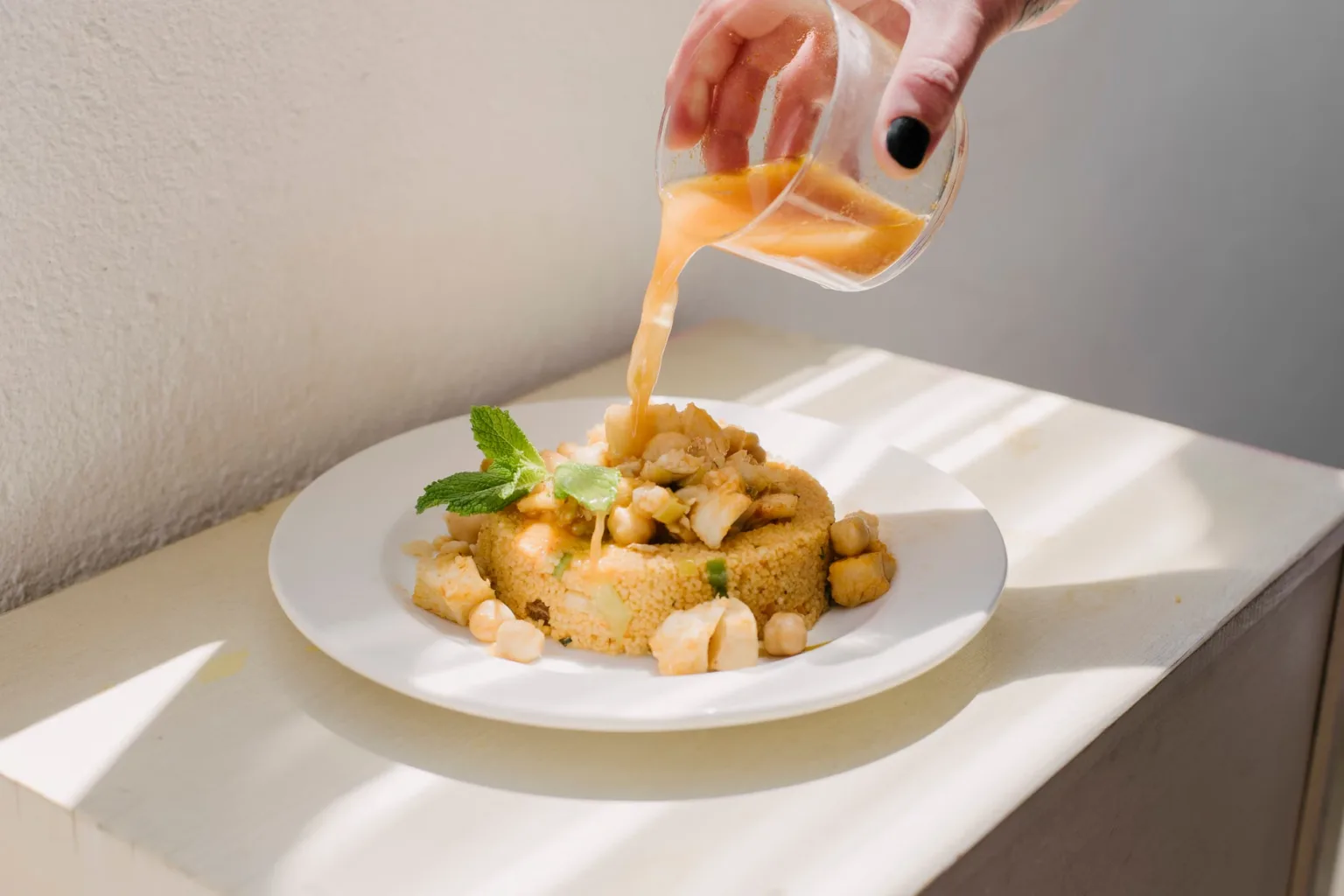
Read the package first: liquid amounts and methods can differ between instant, traditional, and pearl-style couscous. A common approach for instant couscous is to cover the granules with hot liquid, cover the bowl or pan, and let them absorb it; then gently separate them with a fork. Water or stock can be used, with stock adding flavor. Traditional couscous is steamed and needs a different method, while larger varieties may need cooking according to their own directions. Once ready, combine it with vegetables and chickpeas, serve it beside a stew, or pair it with chicken, lamb, or fish. It can also be cooled for a salad. Do not assume one cooking time or liquid amount works for every type; follow the manufacturer’s instructions.
Flavour and texture
Plain couscous has a mild, unobtrusive flavor, so it readily takes on the aromas of stock, spices, vegetables, and sauces. Small granules are usually light and separate when hydrated appropriately; they can clump if they take up too much moisture or are not loosened after preparation. Pearl-style varieties are larger and have a firmer, chewier texture. Variety and preparation both matter, so there is no single texture that applies to every product.
How to choose it
Check the size and style before buying: small couscous is commonly sold precooked and instant, while traditional and pearl-style products may need another preparation method. Read the label to see which grains it contains and whether seasonings or other ingredients have been added. Standard couscous is made from wheat semolina and contains gluten; anyone avoiding gluten should verify that the specific product is formulated and labeled for their needs. Choose an intact package and consult the maker’s preparation instructions.
Storage
Keep dry couscous in a clean, dry place protected from moisture; avoid light exposure and extreme temperature changes. After opening, reseal the package or transfer the couscous to a clean, tightly closed container to protect its quality. Follow any storage directions and date on the package. If cooked, refrigerate leftovers promptly and use them within 3 to 5 days; do not leave prepared food at room temperature for extended periods.
Substitutions
Rice can fill a similar role as a side or base, although its texture and preparation are different. Quinoa can also work in salads or as a dish base, but the flavor and consistency will change. Neither option exactly reproduces couscous’s texture. When substituting one ingredient for another in a recipe, use the cooking method for the ingredient you chose.
Common mistakes
Treating every type as instant can leave couscous undercooked or too soft: identify the variety and follow its package directions. Adding liquid without measuring, or leaving the couscous covered longer than needed, can make it clump. Gently separate the granules when it is ready rather than crushing them. Do not assume standard couscous is gluten-free or that all products have the same ingredients; check the label.
Safety and allergens
Standard durum wheat semolina couscous contains wheat and gluten. If you have an allergy or intolerance, check the label and allergen information for the specific product, as ingredients can vary. Keep dry product clean and protected from moisture. Refrigerate cooked leftovers promptly and follow the package’s storage directions.
Culinary uses
- Guarnición para guisos y platos con salsa
- Base de ensaladas, pilafs y platos principales
Recommended techniques
- Hidratación con líquido caliente para el cuscús instantáneo
- Cocción al vapor para el cuscús tradicional
Pairs well with
- Verduras y garbanzos
- Pollo, cordero o pescado
Frequently asked questions
Is couscous a grain or a pasta?
Standard couscous is made from wheat semolina and is considered a small-granule pasta, although it is often sold alongside grains.
Does couscous contain gluten?
Standard couscous made from wheat semolina contains gluten. Check each product’s label, especially if you need to avoid gluten.
Does every type of couscous cook the same way?
No. Instant, traditional, and pearl-style couscous can need different methods and amounts of liquid. Follow the package directions.
Estimated nutrition
- Fat
- 1.43 g
- Saturates
- 0 g
- Carbohydrate
- 71.4 g
- Sugars
- 2.86 g
- Fibre
- 4.3 g
- Protein
- 12.9 g
- Salt
- 0.02 g
Sources and review
Automatically researched, cross-checked and validated content. Sources consulted:
- En el etiquetado alimentario hay algunas menciones que son obligatorias eletiquetadocuentamucho.aesan.gob.es
- Client Challenge doi.org
- Cooking Food Storage | USU extension.usu.edu
- Revista del comité científico de la aecosan número 24 aesan.gob.es
- Food Selection & Storage | Home & Garden Information Center hgic.clemson.edu
- Preparing an Emergency Food Supply, Long Term Food Storage | Food Preservation | Food | Extension | UGA FACS fcs.uga.edu
- Course Descriptions canyons.edu
- Grain of the Month: Couscous | Sargent Choice Nutrition Center bu.edu
- Cous Cous What Is It - Salem State Vault www-backup.salemstate.edu
- Does couscous belong in the grain or pasta family? | Simply Nutritious, Quick and Delicious | Illinois Extension | Illinois extension.illinois.edu
- 2024 – 2025 1 Florida Department of Education Curriculum Framework fctc.edu
- Cuscús - Wikipedia, la enciclopedia libre es.wikipedia.org
- Qué es el cuscús y cuál es su origen | Gastro expansion.com
- ¿Qué es el cuscús y cómo se cocina? | Recetas Nestlé recetasnestle.com.co
- Cuscús, propiedades y características | OCU ocu.org
- ¿Qué es el cuscús y cómo se cocina? | Recetas Nestlé recetasnestle.com.mx
- Cuscús: Origen, Propiedades y Usos Culinarios | No Desperdicies nonsprecare.it