- Category
- Sugar and sweeteners
- State
- Dry
- Usual unit
- g
What it is
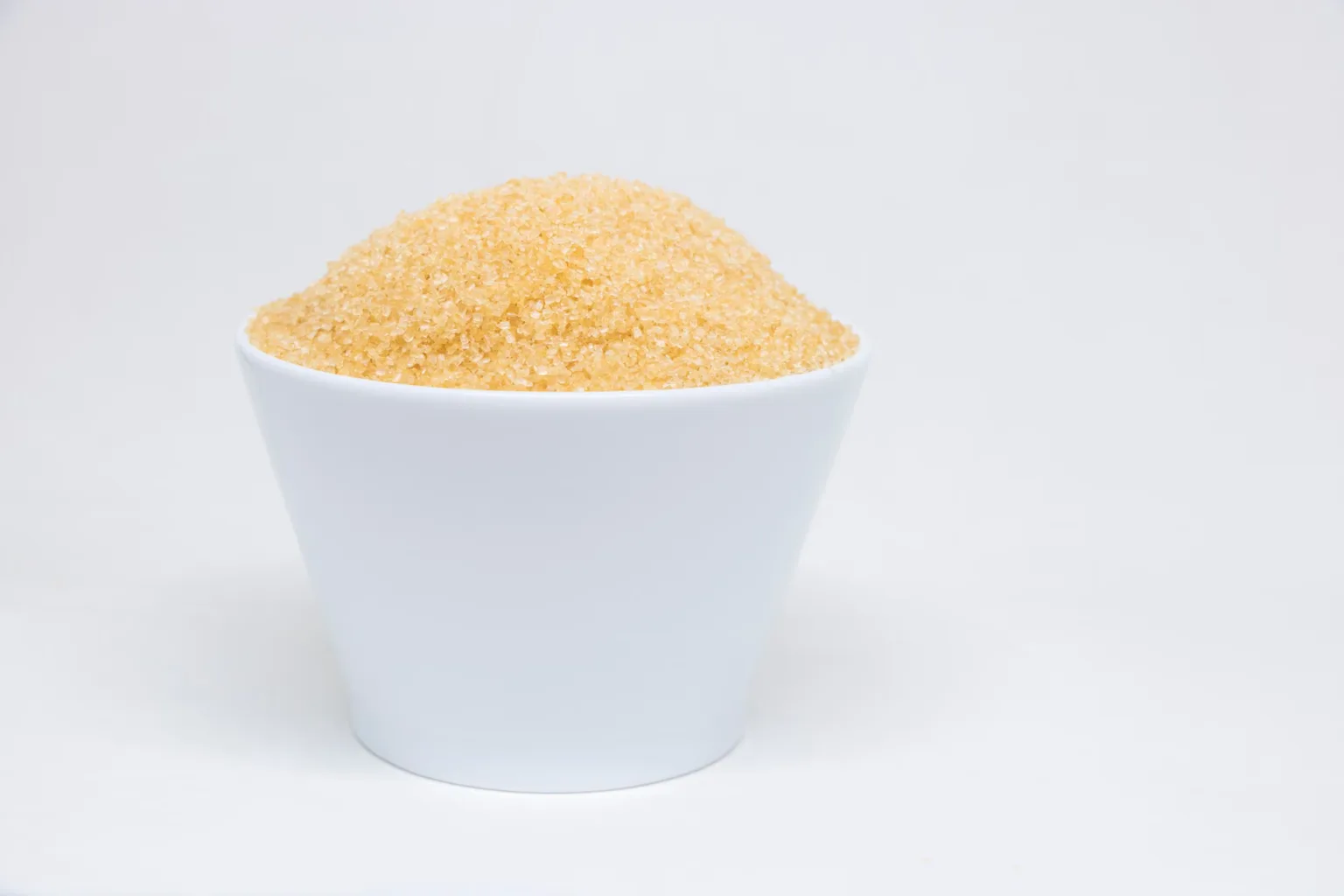
Crystal sugar, also called granulated or table sugar, is sucrose in a dry, crystalline form. In everyday cooking, the name usually means small, visible crystals, rather than powdered sugar or large decorative crystals. Grain size can vary somewhat between products. It can be made from sugar cane or sugar beet; the supplied sources describe both as possible sources. When a recipe simply calls for sugar, ordinary granulated sugar is a practical default, unless the instructions specify a particular type or crystal size.
When to use it
Choose crystal sugar to sweeten drinks, add sweetness to batters and other recipes, or make a sugary surface that melts and browns with heat. It is a versatile choice when a recipe does not specify a more particular sugar. For mixtures where quick incorporation or an imperceptible grain matters, consider a finer sugar; for decoration with large crystals, ordinary granulated sugar will not give the same appearance or dissolving behavior.
How to use it
Measure the amount specified in the recipe and add it to cold or hot liquids, stirring to help it dissolve. In batters, it can be creamed with butter or mixed with eggs to incorporate it and contribute to texture. It can also be sprinkled over a preparation before baking to create a crisp surface. When heated, it melts and can caramelize; monitor the process and follow the recipe, since the result depends on the preparation. Do not automatically swap crystal sizes when texture is important.
Flavour and texture
It gives a straightforward, familiar sweetness without the molasses notes associated with some brown sugars. Its small crystals are visible and can feel crunchy; they dissolve in liquids, although the speed depends on crystal size and the preparation. When heated, sugar melts and can form caramelized or crisp surfaces.
How to choose it
Look for a product labeled granulated sugar, crystal sugar or table sugar when you need the standard form. Check that the package is intact and that the contents show no signs of moisture or excessive clumping. The sources note that crystal size varies between products; if a recipe specifies superfine or powdered sugar, do not assume ordinary granulated sugar will give the same texture.
Storage
Store it in a cool, dry place, away from moisture and strong odors, which sugar can absorb. For storage, transfer it to a clean, airtight, food-safe container; the retail paper package is not ideal for long-term storage. Moisture can make the crystals harden or clump. Refrigeration is unnecessary.
Substitutions
White superfine sugar may work when faster dissolving or incorporation is desired, but the smaller crystals can change texture. Brown sugar also sweetens, but may add color and different characteristics. These are not identical swaps: if a recipe depends on a specific texture, keep the type it calls for.
Common mistakes
Confusing crystal sugar with powdered, superfine or pearl sugar: these have different crystal sizes and do not always behave alike. Another mistake is storing it where it can absorb moisture or odors, which may cause clumping. Before changing sugar type, consider whether the recipe needs quick dissolving, visible crystals or a particular finish.
Safety and allergens
No specific safety warning for granulated sugar itself was provided. Keep the product protected from moisture and odors, check the package, and follow the manufacturer’s directions; consult the relevant food-safety authority if you have a safety concern.
Culinary uses
- Endulzar bebidas y preparaciones
- Aportar textura y acabado crujiente a productos horneados
Recommended techniques
- Disolver en líquidos fríos o calientes
- Batir con mantequilla o huevos para integrar en masas
- Fundir y caramelizar
- Espolvorear antes del horneado
Pairs well with
- Café, té y otras bebidas
- Huevos y mantequilla en masas dulces
- Frutas y preparaciones de sabor ácido
Frequently asked questions
Are crystal sugar and granulated sugar the same?
In everyday cooking, both names are used for table sugar with small, visible crystals. Crystal size can vary between products.
Can I use it in cold drinks?
Yes. It dissolves in cold and hot liquids; stir to help it dissolve, and remember that grain size affects how quickly it does so.
How do I stop it from clumping?
Store it in an airtight container in a cool, dry place away from strong odors. Moisture can harden the crystals.
Estimated nutrition
- Fat
- 0 g
- Saturates
- 0 g
- Carbohydrate
- 100 g
- Sugars
- 100 g
- Protein
- 0 g
- Salt
- 0 g
Sources and review
Automatically researched, cross-checked and validated content. Sources consulted:
- Client Challenge doi.org
- The Essential Glossary of Cooking Terms for the Culinary Arts - Escoffier escoffier.edu
- Del blanco a la panela: los 19 tipos de azúcar más comunes, en qué se diferencian y cómo usarlos en cocina directoalpaladar.com
- Tipos y variedades de Azúcar que encontrarás en el mercado, apuntes. - Cocina y Aficiones cocinayaficiones.com
- El azúcar: tipos y usos. Parte I - Blog de recetas de María Lunarillos marialunarillos.com
- Agencia Española de Seguridad Alimentaria y Nutrición aesan.gob.es
- Food Labeling Guide marketready.uky.edu
- ¿Qué es el azúcar? Tipos, sacarosa y edulcorantes - Zschimmer & Schwarz, Inc. zschimmer-schwarz.es
- Page 7 | See All Home Food Preservation and Safety - Home Food Preservation and Safety - Food Safety and Quality extension.psu.edu
- Storing Sugars | USU extension.usu.edu
- Processed Foods and Health • The Nutrition Source nutritionsource.hsph.harvard.edu
- Home - Department of Food Science and Technology foodscience.tamu.edu
- Safe & Healthy Food Pantries Project - Health & Well-Being health.extension.wisc.edu
- Changes to the Nutrition Facts Label | FDA go.unl.edu
- SugarScience.UCSF.edu | Hidden in Plain Sight sugarscience.ucsf.edu
- Tipos de azúcar: glacé, cristal y perlado en yogurshop yogurshop.com