- Category
- Sauces and condiments
- State
- Liquid
- Usual unit
- ml
What it is
Dark soy sauce is a variety of soy sauce recognized by its deep brown color and often thicker consistency than light soy sauce. In cooking, it is used both to season food and to deepen a dish’s appearance. Bottles do not all have the same profile: some versions are sweeter and may include sugar, molasses or other ingredients. The name alone therefore cannot tell you exactly how a particular sauce will taste, feel or be composed. Read the ingredient list and product information, and taste a small amount before adjusting a dish. Do not automatically treat it as the same thing as Japanese koikuchi soy sauce: the available evidence distinguishes Chinese-style light and dark sauces from some Japanese styles.
When to use it
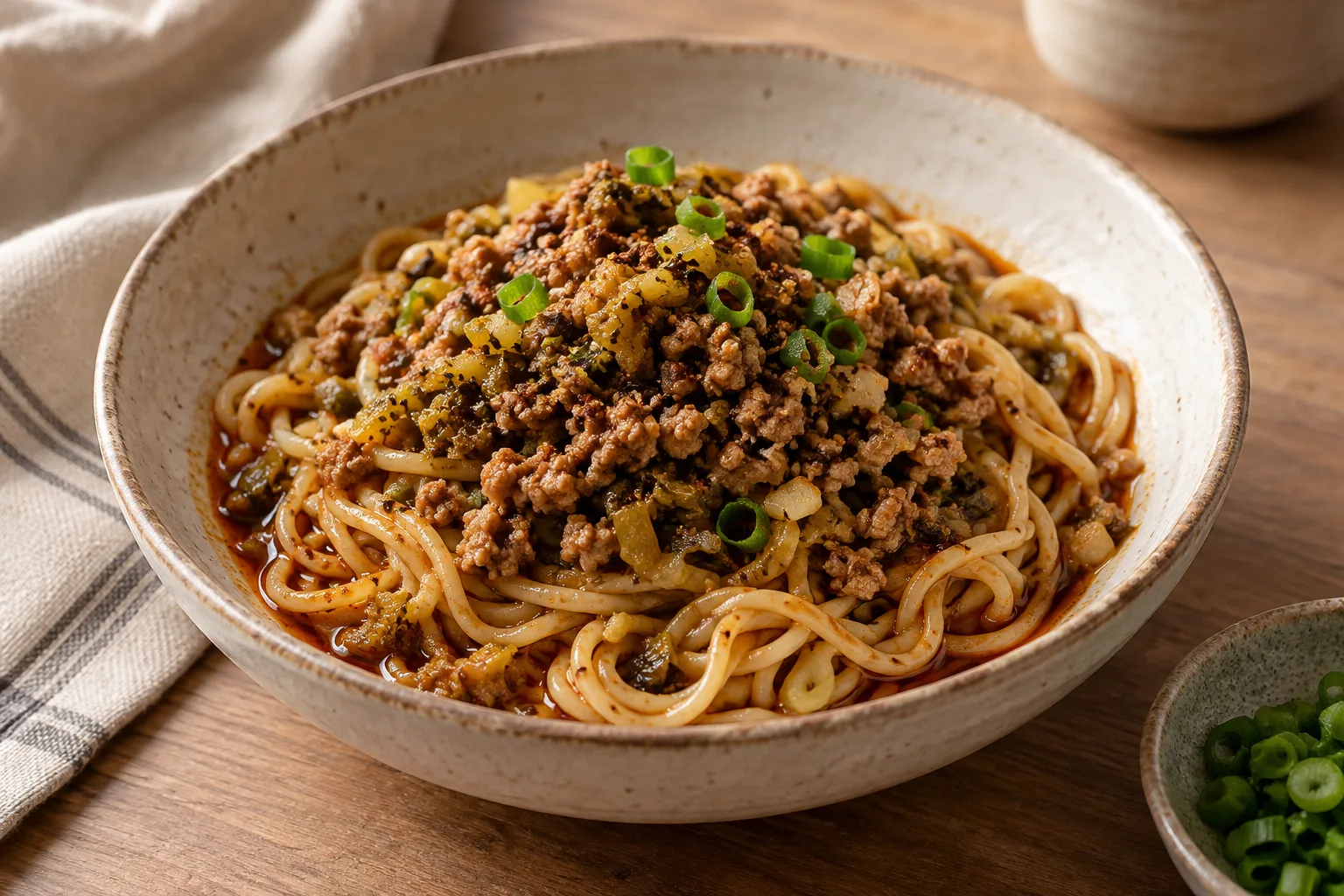
Use it when you want a deeper brown color and savory flavor in substantial dishes such as braises, stewed meat, noodles or sauces. It can also be used in glazes and grilled dishes when you want a darker finish and, depending on the product, a sweeter note. It is not the best choice when you need to keep a dish pale or delicate; consider light soy sauce instead. Since bottles can differ in sweetness, thickness and saltiness, add it gradually and taste before adding more salt or other seasonings.
How to use it
Add it gradually to braises, stews, meat dishes or noodles, checking the color and taste before making adjustments. It can go into a marinade or sauce, or be used to glaze grilled or braised foods when you want a darker appearance and deeper profile. Because some versions are thicker and sweeter than others, do not automatically replace an equal volume of another soy sauce without tasting the result. Choose another style if the recipe calls for a light color. Check the label too: added ingredients and the presence of wheat can vary from product to product.
Flavour and texture
It is usually deep brown and thicker than light soy sauce. It can add a savory, deep, umami taste, and some versions are sweeter or less salty than a light sauce. These qualities are not identical across products; added ingredients can affect sweetness, thickness and the final flavor.
How to choose it
Check that the package identifies the product as dark soy sauce and read its ingredient list: some versions include sugar, molasses or other ingredients. Do not assume every bottle has the same sweetness, thickness or saltiness. If you need to avoid soy or wheat, check the package’s allergen information, since composition can vary. Choose a product suited to the result you want and follow the manufacturer’s guidance.
Storage
Follow the storage instructions printed on the package, since the available evidence does not establish one universal refrigeration rule or storage period for all dark soy sauces. Keep the bottle closed as directed by the manufacturer and check the product label for any specific advice after opening. Do not infer safe storage duration from appearance or sauce type alone.
Substitutions
Light soy sauce can stand in when a less dark result is acceptable; taste and adjust, since varieties can differ in saltiness and sweetness. Regular soy sauce may also work in many preparations, though it may not reproduce the color or thickness of dark soy sauce. Add sugar only if you specifically want to make up for less sweetness, and do so gradually.
Common mistakes
Do not assume that “dark” necessarily means saltier or more intense than every light soy sauce: sweetness, saltiness and thickness depend on the product. Avoid adding a large amount at once, as it can darken a dish substantially. Do not use it when you need to preserve the natural color of delicate ingredients; try a light variety and always check the label.
Safety and allergens
Check the label for ingredients and allergens, especially soy and possible wheat. Follow the manufacturer’s storage and use instructions; no specific official guidance is available here to establish a universal temperature or storage period.
Culinary uses
- Adds deep brown color to dishes
- Seasoning that contributes savory umami and, depending on the product, sweetness
Recommended techniques
- Braising and stewing
- Glazing or making sauces
- Marinating
Pairs well with
- Meat and noodles
- Garlic and ginger
- Vinegar or citrus
Frequently asked questions
Is dark soy sauce always saltier?
Not necessarily. Sweetness, saltiness and thickness vary by product, so taste it and check the label before adjusting a dish.
What dishes is it commonly used in?
It is used especially to add color and flavor to braises, stewed meat, noodles, sauces and some glazes.
Can I substitute light soy sauce?
Yes, if you are happy with a less dark result. Adjust gradually and taste, since flavor and saltiness may differ.
Estimated nutrition
- Fat
- 9.15 g
- Saturates
- 2.02 g
- Carbohydrate
- 4.34 g
- Sugars
- 1.56 g
- Fibre
- 1 g
- Protein
- 12.13 g
- Salt
- 0.61 g
Sources and review
Automatically researched, cross-checked and validated content. Sources consulted:
- Los alimentos como medicina: la dieta antiinflamatoria | Children's Hospital of Philadelphia chop.edu
- elBulli: un nuevo lenguaje en la gastronomía repositorio.ucjc.edu
- Neologismes documentats en textos escrits i orals en ... repositori.upf.edu
- FICCIONES DE PATAGONIA - UKnowledge uknowledge.uky.edu
- ¿Qué es la salsa de soja y para qué sirve? | ComerJapones comerjapones.com
- Distintos tipos de salsas de soja | Umami Madrid umami-madrid.com
- Revista del Comité Científico de la ... aesan.gob.es
- ISSUE 20 La ciudad en la literatura hispánica de los siglos ... lehman.edu
- UTILIZACIÓN DE SUERO ÁCIDO LÁCTEO EN LA ... scholar.uprm.edu
- ЛЕКСИКОЛОГІЯ ІСПАНСЬКОЇ МОВИ - eKhSUIR ekhsuir.kspu.edu
- ¿Qué es la personalidad oscura? doi.org
- ¿Qué es la salsa de soja oscura y cómo realza tus platos?-es.pearlriverbridge.com es.pearlriverbridge.com
- Variedades de salsa soja: clara vs. oscura | Kikkoman kikkoman.es
- Salsa de soja ligera y salsa de soja oscura: Diferencias clave y usos culinarios | Gastronomía & Cía gastronomiaycia.com