- Category
- Fruit
- State
- Other
- Usual unit
- cup
What it is
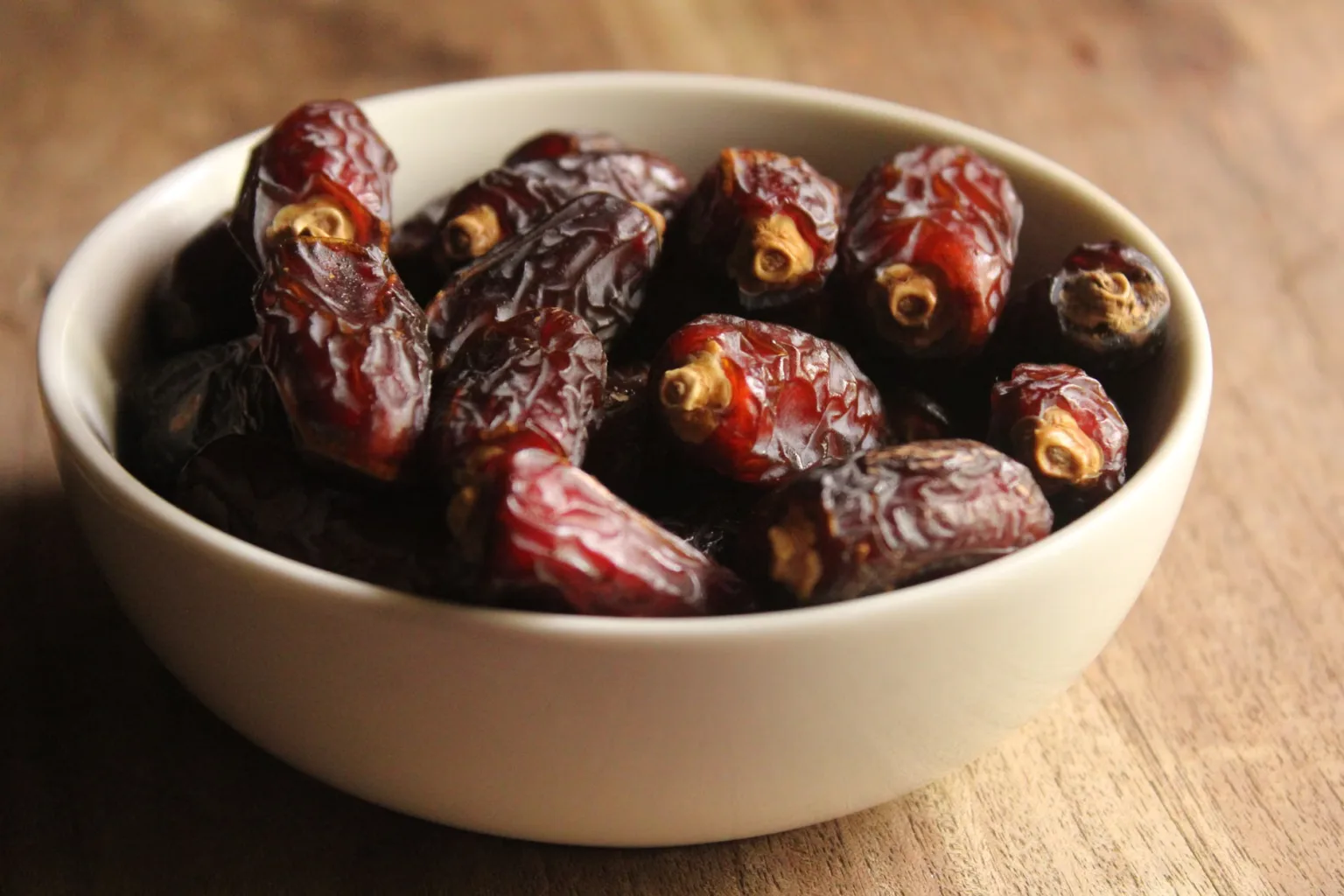
A date is the fruit of the date palm, Phoenix dactylifera. Although dates are often found dried or semi-dried, some varieties and stages of ripeness are also eaten fresh. Their appearance and texture change with the variety and maturity: a date may be soft and juicy, tender and semi-dry, or firmer and dry. Size, color, and degree of sweetness vary too. Some varieties are especially soft and sweet, while others have firmer flesh and a more moderate sweetness. For that reason, check the variety and product description rather than assuming that every date will behave the same way in a recipe. Dates are sold for eating as they are and for adding whole, chopped, or blended to different preparations.
When to use it
Choose dates when you want to add sweetness and a substantial, fleshy texture to a snack, dessert, or savory dish. Softer, sweeter dates work well for eating as they are or blending, while firmer ones can be useful when you want chopped pieces to hold their shape. Use them in baking, sweets, salads, or stews, bearing in mind that variety and moisture affect the result. If a recipe needs a smooth paste, choose soft dates and remove the pits before blending. For a dish where distinct pieces matter, choose firmer dates and add them chopped.
How to use it
Before using dates, check for pits and remove them; do not blend the pits with the flesh. To serve dates whole, first make sure they are pitted. To add texture to a dish, chop them and mix them with the other ingredients. To make a paste, blend the pitted flesh; soft Medjool dates are one option described for this purpose, and their paste can replace sugar or honey in some recipes. Add the paste gradually and adjust the sweetness of the recipe, since dates vary in both sweetness and moisture. Dates can also be used in baking, desserts, salads, and savory dishes. If you are using fresh dates, remember that their texture may differ from that of dried or semi-dried fruit.
Flavour and texture
Dates taste sweet, but the intensity depends on variety and maturity. Some are described as very sweet, tender, and juicy; others are less sweet and firmer. Their texture can range from fleshy and soft to dry and compact, and color also varies with variety and ripeness. These differences affect whether they are best eaten whole, chopped, or blended.
How to choose it
Choose dates with the intended use in mind: soft, tender dates are easy to blend, while firmer ones are suited to chopping when you want pieces to hold their shape. Check the variety and product description, since size, color, sweetness, and moisture are not the same for every date. For a paste, favor soft flesh; for pieces in a dish, consider a firmer variety. Also check the packaging to see whether the dates are fresh, semi-dried, or dried.
Storage
Dates are sold fresh, semi-dried, and dried, so one storage instruction does not necessarily suit every product. Follow the package directions and the seller’s guidance for the particular dates you have. For dried dates, a culinary source recommends protecting them from air and sunlight in an airtight container in a cool, dry place. Do not automatically apply that advice to fresh dates: the product’s moisture and state may change its storage needs.
Substitutions
The available evidence describes Medjool date paste as an alternative to sugar or honey in some preparations; that does not mean the swap works identically in every recipe. Whole dates, chopped dates, and date paste contribute different textures, so choose the form that suits the dish. Adjust sweetness to taste because dates do not all have the same level of sweetness.
Common mistakes
Do not assume every date is equally soft, sweet, or moist: variety and maturity change how dates behave. Avoid blending the pit, and do not automatically swap whole, firm fruit for paste when a recipe depends on distinct pieces. Storage advice for dried dates should not automatically be used for fresh ones.
Safety and allergens
Check for and remove pits before serving, chopping, or blending dates, and follow the package directions for handling and storage. The supplied evidence does not establish a specific safety warning for dates.
Culinary uses
- Fruta para consumir sola
- Ingrediente dulce para postres y repostería
- Aporte dulce en preparaciones saladas
Recommended techniques
- Consumir entero o troceado, retirando el hueso
- Triturar la pulpa sin hueso para obtener una pasta
- Incorporar picado a ensaladas, guisos o preparaciones de repostería
Pairs well with
- Frutos secos
- Chocolate
- Ensaladas y platos salados
- Preparaciones de repostería
Frequently asked questions
Are all dates dried?
No. Dates are sold fresh, soft, semi-dried, and dried; texture and moisture vary with type and maturity.
How do I make date paste?
Remove the pits and blend the flesh. Soft Medjool dates are described as suitable for this use; their paste can replace sugar or honey in some preparations.
How should I store dates?
Follow the package directions because dates may be fresh, semi-dried, or dried. For dried dates, a culinary source recommends an airtight container away from air and sunlight in a cool, dry place.
Estimated nutrition
- Fat
- 0 g
- Saturates
- 0 g
- Carbohydrate
- 75 g
- Sugars
- 55 g
- Fibre
- 7.5 g
- Protein
- 2.5 g
- Salt
- 0.06 g
Sources and review
Automatically researched, cross-checked and validated content. Sources consulted:
- Client Challenge doi.org
- Pantry Food Storage | Ohioline ohioline.osu.edu
- USDA FoodData Central libguides.marist.edu
- Comité Científico aesan.gob.es
- Culinary Institute of America | World's Premier Culinary College ciachef.edu
- Tipos de dátiles – VisitElche visitelche.com
- Food Storage Booklet.indd extension.usu.edu
- Janice Bluestein Longone Culinary Archive | University of Michigan Library lib.umich.edu
- A Consumer Food Data System for 2030 and Beyond nap.edu
- ¿Conocías los distintos tipos de dátiles? | El arte de comer bien | mentta mentta.com
- Dátil: qué es, propiedades, beneficios y recetas bonviveur.com
- Dátiles: lo que no sabías de este alimento. Tipos e historia rtve.es
- Dátiles | Gastronomía & Cía gastronomiaycia.com