- Category
- Pulses
- State
- Dry
- Usual unit
- g
What it is
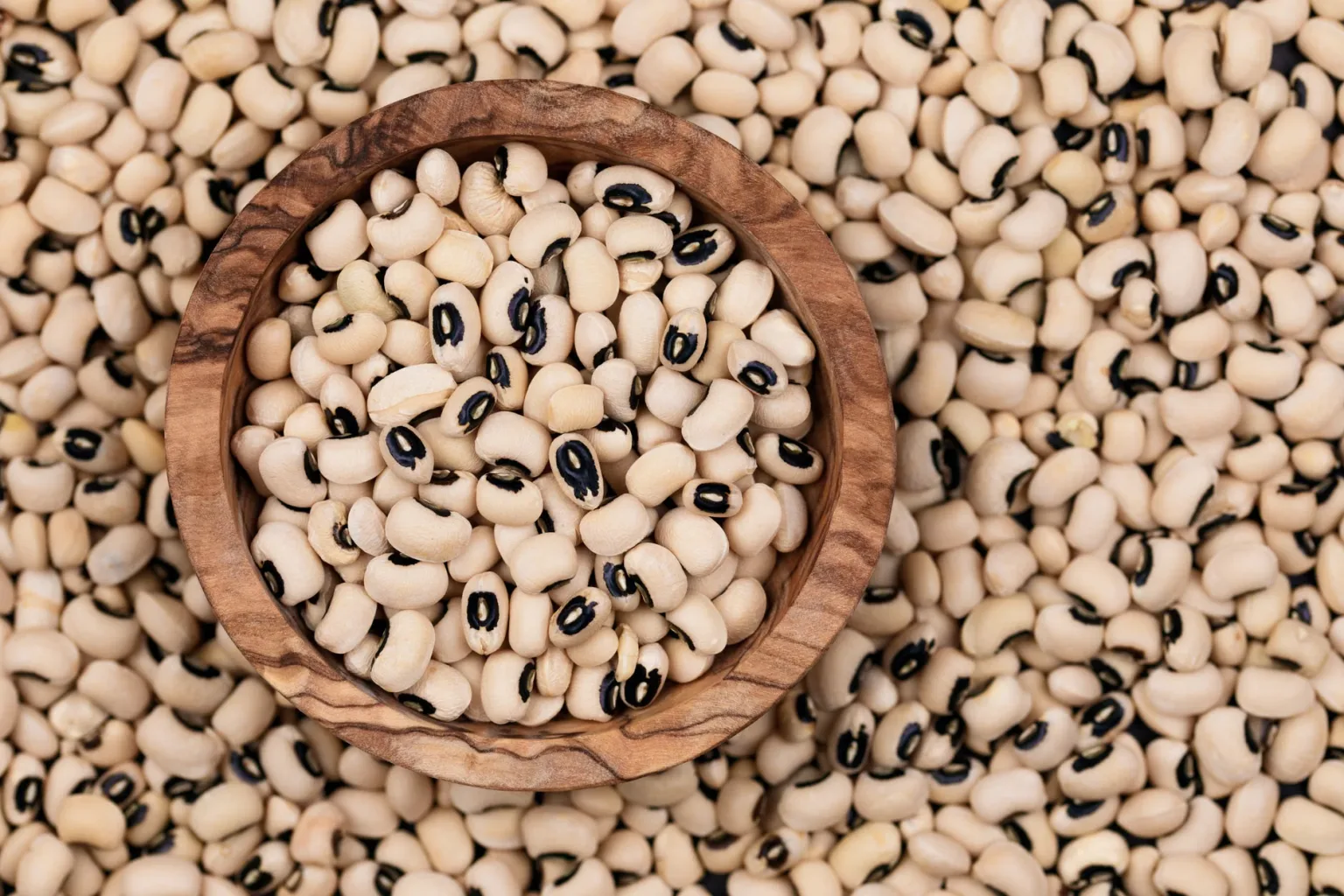
Black-eyed peas, also known in Spanish as alubias carilla, are the dried seeds of a legume identified in the supplied evidence as Vigna unguiculata. The common commercial variety described is pale with a distinctive dark spot, although the evidence also notes differences in size and color among varieties. Here, “dried” describes the product before it is soaked and cooked; it is not the same state as freshly shelled peas. Their small size and mild flavor suit stews, soups and other preparations. This profile does not assign an origin or season because the available evidence does not establish either one securely.
When to use it
Choose dried black-eyed peas when you want a legume base for a spoonable stew, a vegetable pot or a salad made with cooked peas. The available recipes pair them with a sauté of onion, garlic, pepper and tomato, and also describe a rice variation. Because the dry product needs soaking and cooking, it is most convenient when you can plan for those steps rather than when you need an ingredient ready to serve immediately. There is no universal timing supported here: checking for tenderness is a more useful guide than applying the duration from one particular recipe to every kitchen.
How to use it
Sort through the peas and remove any damaged seeds or foreign material, then rinse them. You can soak them before cooking; one recipe leaves them overnight and then drains and rinses them. For a stew, cook onion, garlic and pepper, add tomato and, if desired, paprika, then add the peas and enough water to cook them. Keep the cooking gentle until they are tender, and check the texture before serving. You can also cook them with vegetables and bay leaf, serve them with brown rice, or use them in a salad once cooked. The evidence does not establish one fixed soaking or cooking time, so do not treat the timing in an individual recipe as a universal rule.
Flavour and texture
A culinary source describes black-eyed peas as small and mild, and the recipes use them in brothy preparations. Check their texture as they cook and continue gently until tender. The dry seed commonly has a distinctive dark spot, but the evidence also describes varieties with different sizes and colors; a visual variation alone should not be treated as automatic evidence of spoilage.
How to choose it
Look for a product clearly labeled black-eyed peas, alubias carilla or a comparable name, and check that it is identified as dried. If you can inspect the seeds, look for a reasonably intact product without visible moisture or foreign material. The dark spot is characteristic of the common commercial variety described, but sizes and colors can vary among varieties, so do not expect every seed to look identical. The available evidence does not establish a seasonal buying window or a universal quality standard based on size.
Storage
Keep dried peas in a tightly closed container in a cool, dry place away from direct light, following the available storage recommendation for this legume. Avoid places where they might become damp. Check the product before cooking and do not use seeds with obvious signs of moisture damage or deterioration. The evidence consulted does not set a precise shelf life for dried peas; follow the package date and directions when provided.
Substitutions
The evidence does not identify another legume as a direct substitute for dried black-eyed peas. As dish variations, one recipe suggests making the peas with brown rice, while another presents a vegetable stew without meat alongside versions using chorizo or pork belly. These options change the preparation but do not exactly reproduce the peas’ role or texture. If you need to replace the legume itself, the available sources do not support a specific equivalent.
Common mistakes
Do not skip rinsing after soaking, or assume that a cooking time from one recipe guarantees the same result for every batch. Check for tenderness and keep a stew at a gentle simmer. Also, do not treat every color difference as a defect: the evidence describes variation among varieties. Rice and vegetables can create different versions of a dish, but they are not identical substitutes for the peas.
Safety and allergens
Rinse the peas and cook them fully until tender before serving. Discard any seeds with visible deterioration and follow the package directions. The available sources do not provide a specific official safety warning for this ingredient.
Culinary uses
- Base de guisos y potajes
- Ingrediente para ensaladas de legumbres
Recommended techniques
- Remojar y enjuagar antes de cocinar
- Cocer a fuego lento hasta que estén tiernas
- Añadir a guisos con verduras y aromáticos
Pairs well with
- Cebolla, ajo, pimiento y tomate
- Laurel y pimentón
- Arroz integral
- Aceite de oliva, ajo y perejil
Frequently asked questions
Do dried black-eyed peas need soaking?
One available recipe recommends soaking them overnight, then draining and rinsing them. The evidence does not establish that this duration is required for every product.
What ingredients pair well with them?
Recipes pair them with onion, garlic, pepper, tomato, bay leaf and paprika. A brown-rice variation is also mentioned.
How do I know when they are ready?
Cook them until tender and check the texture directly. The sources give different timings for individual recipes, not one universal cooking time.
Estimated nutrition
- Fat
- 0 g
- Saturates
- 0 g
- Carbohydrate
- 20 g
- Sugars
- 2.86 g
- Fibre
- 5.7 g
- Protein
- 2.86 g
- Salt
- 0.02 g
Sources and review
Automatically researched, cross-checked and validated content. Sources consulted:
- Client Challenge doi.org
- Sevin 16oz Concentrate Label v20 ucanr.edu
- Sevin RTU Gallon Label v14 picol.cahnrs.wsu.edu
- [Alubias carillas] ✅ Receta para los amantes de las legumbres cocinandoelcambio.com
- Las carillas, legumbres típicas del Valle del Tiétar y La Vera saboresdegredos.com
- Selección de cultivos de cobertura para productores de hortalizas | Extensión de la UMN es.extension.umn.edu
- Huertos caseros en Nuevo México | New Mexico State University - BE BOLD. Shape the Future. pubs.nmsu.edu
- EL DESARROLLO LOCAL EN EL ECUADOR Historia, ... digitalrepository.unm.edu
- Alubia carilla - Wikipedia, la enciclopedia libre es.wikipedia.org
- Alubia Carilla: El Tesoro de Extremadura 🌾🥣 - Slow Shop granel slowshopgranel.es
- La alubia carilla, la más antigua y que vino de África - Foodies on Menorca foodiesonmenorca.com