- Category
- Herbs and spices
- State
- Dry
- Usual unit
- Variable
What it is
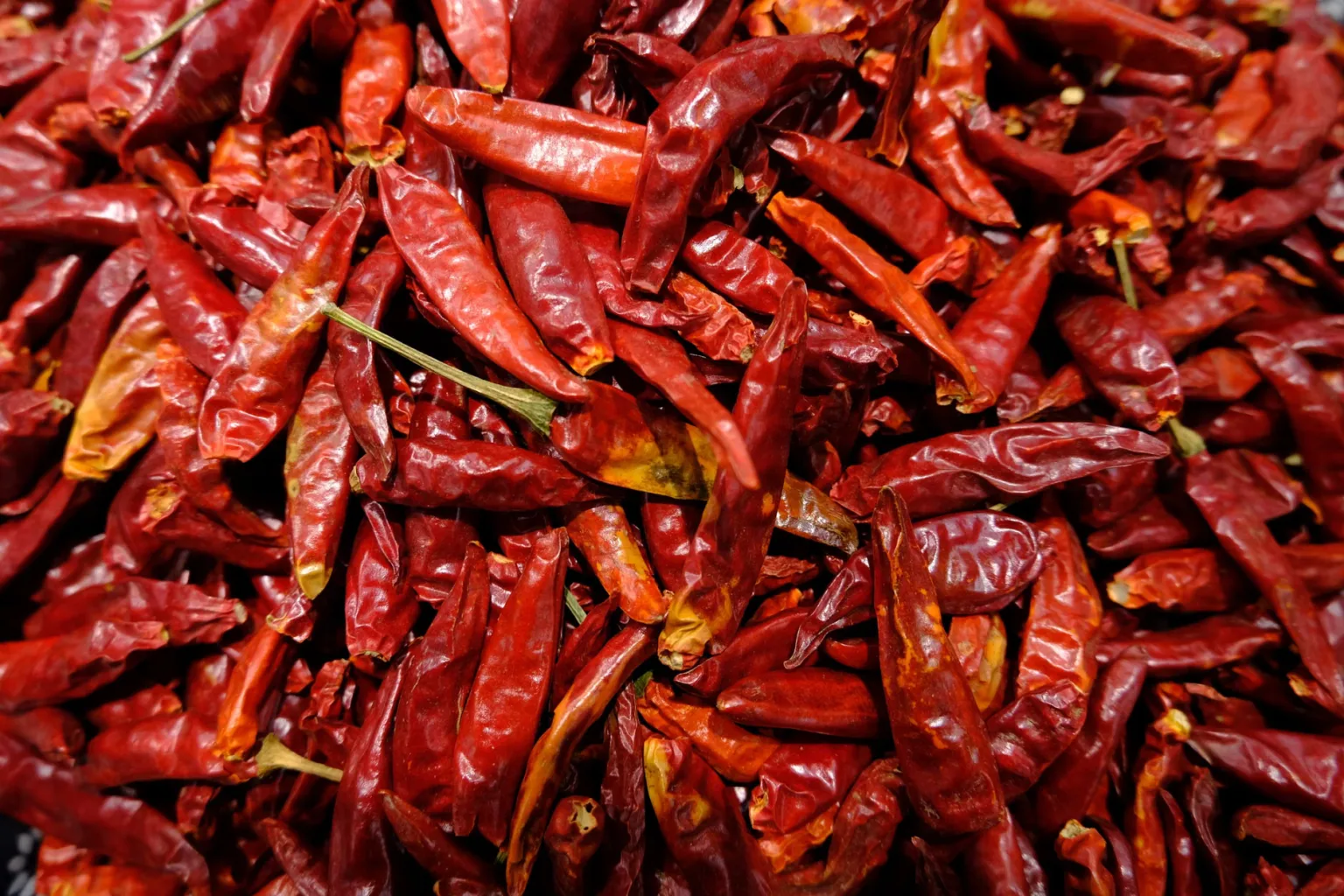
Dried chili is a general name for different dehydrated chili peppers, not one specific variety. Removing moisture concentrates flavor and aroma, while each chili can have its own flavor profile and heat level. Some are simply dried, while others are also smoked. They often have wrinkled skins and colors ranging from red to dark brown. In cooking, dried chilies may be used whole, rehydrated, or ground, and the variety chosen affects a dish's color, aroma, and overall character. It is useful to identify the type when possible rather than assume that all dried chilies are interchangeable.
When to use it
Use dried chili when you want to add heat, color, or a more concentrated, complex flavor than fresh chili provides. It is especially useful in sauces, adobos, and moles, where it can be rehydrated and blended with ingredients such as tomato or other chilies. Choose a variety to suit the flavor you want: some dried chilies are sweeter or fruitier, while others bring more acidity, earthy notes, or smoke. Because the name covers different varieties, start cautiously if you do not know its strength, then adjust to taste.
How to use it
Inspect the chili and remove its stem if the recipe calls for it. To add it to a sauce or another blended preparation, rehydrate it in hot water until pliable; some recipes then call for removing the seeds and veins before blending. If the recipe specifies, briefly toast it in a dry skillet to develop its aroma, but do not assume this step is required for every variety or dish. It can also be ground or crumbled as needed. Blend it with tomato for a sauce, with other chilies for an adobo, or, in some mole preparations, with fat, chocolate, and nuts. Add a little at first and adjust: heat and flavor vary between varieties.
Flavour and texture
Flavor depends on the variety and drying process: it may be fruity, citrusy, earthy, sweet, or smoky. Drying concentrates aromas, and the skin is often wrinkled; some chilies have thicker skins and others thinner ones. Colors range from red to dark brown and can offer clues to flavor, but color alone does not identify heat level. Seeds and veins may also contribute to a hotter or more bitter impression.
How to choose it
Look for the variety name whenever possible, as it helps set expectations for flavor. Choose whole chilies with reasonably vivid color for their type and no visible signs of mold or insects; avoid pieces that are excessively broken or look deteriorated. Wrinkled skin is normal for some varieties, so do not treat that feature alone as a defect. If the package identifies a variety or origin, check those details and the product's usage instructions.
Storage
Keep dried chili in a tightly sealed container in a cool, dry place to limit exposure to ambient moisture. The available evidence also describes storage in a bag in the freezer, but it does not establish a universal storage duration for every variety and product form. Keep the container clean and closed after each use, and follow the manufacturer's directions for packaged products. Do not use it if you see mold or signs of deterioration.
Substitutions
Another dried chili can be substituted, but the heat, sweetness, acidity, aroma, and color may change. Choose an alternative based on the qualities you want to preserve, and begin with a small amount. A fresh equivalent chili may also work when its variety is known, but it is not an exact replacement: it contains more moisture and differs in flavor and handling from its dried form.
Common mistakes
Treating all dried chilies as though they have the same heat and flavor can throw off a recipe. Do not add a large amount of an unfamiliar variety without tasting first. It is also a mistake to assume that seeds and veins must always be removed or that every chili must be toasted or rehydrated: follow the recipe and choose the treatment for the intended use.
Safety and allergens
The available evidence contains no specific official safety warning for dried chili. Check the package and follow its directions; do not use the product if it shows visible mold or deterioration.
Culinary uses
- Aportar picor, aroma y color
- Base o condimento para salsas, adobos y moles
Recommended techniques
- Rehidratar en agua caliente antes de triturar
- Tostar brevemente en seco cuando la receta lo indique
- Retirar semillas y venas si se desea moderar el picor
Pairs well with
- Tomate
- Otros chiles y especias
- Carnes blancas y pescado
- Carnes rojas, grasas, chocolate y frutos secos
Frequently asked questions
Does dried chili refer to one specific variety?
No. It is a general term for different dehydrated chilies, whose flavor, aroma, and heat can vary.
Do I need to rehydrate dried chili before cooking?
Not always. Rehydrating it in hot water is useful for sauces and preparations that will be blended, but the method depends on the recipe.
Does removing the seeds reduce the heat?
Removing seeds and veins can moderate the heat in some preparations, although the result depends on the variety and the individual chili.
Sources and review
Automatically researched, cross-checked and validated content. Sources consulted:
- Client Challenge doi.org
- Storing White Rice | USU extension.usu.edu
- Pescado a la Veracruzana 1952 (Veracruz-style Fish) - lacocina.utsa.edu
- Agencia Española de Seguridad Alimentaria y Nutrición aesan.gob.es
- Tipos de Chiles Secos Mexicanos: Características y Usos abarrotes.es
- Chiles secos: el Ama de nuestra gastronomía | Love Veg loveveg.mx
- Chile seco - Wikipedia, la enciclopedia libre es.wikipedia.org
- Salsa Picante de Jícama (Spanish) - National Center for Home Food Preservation nchfp.uga.edu
- El chile — Canela Limón Chile canelalimonchile.com
- Preferences in 'Jalapeño' Pepper Attributes upcommons.upc.edu
- SCHOLAR OF GLOBAL DISTINCTION Application Template worldview.unc.edu