- Category
- Vegetables
- State
- Dry
- Usual unit
- cup
What it is
Dried gundruk is made from leafy vegetables that are fermented and dried. The leaves can vary: descriptions mention mustard leaves as well as other greens such as radish, cauliflower, cabbage, or spinach. The name therefore does not guarantee that every package contains the same leaf or has the same texture. Gundruk is described as sour and is used in cooked dishes or served as an accompaniment. The available evidence does not establish a single preparation formula or a universal shelf life, so check the product label for details specific to what you have bought.
When to use it
Use dried gundruk when you want to add a sour, fermented-leaf character to soup or another cooked dish. It can also be served as an accompaniment rather than cooked into a main dish. Because the ingredient is sold dry, allow for rehydration when planning a recipe, and follow package directions if provided. Sourness and texture can vary with the leaves and the product, so add it thoughtfully and taste the dish before adjusting its other flavors.
How to use it
First check the package and follow any preparation directions from the maker. One soup recipe in the evidence rehydrates dried gundruk in warm water, drains it, and cuts it before adding it to the dish. You can also cook it in a soup alongside other ingredients; one example combines it with potato, tomato, onion, garlic, ginger, and chile. Treat these as use ideas, not universal proportions: leaf type, piece size, and sourness can differ. Taste the finished dish and adjust its balance to suit the particular product and your preference.
Flavour and texture
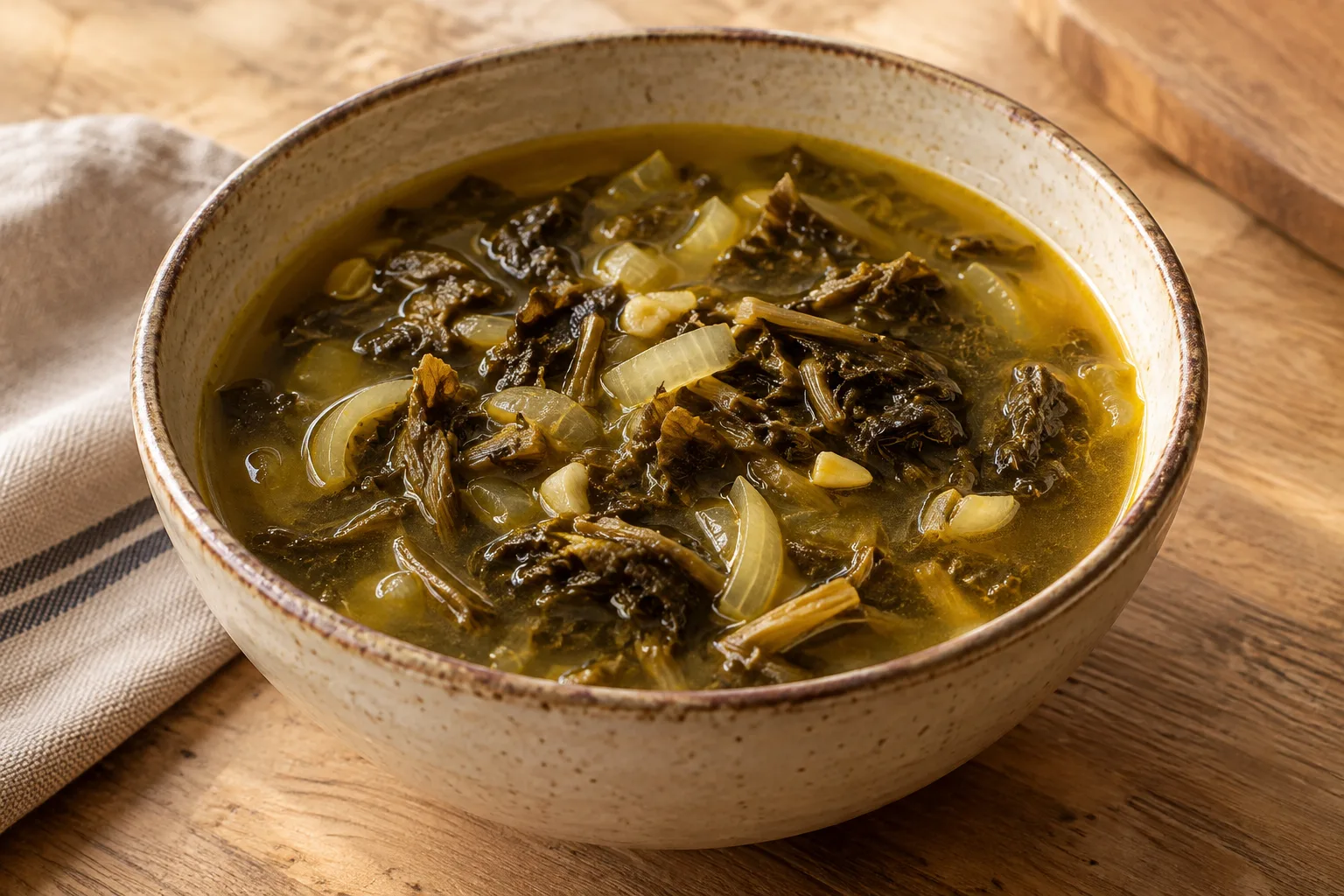
The clearest flavor characteristic reported for gundruk is sourness from the fermented leaves. In soup, it is described as bringing a distinctly earthy note as well. The final texture depends on the leaf variety, drying, and rehydration, so products need not be identical. When cooking it into a dish, keep its sour taste in mind and taste before adding other ingredients intended to balance the flavor.
How to choose it
Choose a package clearly identified as dried gundruk and check that it is closed and has no visible damage. The available information indicates that different leafy vegetables may be used, so read the ingredient list if knowing the specific leaves matters to you. Do not assume that all packages use the same leaf or have identical sourness. If the maker provides preparation instructions, consult them before cooking.
Storage
The available evidence does not establish one storage temperature, storage period, or set of conditions for every dried gundruk product. Follow the package directions and protect it from moisture if the label instructs you to do so. After opening, use the closure or container recommended on the package. Drying should not be taken to mean that the product lasts indefinitely; discard it if the package is damaged or the food shows signs of spoilage.
Substitutions
Another dried fermented leafy green may work as a cooking substitute, but its sourness, flavor, and texture may not match gundruk. If none is available, fresh leafy greens with a separate souring ingredient can be a practical workaround, though it will not reproduce the fermented flavor. Taste as you cook and adjust the dish rather than assuming an exact one-for-one replacement.
Common mistakes
Do not treat it like an unprepared fresh vegetable: the soup recipe in the evidence rehydrates it before cooking it into the dish. Do not assume every product tastes the same, since the leaves can differ. Avoid adding it without tasting and then automatically adding more sour ingredients; sourness is already part of its flavor.
Safety and allergens
Follow the package directions and do not consume a product with damaged packaging or visible signs of spoilage. The evidence consulted does not provide official, ingredient-specific food-safety instructions.
Culinary uses
- Sour, savory ingredient for soup
- Fermented leafy-green accompaniment or side dish
Recommended techniques
- Rehydrate before adding to a dish
- Simmer in a soup or stew
Pairs well with
- Potato and tomato in soup
- Onion, garlic, ginger, and chile in a savory soup
Frequently asked questions
What is dried gundruk?
It is a food made from fermented, dried leafy vegetables. The leaves can differ from one product to another.
How do I use it in soup?
One recipe rehydrates and drains it before adding it to soup. Follow the package directions and taste as you cook.
What does gundruk taste like?
It is described as sour and can bring an earthy note to soup. The intensity varies by product.
Sources and review
Automatically researched, cross-checked and validated content. Sources consulted:
- ¿Por qué la muerte es origen de miedos y tabúes? doi.org
- Client Challenge doi.org
- ¿Qué es el maridaje de sabores? - Hostelería Benidorm hosteleriabenidorm.com
- Criterios de armonía funcional entre gastronomía y salud: una visión desde la comunidad científica scielo.isciii.es
- - YouTube youtube.com
- Técnicas culinarias con frutos secos - Itac Professional itac-professional.com
- Sopa Gundruk — 375 kcal | Nutrilogy AI nutrilogyai.app
- Gundruk - Wikipedia, la enciclopedia libre es.wikipedia.org
- Gundruk para Niños ninos.kiddle.co
- Gundruk ko Jhol: receta y origen | Guide Cuisine guide-cuisine.ch
- Novedades archivos - Amandin.com amandin.com
- Cocina Newari: El Patrimonio Gastronómico de Nepal | Remitly remitly.com
- Técnicas de maridaje de vinos - Bodegas Heredad Linares heredadlinares.com
- ¿Cómo hacer un maridaje perfecto? | SumiVin sumivin.com
- Maridaje en gastronomía: guía fácil para combinar sabores elcarbondevalentina.madrid