- Category
- Pulses
- State
- Dry
- Usual unit
- g
What it is
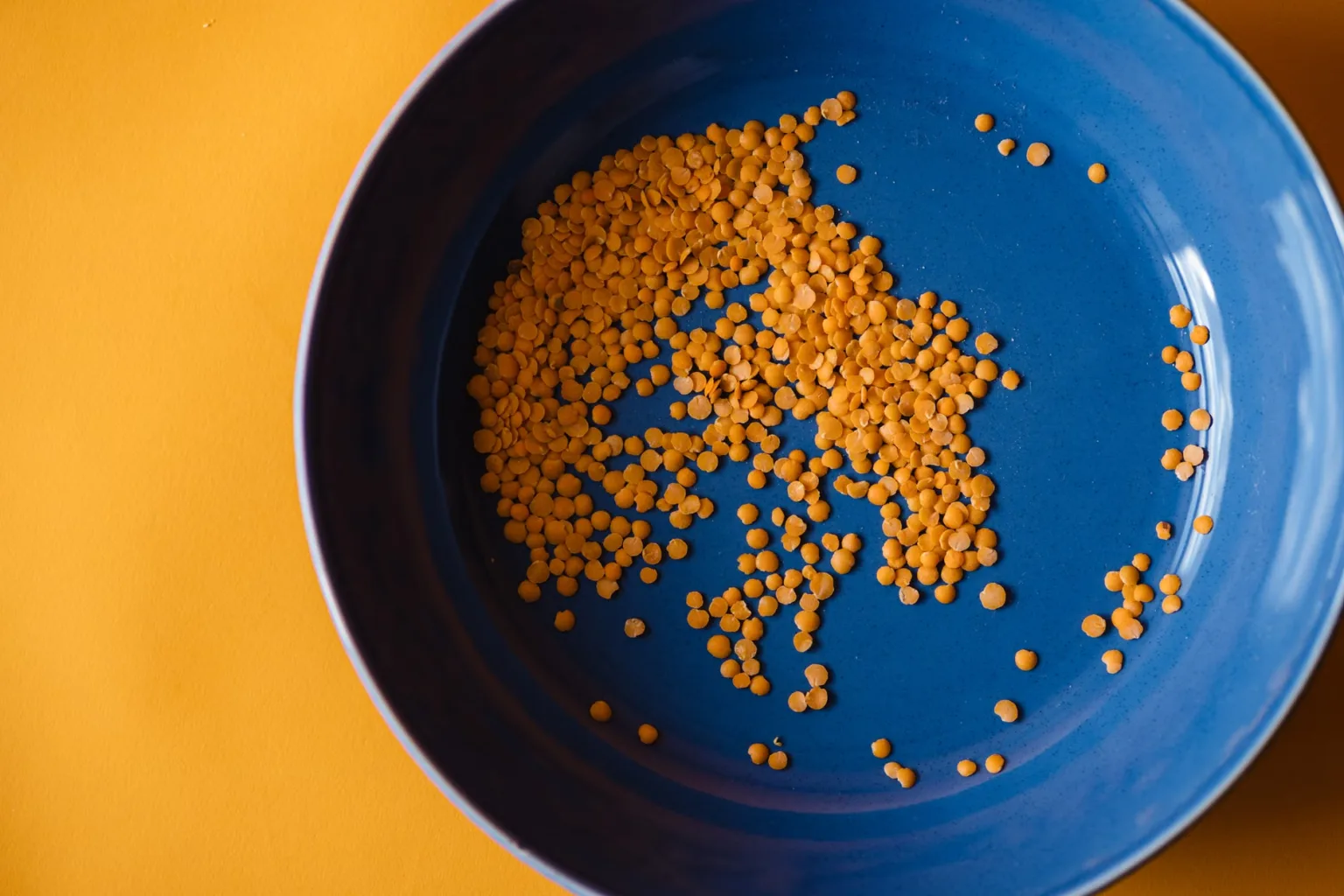
Dried lentils are the mature edible seeds of the lentil plant, sold without their pods and not yet cooked. They belong to the legume group and come in different colors and forms. Some are sold whole, while others are split and may have their skins removed. These differences matter in cooking: whole lentils generally hold their shape better, while split, skinless lentils soften and break down more readily. As a result, dried lentils do not all produce the same texture even when used in similar ways. This profile is for dried lentils, not cooked or canned lentils.
When to use it
Choose dried lentils when you want a substantial base for soup, stew, or curry, or a legume that can be served whole, mashed, or mixed into a filling. Whole lentils suit dishes where distinct pieces are desirable, such as warm salads. Split lentils, especially red or yellow varieties, work well when you want a softer texture for thickening soup or making purée. Color and format do not guarantee identical results across products, so check the package and adjust the cooking to the texture you want.
How to use it
Before cooking, spread out the lentils and check for small stones or debris, then rinse them under water. The consulted source says pre-soaking is not necessary for lentils, though the product and form can affect the result. Put them in a pot with water or stock, bring the liquid to a boil, and then simmer gently until tender. Adjust the cooking to whether you want them to hold their shape or become very soft: split lentils tend to break down and can thicken the liquid. Add them to salads, grains, soups, curries, or stews; you can also mash or blend cooked lentils into a paste for vegetable fillings.
Flavour and texture
Lentils are commonly described as mild, earthy, and slightly nutty, although intensity varies between varieties. Whole lentils can remain firm and hold their shape; split, skinless lentils tend to cook down to a soft, creamy texture. Color alone does not fully determine flavor or texture, so consider whether the lentils are whole or split and choose the finish to suit the dish.
How to choose it
Choose clean dried lentils in packaging that is intact. For a salad or side dish with distinct pieces, look for a whole product whose format is clearly identified; for purée or thick soup, split lentils may be convenient. Lentils are sold in several colors and varieties, so the product name, format, and package directions can help you anticipate how to use them. Also check the product information and any storage or preparation directions.
Storage
Keep dried lentils in a tightly sealed container or intact package in a cool, dry, dark place. Protect them from moisture and prolonged exposure to heat or light. Available sources give differing recommendations about storage duration, so this profile does not set a universal shelf-life. For packaged lentils, follow the date and storage directions on the label, and inspect the product before use.
Substitutions
For a creamier result, replace whole lentils with split lentils, keeping in mind that split lentils break down more readily. Cooked lentils can replace some chickpeas in a hummus-style preparation, or some meat in chili, stews, and fillings. These swaps change the texture and flavor, so adjust the liquid and cooking to suit the recipe.
Common mistakes
Do not assume every lentil will hold its shape: split, skinless lentils can break down and thicken a dish. Another common mistake is skipping the check and rinse before cooking; remove possible small stones or debris and rinse the lentils. Do not rely on color alone, since whole or split form also affects the result.
Safety and allergens
Check and rinse dried lentils before cooking to remove possible debris. Follow the package directions for preparation, use, and storage; applicable information can vary with the product and how it is sold.
Culinary uses
- Base para sopas y guisos
- Aporte de cuerpo a ensaladas y platos de cereales
- Ingrediente para purés, curris y rellenos
Recommended techniques
- Revisar y enjuagar antes de cocinar
- Cocer a fuego suave en agua o caldo hasta alcanzar la textura deseada
- Triturar o aplastar las lentejas ya cocidas para obtener una pasta
Pairs well with
- Arroz, quinoa y otros cereales
- Zanahoria, tomate, cebolla y otras verduras
- Comino, cúrcuma, ajo y hierbas aromáticas
- Mostaza, vinagre y aceite en aliños
Frequently asked questions
Do dried lentils need to be soaked?
The consulted source says pre-soaking is not necessary. Check the product and follow its package directions if provided.
Which lentils hold their shape best?
Whole lentils generally hold their shape better than split, skinless lentils, which soften and break down more readily.
How should dried lentils be stored?
Keep them sealed in a cool, dry, dark place. For packaged lentils, check the date and storage directions on the label.
Estimated nutrition
- Fat
- 6.86 g
- Saturates
- 0.92 g
- Carbohydrate
- 18.71 g
- Sugars
- 1.67 g
- Fibre
- 7.3 g
- Protein
- 8.38 g
- Salt
- 0.54 g
Sources and review
Automatically researched, cross-checked and validated content. Sources consulted:
- En el etiquetado alimentario hay algunas menciones que son obligatorias eletiquetadocuentamucho.aesan.gob.es
- Client Challenge doi.org
- Tipos de lentejas: características y cocción | Fine Dining Lovers finedininglovers.es
- Lentejas: beneficios de una legumbre muy nuestra - Legumbres Ja'e legumbresjae.com
- Lens culinaris - Wikipedia, la enciclopedia libre es.wikipedia.org
- Presencia de gluten en lentejas Página 1 de 4 26/10/2020 aesan.gob.es
- Recetas para comer fuera de casa: Ensalada de lentejas especiada cordonbleu.edu
- Tasty Tidbits: Lentils - Alabama Cooperative Extension System aces.edu
- Orden APA/ /2025, , por la que se definen los bienes y los rendimientos mapa.gob.es
- Cocina Y Cultura Research Papers - Academia.edu academia.edu
- ¿Qué son las lentejas? - Spend Smart Eat Smart spendsmart.extension.iastate.edu
- Lentils • The Nutrition Source nutritionsource.hsph.harvard.edu
- Yum Yum Lentils/Lentejas Deliciosas (LCH) | CSU Northridge w2.csun.edu
- ¡A cocinar! Armado de la estación y guion de la receta eatingsmartbeingactive.colostate.edu
- Lentils | Montana State University montana.edu
- FSHN18-7/FS310: Alimentos en puré: Postres de lenteja ask.ifas.ufl.edu
- Lenteja (Lens culinaris): leguminosa, cultivo, nutrición y usos es.alegsaonline.com