- Category
- Pulses
- State
- Dry
- Usual unit
- g
What it is
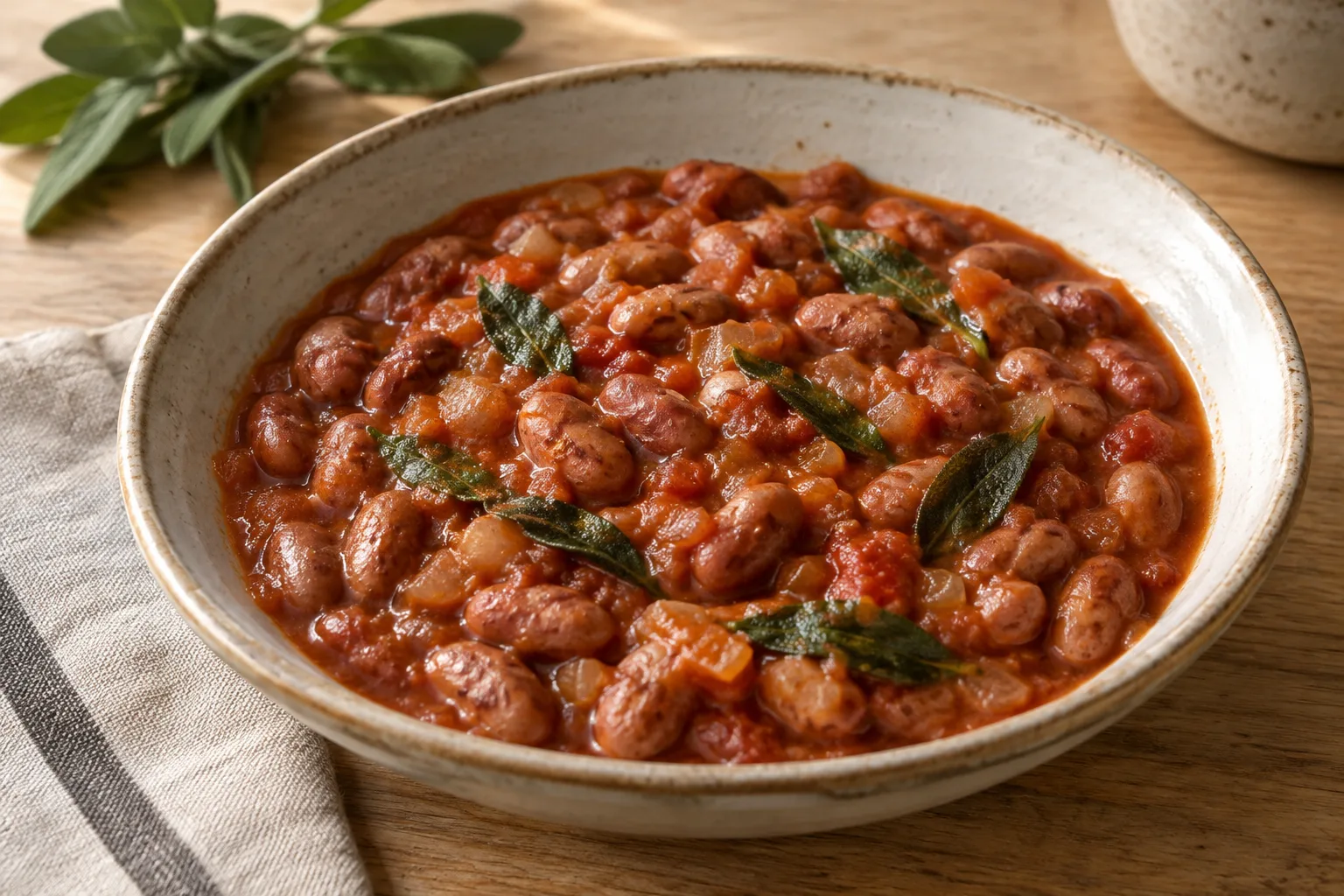
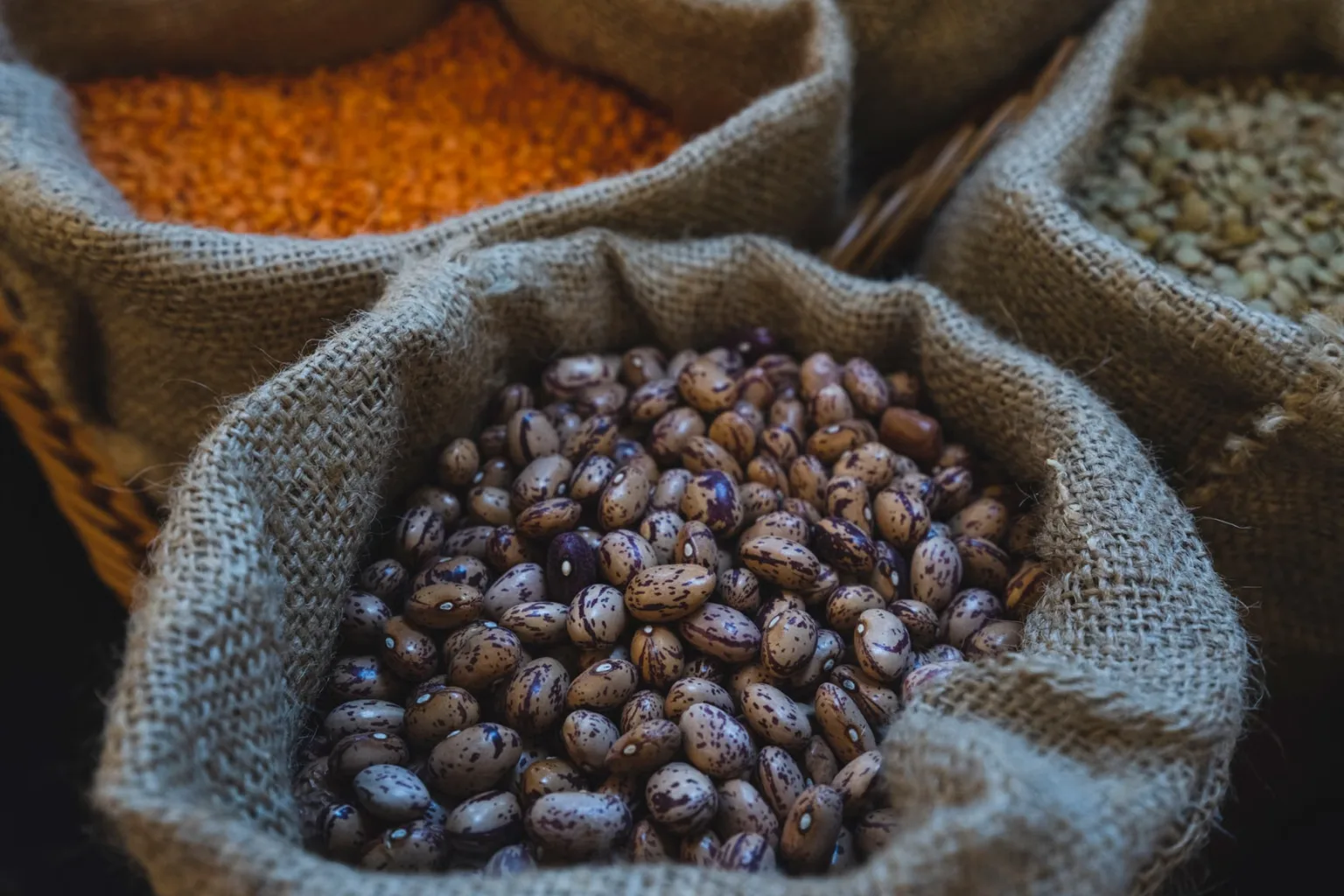
Dried pinto beans are mature, dehydrated seeds from a legume plant. They are commonly recognized by a beige, pink, or reddish background marked with darker spots or streaks, although appearance can vary between varieties and batches. The name “pinto” describes a culinary or market type and does not, by itself, establish a precise botanical species. Once cooked, these beans usually add body and a somewhat creamy or mealy texture, which makes them useful in hearty dishes and preparations where a substantial broth is wanted. They should not be confused with green beans, which are tender pods eaten as a vegetable. Bean names vary by region, and different names do not always identify exactly the same kind of seed.
When to use it
Use them when you want a legume with a noticeable presence in a hot dish, such as a stew, thick soup, or pot of beans. They also work with rice, in salads after cooking, puréed into a smooth or rustic soup, or mashed for vegetable patties and fillings. Their flavor and texture can stand up to vegetables or more assertive ingredients such as chorizo, but meat is not necessary for a satisfying bean dish. If you want the beans to keep their shape, avoid stirring them roughly and check their tenderness before deciding they are done.
How to use it
Before cooking, inspect the beans and remove any foreign material or visibly damaged beans; then rinse them. Soaking is a common way to hydrate dried beans before cooking. Drain them and cook in water until tender; the time can vary with the batch and the age of the beans, so judge by texture rather than relying on one fixed time. You can cook them with vegetables or aromatics and, for a more cohesive broth, mash or purée some of the cooked beans and return them to the pot. Add them to stews, soups, and rice dishes; alternatively, cool them for salads or mash them for vegetable patties. Adjust the liquid and final texture to suit the recipe.
Flavour and texture
Pinto beans are described as more pronounced in flavor than some white beans, with a savory profile that suits hearty dishes. When cooked, the centers can become creamy and slightly mealy, while the skins remain noticeable if the beans are properly cooked. Their dry color and mottling vary between products, and appearance alone does not guarantee identical texture from one batch to another. In stews and soups, they take on flavors from the cooking liquid and help give it body.
How to choose it
Choose a product clearly sold as dried pinto beans and check that its package or label identifies the food. If buying in bulk, look for beans that are reasonably whole and clean, without visible moisture or a large amount of broken pieces. Size, shade, and the strength of the mottling can vary between batches, so do not expect every bean to have exactly the same appearance. If you need a particular origin or regional type, check the label: a common name alone does not guarantee a specific provenance.
Storage
Keep dried beans in a clean, tightly closed container in a cool, dry place, protected from moisture. Retain the label information and follow any specific storage instructions from the producer. Dried legumes can keep for a substantial period, but the available evidence does not establish one storage duration for every product; the age of the beans may affect cooking results. Use any date or particular storage guidance on the package as your reference.
Substitutions
Other dried beans, such as white or red beans, can replace pintos, but their color, flavor, texture, and cooking behavior may differ. Red beans may give a dish more color and a mealier consistency, while white beans generally have a milder profile. The names “pinto” and “borlotti” are used variably in some sources and markets, so do not assume that every product sold as borlotti is identical to the pintos in a recipe. Check the tenderness of any substitute as it cooks.
Common mistakes
Do not confuse dried pinto seeds with fresh green-bean pods; they are used differently. Do not assume every batch will cook in the same amount of time; check for tenderness as they cook. Vigorous stirring can break the beans and make a stew more pasty. Finally, do not treat the name “pinto” as a guarantee of identical origin, species, or appearance across all products.
Safety and allergens
Follow any use and storage directions on the package. The official evidence provided does not describe a specific warning for dried pinto beans; check the product information for the beans you buy.
Culinary uses
- Base de guisos, potajes y estofados
- Ingrediente para sopas, ensaladas, cremas y hamburguesas vegetales
Recommended techniques
- Remojo antes de la cocción
- Cocción en agua hasta que los granos estén tiernos
- Triturado parcial para espesar el caldo
Pairs well with
- Arroz y otros cereales
- Verduras, cebolla y ajo
- Chorizo u otros ingredientes sabrosos, si se desea
Frequently asked questions
Should dried pinto beans be soaked?
Soaking is a common way to hydrate dried beans before cooking. Drain them afterward and cook until tender.
What dishes can I make with pinto beans?
They work in stews, soups, and rice dishes. Once cooked, they can also go into salads, be puréed into soup, or be mashed for vegetable patties.
Are dried pinto beans the same as green beans?
No. Dried pintos are mature, dehydrated seeds; green beans are tender pods eaten as a vegetable.
Can I substitute another bean?
Yes. White or red beans can work, but their flavor, color, texture, and cooking behavior may differ. Check them as they cook.
Estimated nutrition
- Fat
- 7.11 g
- Saturates
- 1 g
- Carbohydrate
- 24.37 g
- Sugars
- 0.32 g
- Fibre
- 8.4 g
- Protein
- 8.37 g
- Salt
- 0.54 g
Sources and review
Automatically researched, cross-checked and validated content. Sources consulted:
- En el etiquetado alimentario hay algunas menciones que son obligatorias eletiquetadocuentamucho.aesan.gob.es
- Informe sobre Legumbres, Nutrición y Salud aesan.gob.es
- Judías pintas, la receta tradicional con chorizo cocinatis.com
- Client Challenge doi.org
- Judías verdes beneficios, cultivo y usos culinarios esenciales flores.ninja
- Las alubias o judías secas | Consumer consumer.es
- Judías secas: propiedades, beneficios para la salud y tipos cuerpomente.com
- Las alubias o habichuelas: origen, variedades, beneficios y recetas para cocinar la legumbre más extendida del mundo directoalpaladar.com
- Judías: variedades y propiedades para tu salud lavanguardia.com
- Alubia Pinta Secofrut - Legumbres a granel - Judías pintas secofrut.com
- Recetas con judías | Recetas.com recetas.com
- Judias Pintas: Sabor Tradicional | HerreraFood – Herrera Premium Food herrerafood.com
- Clases de judías – Botanical-online botanical-online.com
- Almonte - Wikipedia, la enciclopedia libre es.wikipedia.org
- Judías pintas perfectas - Guía para cocerlas y combinarlas castelloalmes.es
- Judías pintas con chorizo abc.es