- Category
- Pulses
- State
- Fresh
- Usual unit
- g
What it is
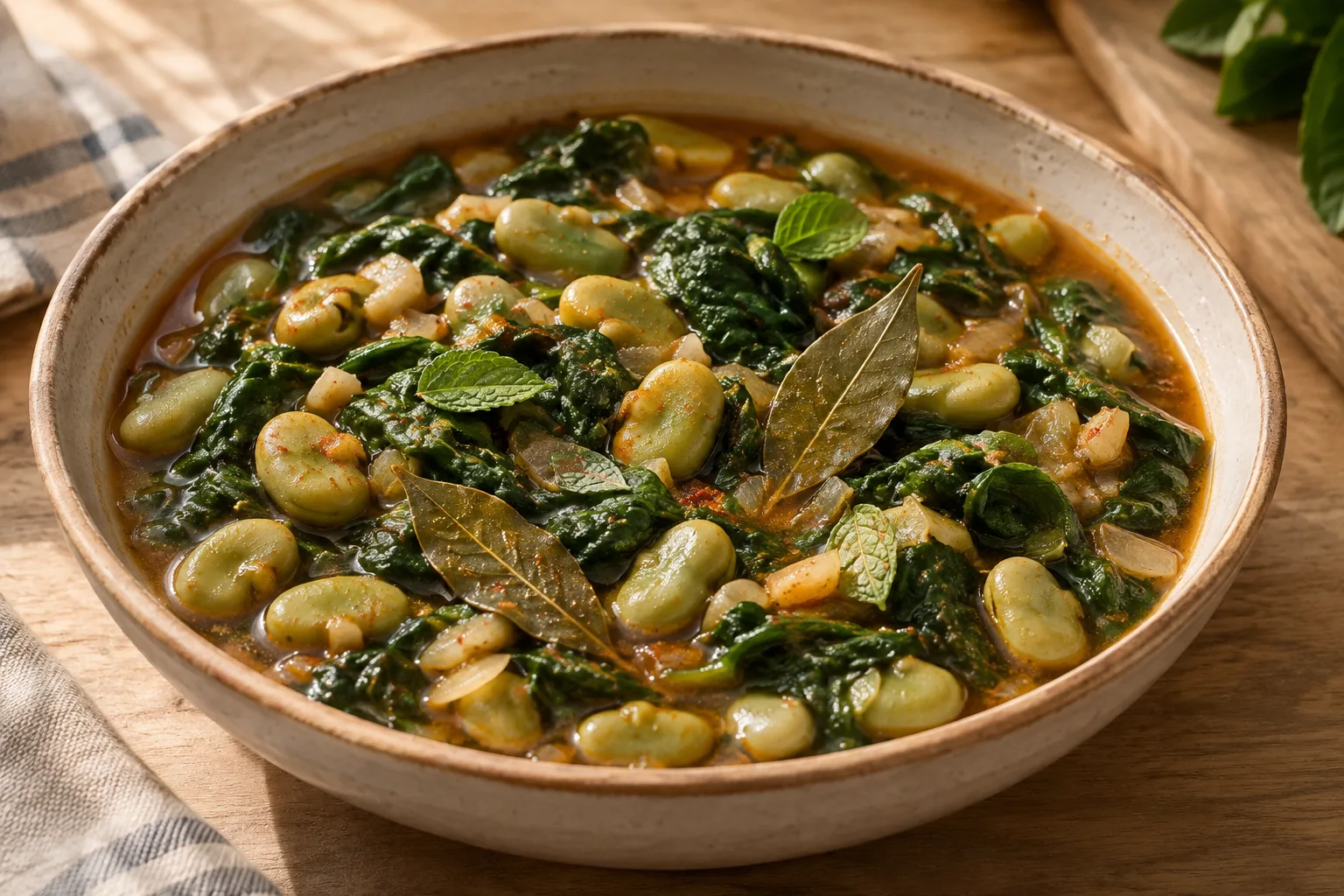
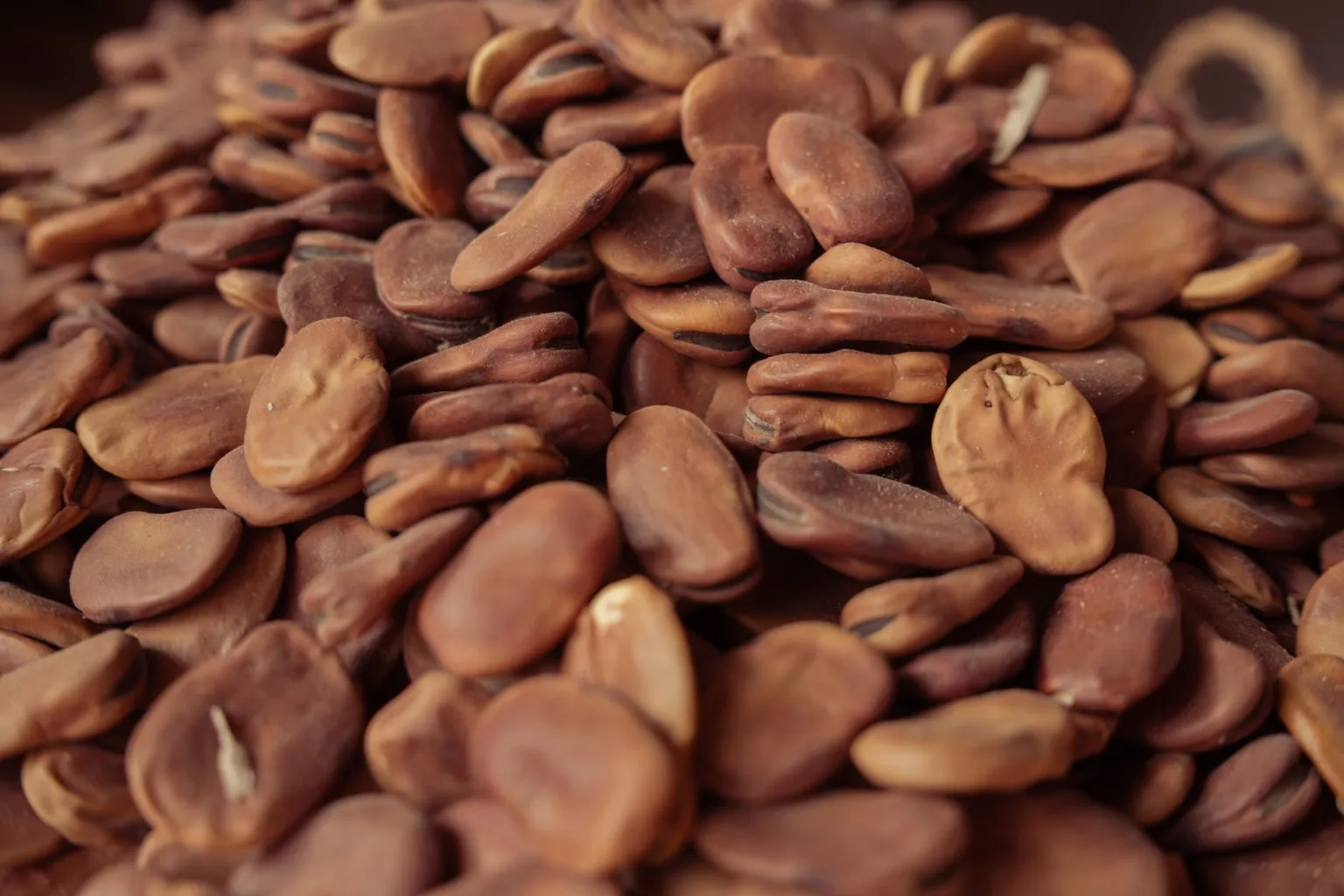
Fava beans are the edible seeds of Vicia faba, a legume. In their fresh form they are commonly sold in green pods, which are opened to remove the seeds before cooking. Maturity affects how they are prepared: very young beans have thin skins, while the outer skin of more mature seeds may be tougher and is sometimes removed by cooks. The pod should not be confused with the seed that is usually served. This profile covers fresh fava beans, not dried beans or preserved products, although frozen or canned favas can be convenient alternatives in a recipe.
When to use it
Choose fresh fava beans when you want a green legume for a salad, soup, stew or side dish. Small, tender seeds suit simple preparations; larger seeds can be cooked and peeled for a more delicate texture. Fresh availability varies by place and time of year, so a universal season cannot be specified here. If fresh beans are unavailable or you want to avoid shelling pods, frozen or canned fava beans are also available as alternatives.
How to use it
Open the pods and remove the seeds. If the beans are very young, you can use them in a simple preparation; larger or more mature seeds can be boiled or blanched until they reach the texture you want. The outer skin of mature seeds can be removed after cooking; briefly cooling them in ice water may make peeling easier. Add the beans to salads with fresh ingredients, stir them into soups or stews, sauté them as a side, or mash them into a purée. They can also be baked. Match the preparation to the beans’ size and maturity, and check their texture as you cook rather than assuming every batch needs the same treatment. For frozen or canned products, follow the package directions.
Flavour and texture
Green fava beans have a mild, vegetal flavour and can be tender and creamy when young and properly cooked. More mature seeds may have a firmer outer skin, which some cooks prefer to remove. Texture varies with size, maturity and preparation, so fresh beans are not always equally tender.
How to choose it
When buying favas in their pods, look for green, firm pods without very soft areas, extensive spots or visible holes. Larger pods often hold larger, more mature seeds, although size is not a guarantee. Keep in mind that the pod is not the part usually shelled and served in most fresh-fava preparations.
Storage
Storage depends on how long ago the beans were harvested and how they have been handled. As practical culinary guidance, keep fresh pods refrigerated in a mesh or perforated bag and use them soon to maintain quality. Avoid a tightly closed plastic bag. Once shelled, refrigerate the seeds in a container and use them promptly; the available evidence does not support a universal storage time here.
Substitutions
Frozen or canned fava beans can stand in for fresh beans in many preparations, although the product and texture may differ. Choose a form that suits the recipe and follow its package directions. The substitution changes the preparation work: fresh beans need to be shelled from their pods.
Common mistakes
Do not confuse the pod with the seed usually cooked, or assume that every seed is equally tender. More mature beans may have a tougher skin; cooking without checking texture or expecting the skin always to be pleasant can make the result less delicate. Avoid storing fresh pods in a tightly closed plastic bag.
Safety and allergens
For packaged or prepared products, read the label and follow its use and storage instructions. AESAN issued an alert about sulfites in a specific batch of cooked fava beans from Lebanon; that alert does not mean that all fava beans contain sulfites. If you need to avoid an allergen or intolerant substance, check the product information and ask the seller when necessary.
Culinary uses
- Legumbre fresca para ensaladas y guarniciones
- Ingrediente para sopas, guisos y purés
Recommended techniques
- Hervir o escaldar
- Saltear
- Machacar o hacer puré
- Hornear
Pairs well with
- Limón y aceite de oliva
- Menta
- Queso fresco
Frequently asked questions
Do fava beans need to be peeled?
Not always. Very young seeds may have thin skins; on more mature beans the skin can be tougher, and some cooks prefer to remove it after cooking.
How can I cook fresh fava beans?
Shell them, then boil, blanch, sauté or mash them, or add them to soups, stews and salads. Match the preparation to their size and maturity.
Can frozen or canned fava beans replace fresh ones?
Yes, they are available alternatives for many recipes. Texture and preparation instructions can vary by product, so check the package.
Estimated nutrition
- Fat
- 0.73 g
- Saturates
- 0.12 g
- Carbohydrate
- 17.6 g
- Sugars
- 9.21 g
- Fibre
- 7.5 g
- Protein
- 7.92 g
- Salt
- 0.06 g
Sources and review
Automatically researched, cross-checked and validated content. Sources consulted:
- En el etiquetado alimentario hay algunas menciones que son obligatorias eletiquetadocuentamucho.aesan.gob.es
- Client Challenge doi.org
- Cooking Food Storage | USU extension.usu.edu
- Aesan - Agencia Española de Seguridad Alimentaria y Nutrición aesan.gob.es
- Food Selection & Storage | Home & Garden Information Center hgic.clemson.edu
- Preparing an Emergency Food Supply, Long Term Food Storage | Food Preservation | Food | Extension | UGA FACS fcs.uga.edu
- La Haba | UC Master Gardener Program of Sonoma County ucanr.edu
- A Curious Harvest: The Practical Art of Cooking Everything academia.edu
- Vicia faba - Wikipedia, la enciclopedia libre es.wikipedia.org
- Haba | HerbaZest herbazest.com
- Habas: cinco recetas de temporada con esta deliciosa legumbre directoalpaladar.com
- Las habas: un poco de su cultivo, uso y recetas tradicionales elcampesino.co
- Habas a la moda | CocinaSinReceta.com cocinasinreceta.com
- Habas | Nutrepedia nutrepedia.com