- Category
- Vegetables
- State
- Fresh
- Usual unit
- unidad
What it is
Fennel is an aromatic plant in the Apiaceae family, commonly sold fresh with a white or pale-green bulb, green stalks, and fine, feathery fronds. In cooking, the fleshy bulb is used as a vegetable, while the stalks and fronds can bring aroma to a range of dishes. The plant also produces seeds used as a seasoning, but this profile focuses on fresh fennel. Its characteristic flavor is reminiscent of anise; it should not be confused with sea fennel, which is a different plant. Bulb shapes can vary, and an unusual shape alone does not mean the fennel is poor quality.
When to use it
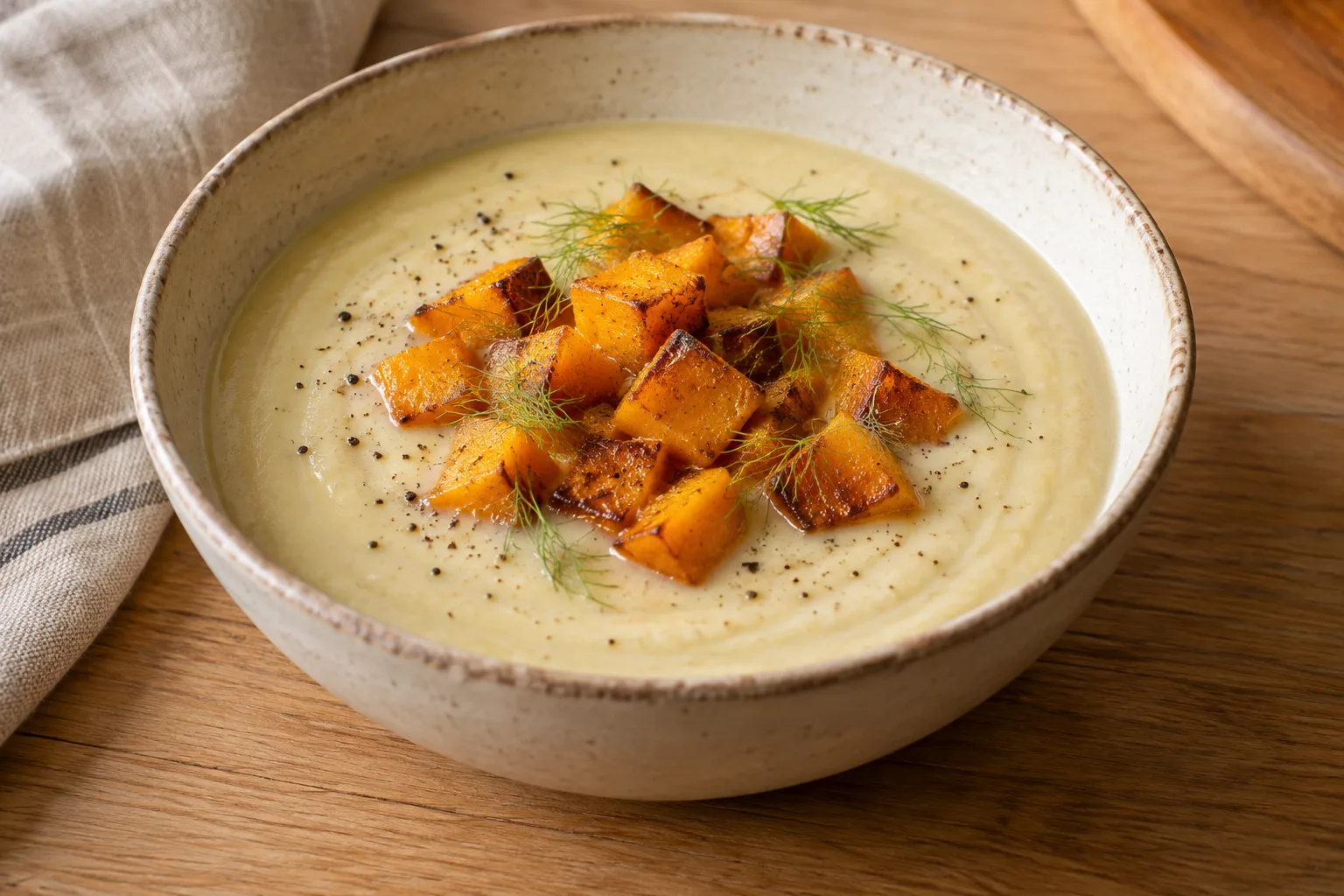
Use the bulb raw when you want a firm, crisp texture, such as in a salad or fresh side dish. For a more tender texture and a gentler flavor, sauté, roast, braise, or add it to soup. Stalks can flavor stocks and stews, while the fronds make an aromatic finishing touch. Fennel works particularly well with fish and legumes, and citrus can add a fresh contrast.
How to use it
Separate the fronds and stalks from the bulb and wash them well before preparation. Remove damaged parts, then cut the bulb to suit the dish: slice it thinly for raw servings, or cut it into pieces, wedges, or strips for cooking. Add raw slices to salads; for a softer texture, sauté the fennel or add it to soups, stews, and legume dishes. It can also be roasted or braised as a side for fish. Save the fronds to scatter over a finished dish or add aroma to a sauce, and use the stalks in stocks and stews. Add fennel gradually if you want to keep its anise-like flavor from dominating.
Flavour and texture
Fresh fennel has a distinctive aroma reminiscent of anise. The raw bulb is firm, juicy, and crisp, with a fresh flavor; cooking softens it and can make its flavor seem milder and sweeter. Stalks are more fibrous than the bulb, while the fine fronds contribute aroma and a delicate texture. The strength of the anise-like character can vary with the part used and the preparation.
How to choose it
Choose bulbs that feel firm and look fresh, without bruises, dark spots, or soft, deteriorating areas. A white or pale-green appearance and fresh-looking stalks and fronds are useful signs when comparing fennel. Bulbs may be round, elongated, or somewhat irregular; they do not all need to look alike. Check for visible damage and buy an amount you can use while the fennel is still fresh.
Storage
Keep fresh fennel refrigerated and aim to use it while the bulb, stalks, and fronds remain firm and fresh. Available sources give differing storage time estimates, so an exact number of days should not be promised. Refrigerate cut fennel until use. Follow any storage directions on the package or provided by the seller, and do not keep produce that shows signs of deterioration.
Substitutions
If a dish needs an anise-like note, anise can replace some of fennel's aroma, especially when fennel is being used as a seasoning; it will not provide the bulk or texture of the fresh bulb. Celery can be a vegetable alternative for texture, but it will not reproduce fennel's anise-like flavor. Adjust the amount to suit the dish and decide whether you need to replace aroma, texture, or both.
Common mistakes
Do not treat the bulb, stalks, and fronds as though they have the same texture: stalks can be more fibrous, while the raw bulb is crisp. Cooked fennel will not have exactly the same fresh, anise-like character as raw fennel. For salads, slicing the bulb thinly makes its texture easier to enjoy; if you do not want the aroma to stand out, start with a modest amount.
Safety and allergens
Wash fresh fennel well before cutting and preparing it. Remove visibly deteriorated parts and follow any storage or use directions on the package, where applicable. This guide does not replace product-specific information.
Culinary uses
- Hortaliza para ensaladas y guarniciones, especialmente el bulbo
- Aromático para sopas, guisos y platos de pescado
Recommended techniques
- Cortar en láminas finas y servir crudo
- Saltear, asar, estofar o añadir a sopas y guisos
Pairs well with
- Pescado
- Legumbres
- Cítricos como naranja o limón
- Apio y otras hortalizas
Frequently asked questions
Which parts of fresh fennel can I use?
Use the bulb as a vegetable, and use the stalks and fronds to add aroma to stocks, stews, and other dishes.
Can fennel be eaten raw?
Yes. Slice the bulb thinly for salads or serve it as a crisp side.
What does fennel taste like?
It has an anise-like aroma. Raw fennel is crisp and fresh; cooking softens it and can make its flavor milder and sweeter.
Estimated nutrition
- Fat
- 0.2 g
- Saturates
- 0.09 g
- Carbohydrate
- 7.3 g
- Sugars
- 3.93 g
- Fibre
- 3.1 g
- Protein
- 1.24 g
- Salt
- 0.13 g
Sources and review
Automatically researched, cross-checked and validated content. Sources consulted:
- En el etiquetado alimentario hay algunas menciones que son obligatorias eletiquetadocuentamucho.aesan.gob.es
- Client Challenge doi.org
- Revista del comité científico de la aecosan número 24 aesan.gob.es
- Hinojo de temporada, una verdura mediterránea saludable y deliciosa: qué es y cómo usarlo en la cocina con cinco recetas directoalpaladar.com
- Hinojo, la hortaliza de los dioses | Gastronosfera gastronosfera.com
- Hinojo marino: historia, propiedades y usos en la cocina elpaladar.es
- Hinojo: para qué sirve, propiedades y beneficios | El Diario Vasco diariovasco.com
- ¿Qué es el Hinojo? Origen, beneficios y posología | Dieti Natura dieti-natura.es
- Guía completa para aprovechar el hinojo | Recetas Nestlé recetasnestle.com.ar
- AI Chef Pro Funciones Avanzadas: Técnicas de Power User | Blog AI Chef Pro blog.aichef.pro
- 10 consejos creativos para usar Hinojo - Paulina Cocina paulinacocina.net
- Foeniculum vulgare - Wikipedia, la enciclopedia libre es.wikipedia.org
- Hinojo: el bulbo con matojo | CocinaSinReceta.com cocinasinreceta.com
- Hinojo ¿Qué es? Propiedades y usos en la cocina abc.es
- El hinojo y su uso como especia y en blends de té | Alveus alveus.eu
- Glosario de especias: hinojo | JUST SPICES ® justspices.es
- Hinojo: usos en la cocina y propiedades - Cocina y Come cocinaycome.com
- Guía completa para aprovechar el hinojo | Recetas Nestlé recetasnestle.cl