- Category
- Herbs and spices
- State
- Dry
- Usual unit
- teaspoon
What it is
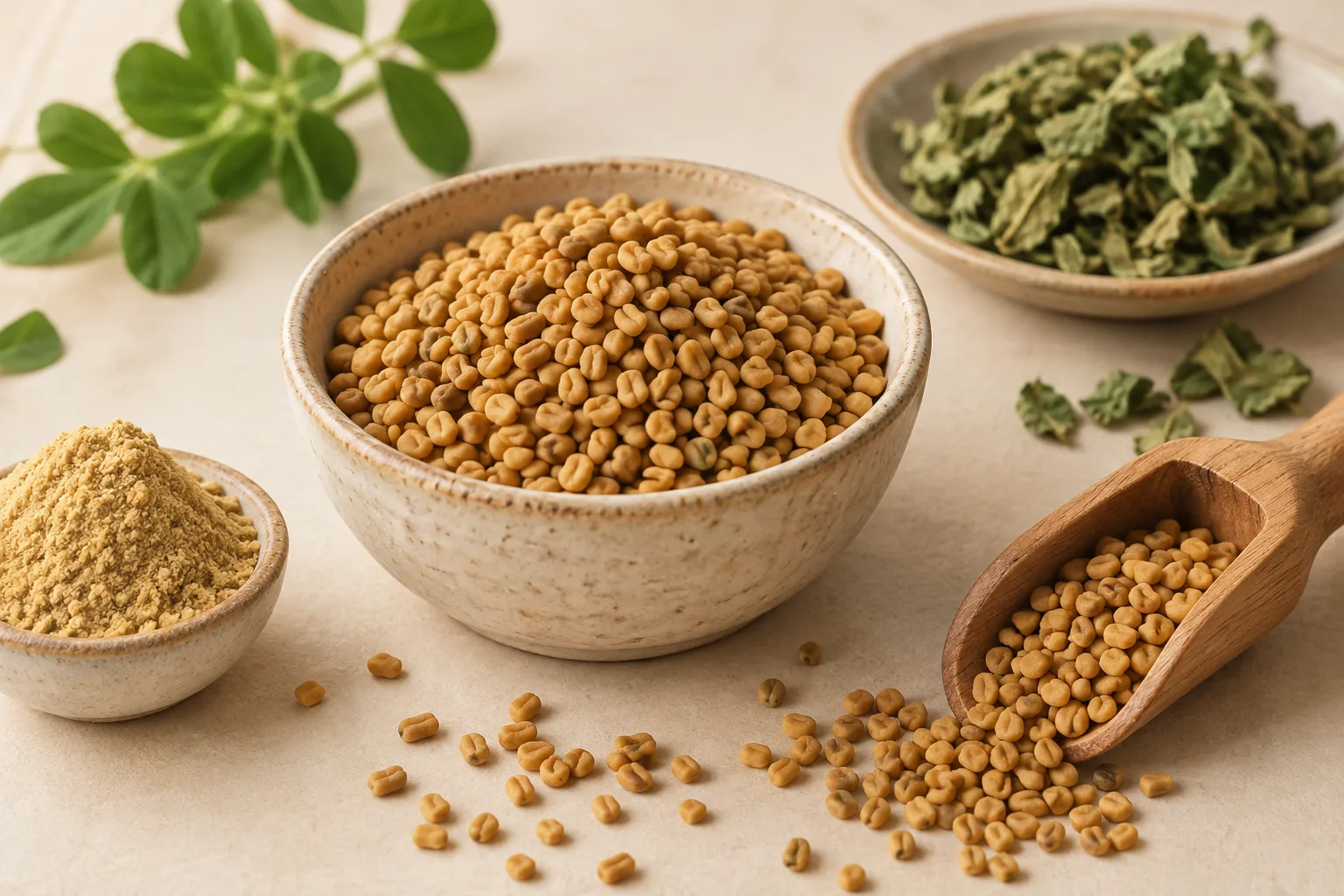
Fenugreek, also known as methi, is a plant in the Fabaceae family whose seeds and leaves are used in cooking. The seeds are commonly sold whole and dried or ground; they are small, hard, and mustard-yellow to brown in color. The leaves are also used fresh or dried. The seeds have an assertive flavor with noticeable bitterness and notes that some descriptions compare to maple syrup or burnt sugar. In cooking, fenugreek appears in spice blends and is added to stews, breads, and legume dishes. Seeds and leaves are not interchangeable without changing the result: they have different forms and uses.
When to use it
Use fenugreek when you want to add an aromatic, deep, slightly bitter note to a spice blend, stew, or legume dish. Whole seeds work in preparations where they can soften; grinding or crushing them helps prevent a hard seed from standing out in each bite. Brief, moderate toasting can bring out their aroma, but avoid prolonged heating because excessive toasting may intensify bitterness. Dried leaves work as a cooking herb, while sprouts can be added to fresh preparations.
How to use it
Choose the form to suit the dish: whole seeds for stews and blends, ground or crushed seeds for easier distribution, and fresh or dried leaves for a more herbaceous character. If toasting the seeds, do so moderately and stop before they darken or smell burnt; excessive toasting can make bitterness more pronounced. You can also toast them in oil or with cumin and fennel before adding other ingredients. In long-cooked dishes, the seeds may soften; grind them first if you would rather not encounter them whole. Add dried leaves during cooking as you would other dried herbs. Sprouts can be used in fresh preparations.
Flavour and texture
The seeds taste assertive and somewhat bitter, with notes described as sweet, toasted, or reminiscent of maple syrup. Whole seeds are hard and crunchy; ground seeds blend more readily into a dish. Moderate toasting can heighten their aroma, while scorching them can make the bitterness more pronounced. The leaves bring a more herbaceous profile than the seeds.
How to choose it
Fenugreek is available as whole seeds, ground powder, and dried leaves; fresh leaves are also used in cooking, though they may be less common in some shops. Check the label to confirm the form: whole seeds are hard and need different handling from powder. Choose the form specified by your recipe or preparation method, and do not assume leaves and seeds will give the same result.
Storage
Keep seeds and ground fenugreek in a tightly closed container in a dry place away from light, and follow the package directions. Ground fenugreek releases its aroma readily, so check its freshness before use. Store fresh leaves according to their label or the seller’s guidance; the available sources do not establish a specific storage method or duration for them.
Substitutions
The available sources do not document an exact substitute. A curry blend can work if its ingredient list includes fenugreek, though it will bring other spices as well. A panch phoron-style blend containing fenugreek can offer a related profile, but it is not a one-for-one replacement. Adjust to the blend and dish, and do not expect an alternative to reproduce the flavor exactly.
Common mistakes
Avoid toasting the seeds for too long: excessive heat can intensify their bitterness. Do not use whole seeds in a dish where their hard texture would be unwelcome; grind or crush them for easier integration. Do not treat leaves and seeds as identical; their uses and flavor profiles differ.
Safety and allergens
This guide covers fenugreek as a culinary seasoning, not as a supplement or remedy. For concentrated preparations or uses beyond cooking, consult a health professional. Follow package directions and do not use a product that shows signs of spoilage.
Culinary uses
- Especia para mezclas y curris
- Condimento para guisos, panes y platos de legumbres
Recommended techniques
- Tostar las semillas brevemente y con moderación
- Moler o machacar las semillas antes de usarlas
- Añadir hojas secas durante la cocción
- Usar brotes en preparaciones frescas
Pairs well with
- Comino e hinojo
- Lentejas y otras legumbres
- Arroz y verduras de sabor suave
- Mezclas de especias para curry
Frequently asked questions
Is fenugreek used as a seed or a leaf?
Both forms are used. Seeds are commonly sold whole or ground, and leaves can be used fresh or dried; they do not give an identical culinary result.
Should I toast fenugreek seeds?
Moderate toasting can enhance their aroma. Avoid overdoing it, since culinary sources note that excessive toasting can intensify bitterness.
Can I add whole seeds to a stew?
Yes. Whole seeds are used in some stews and can soften during cooking. If you do not want a hard texture, grind or crush them before adding.
Estimated nutrition
- Fat
- 0 g
- Saturates
- 1.46 g
- Carbohydrate
- 54 g
- Sugars
- 0 g
- Fibre
- 27 g
- Protein
- 27 g
- Salt
- 0 g
Sources and review
Automatically researched, cross-checked and validated content. Sources consulted:
- Client Challenge doi.org
- Curry - Wikipedia, la enciclopedia libre es.wikipedia.org
- Herbs to Avoid During Pregnancy utep.edu
- Manual on integrated soil management and conservation ... vtechworks.lib.vt.edu
- DIY Guide: How to Make a Herbal Tincture | American College of Healthcare Sciences achs.edu
- Fenogreco: qué es, para qué sirve, propiedades y uso en la cocina bonviveur.com
- Fenogreco | Gastronomía & Cía gastronomiaycia.com
- Descubriendo el Fenogreco: Especia Ancestral para tu Salud y Cocina - Especias RUCA ruca.es
- Fenogreco o alholva | CreatiVegan.net creativegan.net
- Fenogreco | PAPRIMUR paprimur.es
- v. normativa. convenios. relaciones institucionales. fundaciones mapa.gob.es
- El fenogreco en la gastronomía – Botanical-online botanical-online.com
- Fenogreco o alhova, sus beneficios y usos naturitas.es
- Fenogreco: qué es, qué propiedades tiene y cómo incorporar este condimento ancestral a nuestra cocina directoalpaladar.com