- Category
- Grains, flour and pasta
- State
- Fresh
- Usual unit
- lámina
What it is
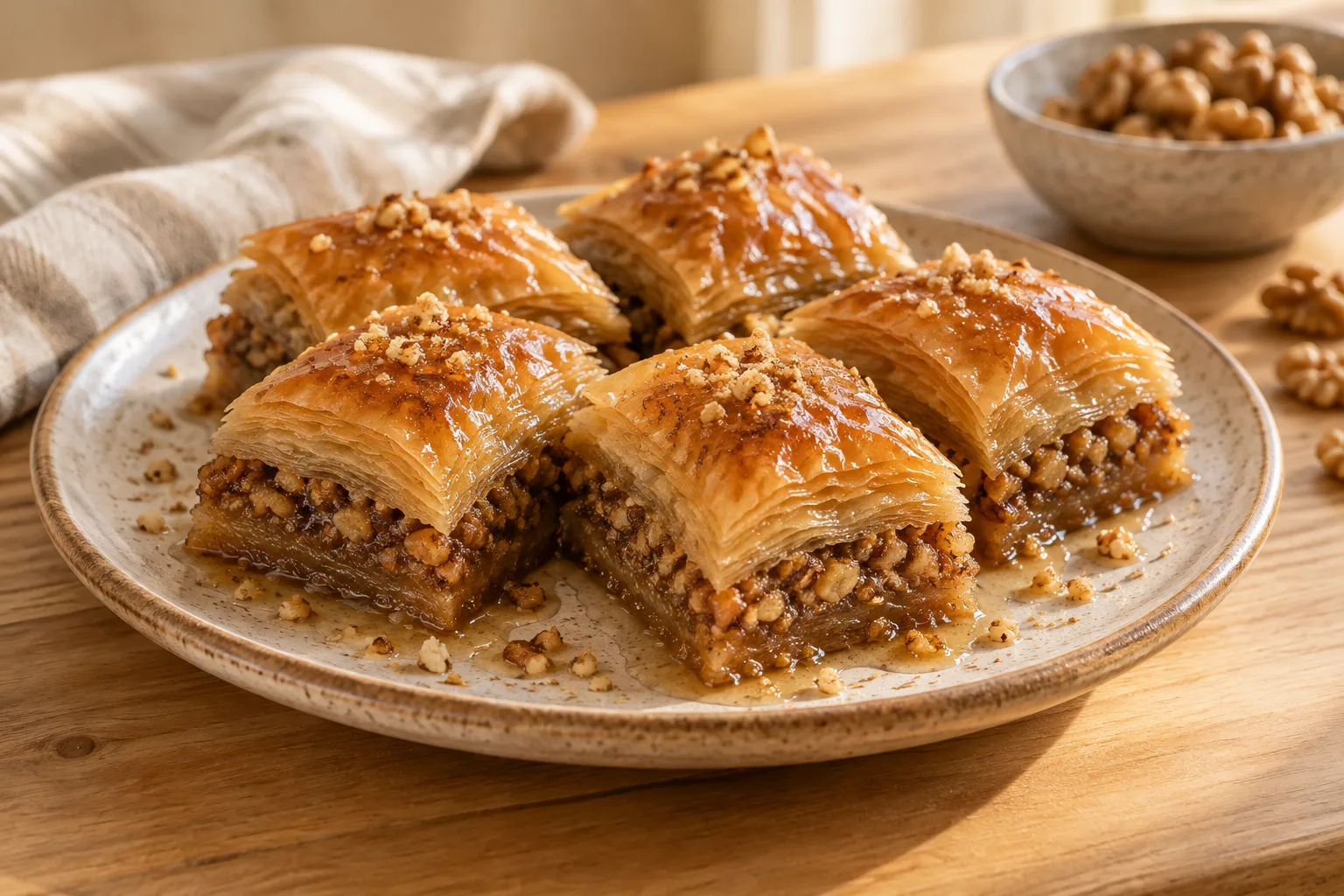
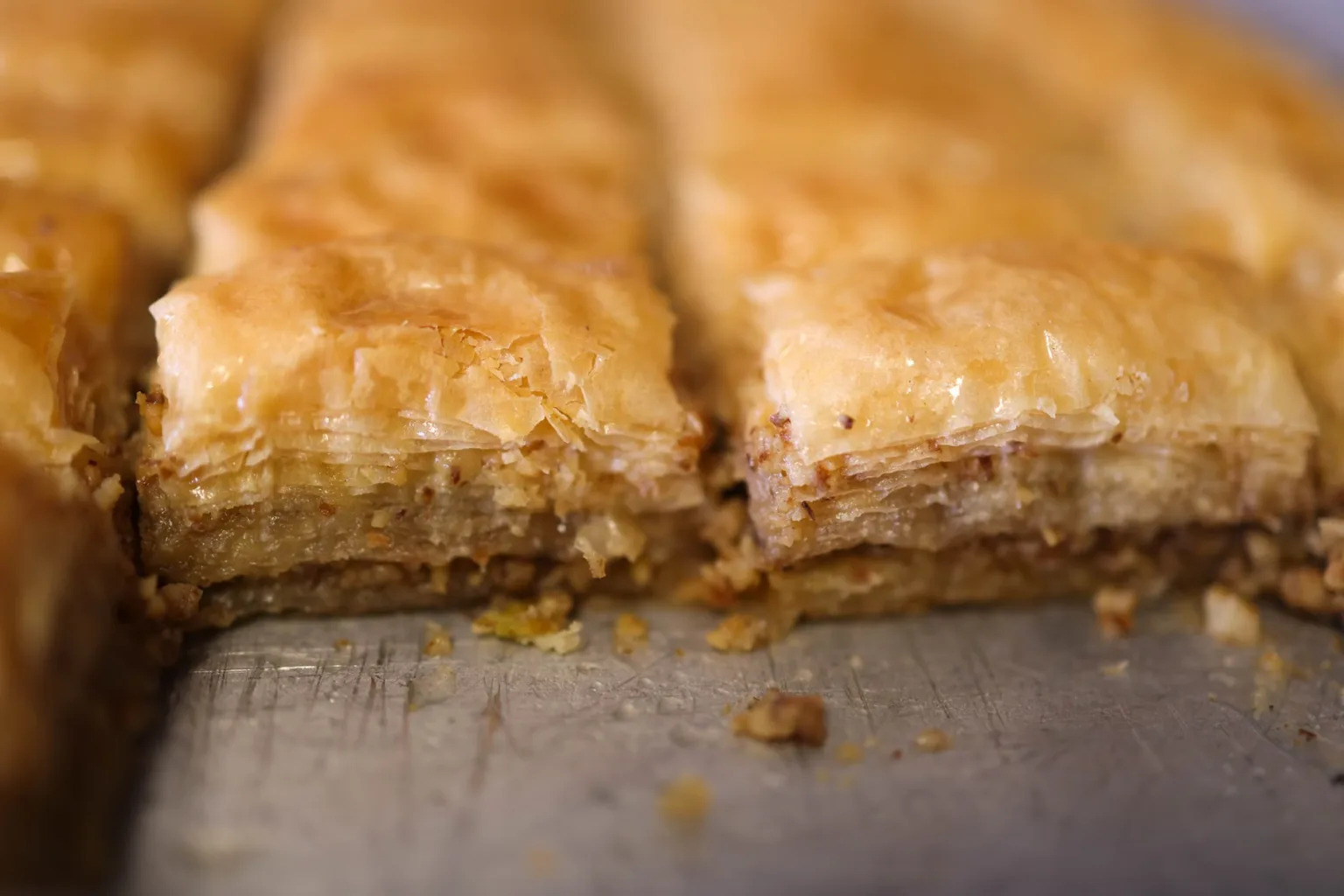
Filo pastry is a thin dough rolled or stretched into delicate sheets, sometimes almost translucent. Shop-bought versions come ready to use; available descriptions list flour, water and salt as basic ingredients, with oil included in some versions. Ingredients can differ by product, so check the package for the exact formulation. Filo is distinct from puff pastry: filo is assembled from separate sheets, while puff pastry has a different structure and method. When cooked, filo sheets can become light and crisp. The pastry is used for both sweet and savoury preparations, including filled parcels, rolls, pies and layered bakes.
When to use it
Choose filo when you want a thin, layered wrapper with a crisp finish rather than a thick or distinctly puffed pastry. It can be used for filled pies, parcels, rolls and tarts, in either sweet or savoury dishes. Documented ideas include spinach-and-cheese pastries, samosas, and desserts with nuts and honey. It is useful when you want the pastry to provide a delicate casing without overwhelming the filling. If the filling is wet, take care during assembly so it does not soak the sheets before cooking.
How to use it
Read the package directions first, since products and formats vary. Open the pack and separate only the sheets you plan to use; cover the rest to limit exposure to air, which can dry them and make them break. Layer the sheets and, if the recipe calls for it, brush a light coating of butter or oil between them. Add the filling without soaking the pastry; a very wet filling can make it harder for the layers to turn crisp. Shape the pastry into a roll, parcel, pie or base as the dish requires, then bake or fry according to the recipe. Filo can be used in both sweet and savoury preparations.
Flavour and texture
Filo sheets have a fairly mild flavour, allowing the filling and any butter or oil between the layers to stand out. Their defining feature is texture: when layered and cooked, they can become thin, crisp and delicate. Sheet thickness and the finished result may vary by product and preparation. Filo does not produce exactly the same texture as puff pastry, so do not expect it to behave like a thicker, puffed dough.
How to choose it
Choose an intact pack that protects the sheets and check whether the product is sold refrigerated or frozen; both formats appear in the available information. Read the ingredient list and handling instructions, especially if you need to avoid wheat or gluten. Special products are described, but do not assume every pack is suitable. Check the number and size of sheets against your recipe. Product appearance and availability can differ between brands, so use the package as your guide.
Storage
Keep the pack tightly closed and follow the storage directions on its label; the available descriptions include products kept refrigerated or frozen. After opening, reseal the pack and avoid leaving sheets exposed to air, since they can dry out and break easily. If freezing or preparing the pastry for use, follow the manufacturer's directions: thawing advice may vary. Do not assume that one method applies to every pack.
Substitutions
Brick pastry can work in some dishes, but it is somewhat thicker and will not reproduce filo's very fine layers exactly. Puff pastry may also be used in some recipes, but its structure and finished texture are different; substitute it only if a different result is acceptable. Adapt the assembly to the pastry you choose and check its instructions. These are culinary alternatives, not exact equivalents.
Common mistakes
Leaving every sheet uncovered while preparing the filling can dry the pastry and make it break. Another common problem is using a very wet filling that soaks the layers and works against a crisp result. Do not treat filo, brick pastry and puff pastry as interchangeable: although they can appear in similar dishes, their thickness and results differ. Work with the sheets you need and keep the rest covered.
Safety and allergens
Check the product label for ingredients and its storage and preparation directions. If you need to avoid wheat or gluten, do not rely on the pastry name alone; verify the package information.
Culinary uses
- Envoltura crujiente para rellenos dulces o salados
- Base o cubierta ligera para tartas y pasteles
Recommended techniques
- Superponer las láminas y pincelarlas con mantequilla o aceite
- Hornear o freír hasta que queden crujientes
- Mantener cubiertas las láminas que aún no se estén usando
Pairs well with
- Espinacas, queso feta y hierbas
- Frutos secos y miel
- Rellenos de verduras o queso
Frequently asked questions
Is filo pastry the same as puff pastry?
No. Filo is assembled from thin sheets, while puff pastry has a different structure and result. Substituting one for the other can change the texture of a dish.
How can I stop filo sheets from breaking?
Expose only the sheets you are using and keep the others covered. Filo can dry out readily when left in the air.
Can filo be used for both sweet and savoury recipes?
Yes. It is used in both, including filled pastries and rolls as well as desserts made with nuts and honey.
Sources and review
Automatically researched, cross-checked and validated content. Sources consulted:
- ¿Por qué la muerte es origen de miedos y tabúes? doi.org
- "ALIGN=CENTER>LES TROIS MOUSQUETAIRES -- Los tres mosqueteros" people.duke.edu
- Free Standing, Slide In, and Drop In Electric housing.illinoisstate.edu
- GESTIÓN INTEGRAL DE CUENCAS Y ASENTAMIENTOS ... digitalrepository.unm.edu
- Su Propio Cultivo | Servicio de Extensión de OSU extension.oregonstate.edu
- Pasta Filo o philo, ideal para hacer dellciosas recetas eladerezo.com
- Pasta filo | Qué es, tipos, origen y beneficios codinafoods.com
- ▷ Origen en Grecia y Turquía【 Kitchen Academy 】 kitchenacademy.es
- Masa filo - Scoolinary scoolinary.com
- Masa o pasta filo. ¿Qué es y que puedo hacer con ella? Trucos y consejos para cocinar con ella abc.es
- Margarita María Palma Vallejo repository.uniminuto.edu
- IMÁGENES DE POSLATINOAMÉRICA stmarys-ca.edu
- problemas de la po tica del Barroco. Ideolog¡a y cultura ... commons.library.stonybrook.edu
- contemporary chronicles of violence in the americas drum.lib.umd.edu
- The Counter-Nostalgia Front against Spanish Censorship pure.lib.usf.edu