- Category
- Grains, flour and pasta
- State
- Powdered
- Usual unit
- g
What it is
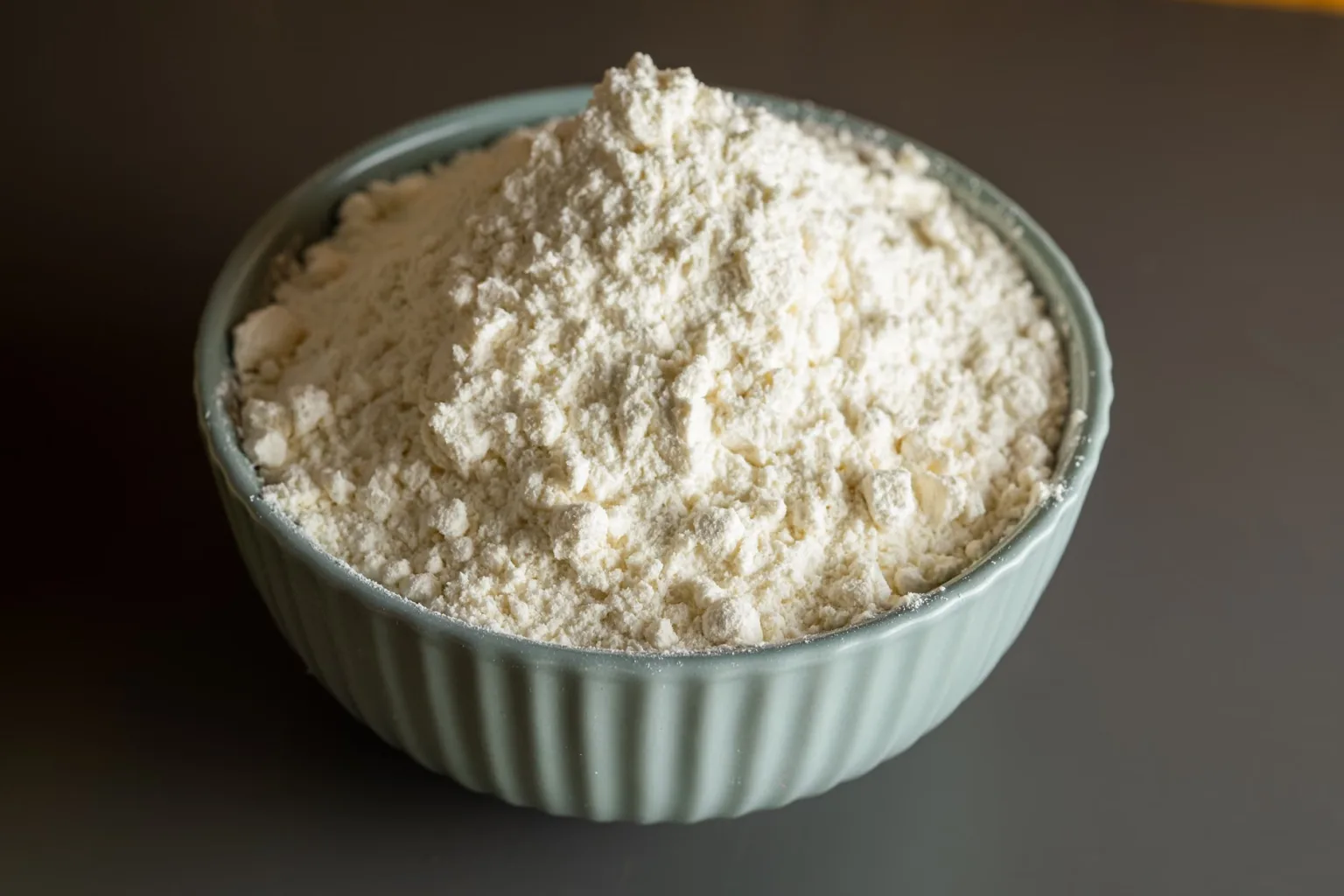
Corn starch, also called maize starch, is a maize product distinct from corn flour. The available evidence describes it as an ingredient for thickening liquids, including cold liquids, and for sweet preparations such as custards, creams and biscuits. The supplied names do not all match: several refer to starch, while “Fine corn flour” can refer to flour. This profile covers corn starch; check the exact product wording on the label before following a recipe. Fineness or appearance alone does not settle the distinction.
When to use it
Choose corn starch when a recipe specifically calls for starch to thicken a sauce, cream or another liquid, or for a sweet preparation such as custard or biscuits. Do not automatically replace it with fine corn flour: the sources distinguish these products and indicate that maize flours are not interchangeable for every use. If a recipe calls for flour, check that the package is not starch. When the product name is ambiguous, verify the label before cooking.
How to use it
First identify the product from its label: corn starch is not the same ingredient as fine corn flour. The evidence describes starch as a thickener for liquids, including cold liquids, and notes its use in sauces, creams, custards and biscuits. Follow the proportions and method in the chosen recipe, since the sources do not provide a universal quantity or cooking time. If a preparation calls for flour to form a dough, do not assume starch can replace it: product type and maize processing affect the result. Also follow the manufacturer’s directions.
Flavour and texture
The consulted sources focus chiefly on corn starch’s thickening role and its use in sweet recipes; they do not describe its own flavor or texture in enough detail to make a precise claim. They do distinguish it from corn flour, which can contribute flavor. Do not automatically attribute a corn-flour flavor to starch or expect the two products to produce the same consistency. The result depends on the recipe and the particular product used.
How to choose it
Read the product name carefully: “corn starch” or “maize starch” identifies a different product from “corn flour.” This matters because common names and translations can be ambiguous. Check the ingredient list and manufacturer’s directions as well; do not choose solely by a fine-looking powder or a shortened translation of the name. If a recipe calls for starch, make sure the package identifies it clearly.
Storage
The available sources do not specify storage conditions specifically for corn starch. Follow the package directions and close the container after use. Advice to keep corn flour in an airtight container protected from light refers to flour and does not establish that starch has exactly the same storage requirements. If the manufacturer gives specific instructions, follow them.
Substitutions
Fine corn flour is not an automatic substitute for corn starch: the sources distinguish the products and describe different uses. Rice flour is mentioned in sources about flour blends for baking, but not as a universal replacement for starch as a thickener. If substituting, use a recipe that explicitly specifies the alternative and expect that the final texture may differ. Also check whether the recipe asks for flour, starch or another product, as those names do not always refer to the same ingredient.
Common mistakes
The main mistake is confusing corn starch with fine corn flour or assuming all maize powders work alike. It is also easy to choose a package based only on a translated name or fine appearance. Check the label and use the product specified by the recipe; the sources do not support a general equivalence between these ingredients. Do not assume there is a universal amount or cooking time.
Safety and allergens
Check the label to confirm product identity and review ingredients and allergen information. Labelling requirements can vary with how a food is sold; if you need to avoid an allergen, verify the package information or ask the seller. The available sources do not identify a specific corn-starch safety warning.
Culinary uses
- Espesante para salsas, cremas y otros líquidos
- Ingrediente para natillas, galletas y otras preparaciones dulces
Recommended techniques
- Usar para espesar líquidos, incluidos líquidos fríos
- Incorporar en preparaciones dulces, siguiendo la receta elegida
Pairs well with
- Salsas y cremas
- Natillas y productos dulces horneados
Frequently asked questions
Is corn starch the same as fine corn flour?
No. The sources distinguish corn starch from corn flour. Check the package wording because some supplied names for this ingredient can be ambiguous.
What is corn starch used for?
It is mainly used to thicken liquids and is found in recipes for sauces, creams, custards and biscuits.
Can I replace it with rice flour?
The evidence here does not establish rice flour as a universal replacement. It is mentioned in some baking flour blends, so choose a recipe that specifically gives that substitution.
Sources and review
Automatically researched, cross-checked and validated content. Sources consulted:
- En el etiquetado alimentario hay algunas menciones que son obligatorias eletiquetadocuentamucho.aesan.gob.es
- Evaluación de harina de amaranto como ingrediente antioxidante para la preparación de matrices alimentarias funcionales doi.org
- i ^ i ^ii^^ Núm. 2-77 HD EL ENSILADO Y SUS VENTAJAS JOSE M.e NOGUER MASSOT mapa.gob.es
- OSU WordPress Outage | Technology | Oregon State University blogs.oregonstate.edu
- UNIVERSIDAD GALILEO, GUATEMALA, C.A. ELABORACION DE UNA PREMEZCLA PARA PAN DE biblioteca.galileo.edu
- (PDF) PROCESO DE FABRICACION DE LA HARINA PRECOCIDA DE MAIZ academia.edu
- ¿Qué hay en tu harina de maíz? | Blog de Alimentos ucanr.edu
- HARINA DE MAIZ PROMASA 500 grs | Store Room stristoreroom.si.edu
- Harinas de maíz ¿Cuántos tipos hay y para qué sirven? - Formacion en Gastronomia formacionengastronomia.com
- La harina de maíz y sus diferentes usos en la cocina | masymas supermercados supermasymas.com
- Harina de maíz - Wikipedia, la enciclopedia libre es.wikipedia.org
- Para qué sirve la harina de maíz y cuántos tipos de ella existen eldiario.es
- Harina de maíz | www.cocinista.es cocinista.es
- Cuáles son los cinco tipos más comunes de harinas de maíz y para qué sirve cada una directoalpaladar.com
- Propiedades de la harina de maíz | OCU ocu.org