- Category
- Grains, flour and pasta
- State
- Fresh
- Usual unit
- g
What it is
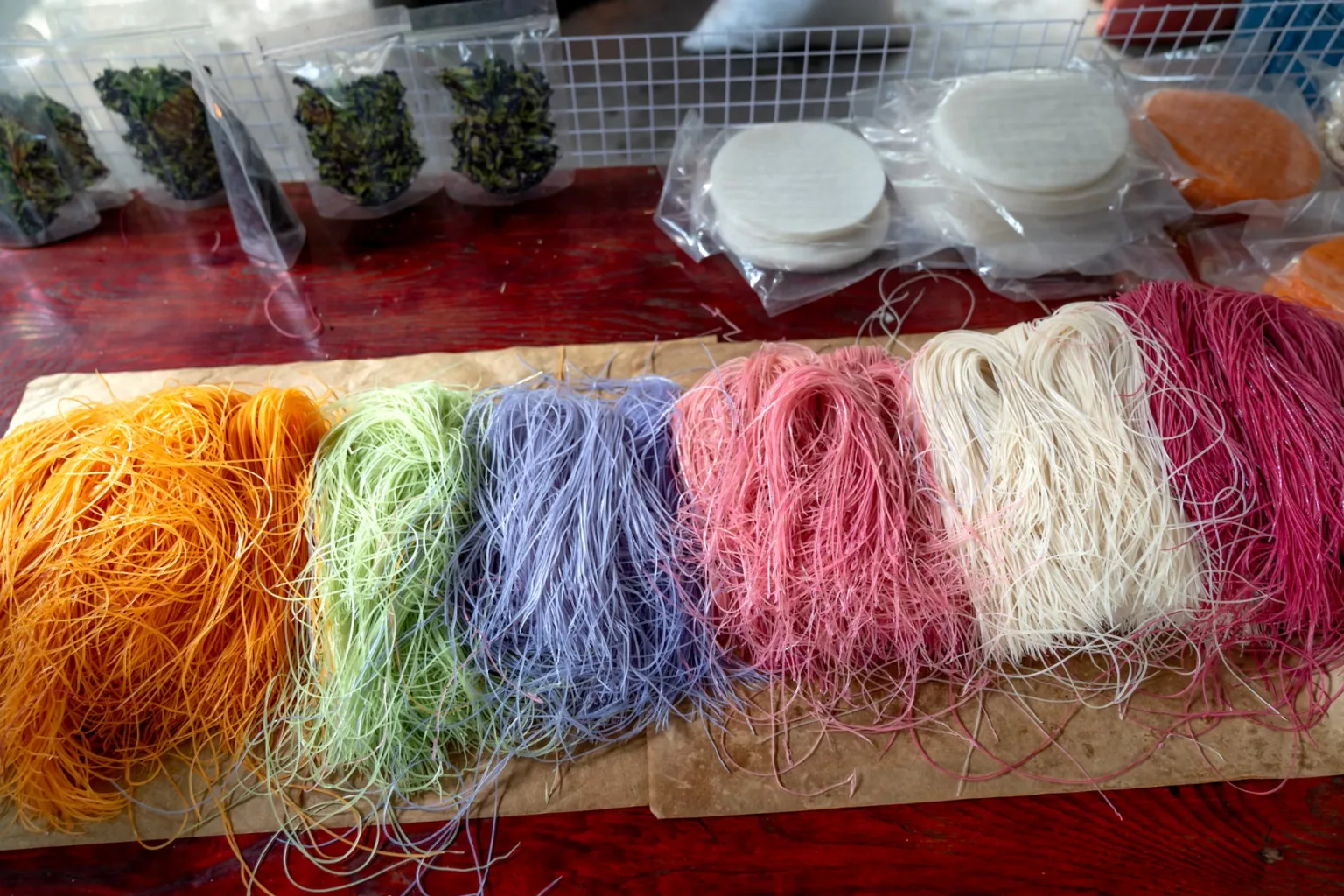
Fine noodles is a broad name for slender, elongated pasta, not a single recipe or a reliable description of its ingredients. Depending on the variety, noodles may be made from wheat flour, rice, or other flours and starches; some include egg and others do not. They can also be sold fresh or dried. As a result, their color, texture, and preparation vary: some become tender or elastic, while others may be softer or translucent. Check the specific product name and ingredient list before cooking, especially when serving someone with dietary restrictions. The generic name alone does not identify the noodle’s base or tell you how to prepare it.
When to use it
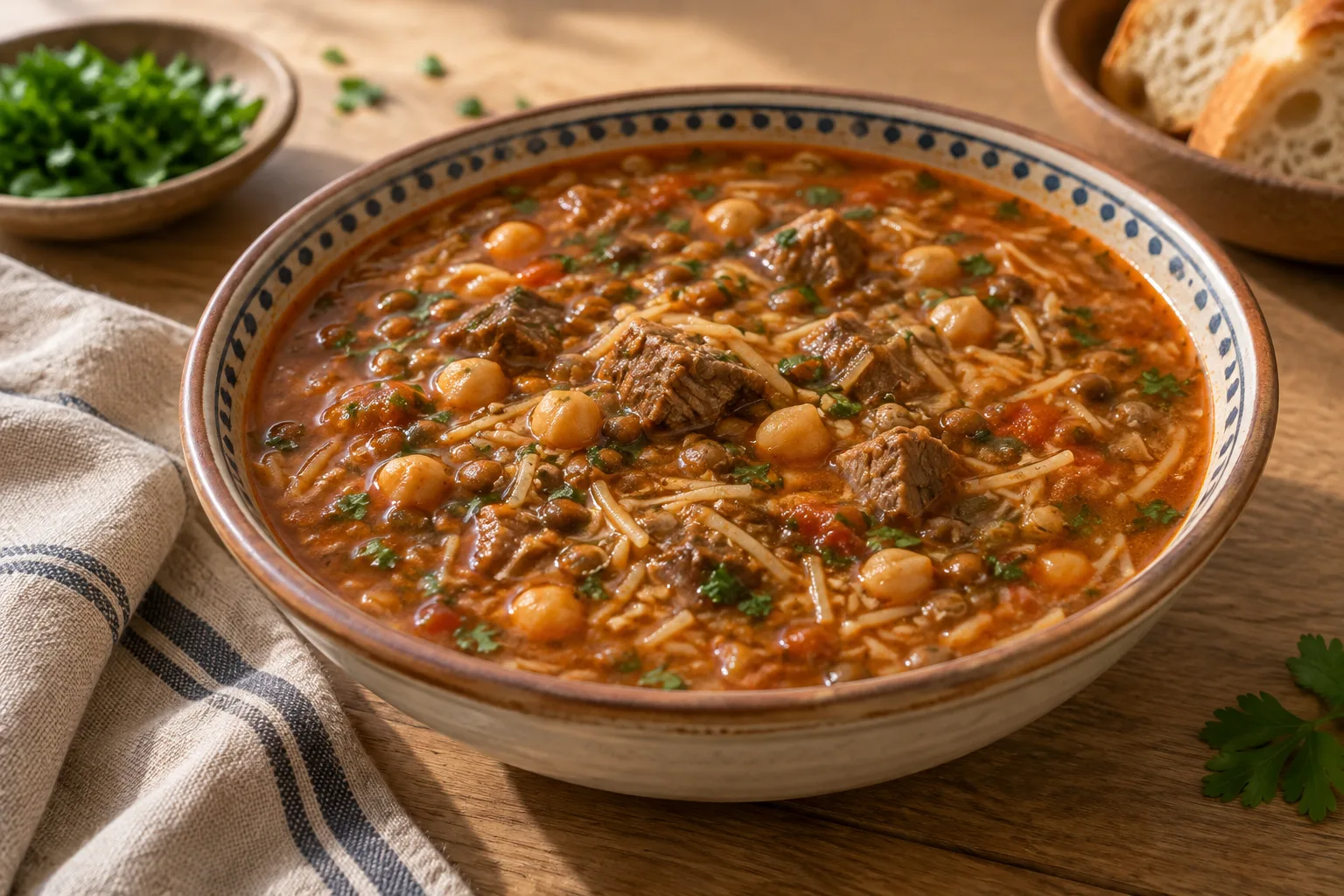
Use fine noodles when you want delicate strands in a soup, broth, or stir-fry. Their narrow shape suits dishes where the noodles share the plate with liquid, vegetables, and other ingredients rather than dominating the whole dish. Since varieties can be based on wheat, rice, or other ingredients, choose according to the texture you want and the product’s preparation instructions. Do not assume that two noodles will cook or behave alike simply because they look similarly thin.
How to use it
First check whether the noodles are fresh or dried, then read the manufacturer’s instructions: ingredients and preparation differ by product. Prepare them as directed and consider adding them to a broth, soup, or stir-fry with vegetables and sauce. One fresh-noodle recipe combines them with chicken, mushrooms, pak choi, soy sauce, and oyster sauce, but those are options, not requirements. If you add noodles to a dish with other ingredients, make sure the method suits that particular variety. Check the texture before serving, and do not automatically apply the cooking instructions for another type of noodle.
Flavour and texture
Flavor and texture are not uniform because fine noodles include products made from different flours and formulations. Some are mild and unobtrusive; others may be more elastic, tender, or translucent. The product form and preparation also affect the finished texture. Choose with the broth, sauce, and other ingredients in mind, and do not infer the ingredients from appearance alone.
How to choose it
Read the product name, ingredient list, and preparation directions before buying. Fine noodles may be made from wheat, rice, or other bases, and some contain egg; they are also sold fresh or dried. Check the form and make sure it suits the dish you have in mind. If you need to avoid an ingredient, do not rely on the generic name or appearance—check the package information.
Storage
Follow the storage directions on the package and note whether the product is fresh or dried; these forms should not be treated as identical. Keep the noodles in their packaging or a suitable container according to those directions, and check the label before storing them. The available evidence does not establish one storage time or temperature for every variety, so do not infer one from the name “fine noodles.”
Substitutions
You can consider another fine wheat noodle or a fine rice noodle, but the swap may change flavor, texture, and preparation. Check the alternative product’s instructions and consider whether its ingredients suit the dish. Do not assume that fresh, dried, wheat, and rice varieties are interchangeable in the same amount or require the same treatment.
Common mistakes
A common mistake is assuming that all fine noodles are made from wheat or always contain egg. It is also unwise to use one variety’s instructions for another or to choose a substitute based on shape alone. Check the ingredients and product form, and follow the package directions for the noodle you have.
Safety and allergens
Ingredients vary between products. Check the package ingredients and allergen information, particularly when cooking for someone with dietary restrictions, and follow the manufacturer’s directions.
Culinary uses
- Base for soups and broths
- Noodle component in stir-fries and mixed dishes
Recommended techniques
- Boiling or cooking in liquid
- Stir-frying with vegetables, sauces, or other ingredients
Pairs well with
- Broths and soups
- Vegetables, sauces, and protein ingredients such as chicken or seafood
Frequently asked questions
Are all fine noodles made from wheat?
No. They may be made from wheat, rice, or other bases. Check the ingredient list for the specific product.
Are fine noodles always sold fresh?
No. They may be sold fresh or dried; check the package and follow its preparation and storage directions.
What can I use instead of fine noodles?
You can consider another fine wheat noodle or a rice noodle, but texture and preparation may differ. Check the alternative’s ingredients and instructions.
Sources and review
Automatically researched, cross-checked and validated content. Sources consulted:
- Client Challenge doi.org
- The Essential Glossary of Cooking Terms for the Culinary Arts - Escoffier escoffier.edu
- Glimpses of an 18th century Colonial Kitchen in Manila archium.ateneo.edu
- neoliberal multiculturalism in early digital discourse about food. iro.uiowa.edu
- Additional file 1: The Antioxidant Food Table. vtechworks.lib.vt.edu
- AN ABSTRACT OF THE THESIS OF Larbi Alaoui ... ir.library.oregonstate.edu
- Online and Official Price Indexes: Measuring Argentina's ... hbs.edu
- Occupational Therapy Specific Manipulatives - Curriculum Center - LibGuides at Duquesne University guides.library.duq.edu
- Noodles: tipos, donde comprarlos y receta - Oriental Market orientalmarket.es
- Fideo - Wikipedia, la enciclopedia libre es.wikipedia.org
- ¿Qué es un fideo? | Cuisinenet cuisinenet.com
- Estos son los tipos de 'noodles' más comunes hola.com
- - YouTube youtube.com