- Category
- Herbs and spices
- State
- Dry
- Usual unit
- teaspoon
What it is
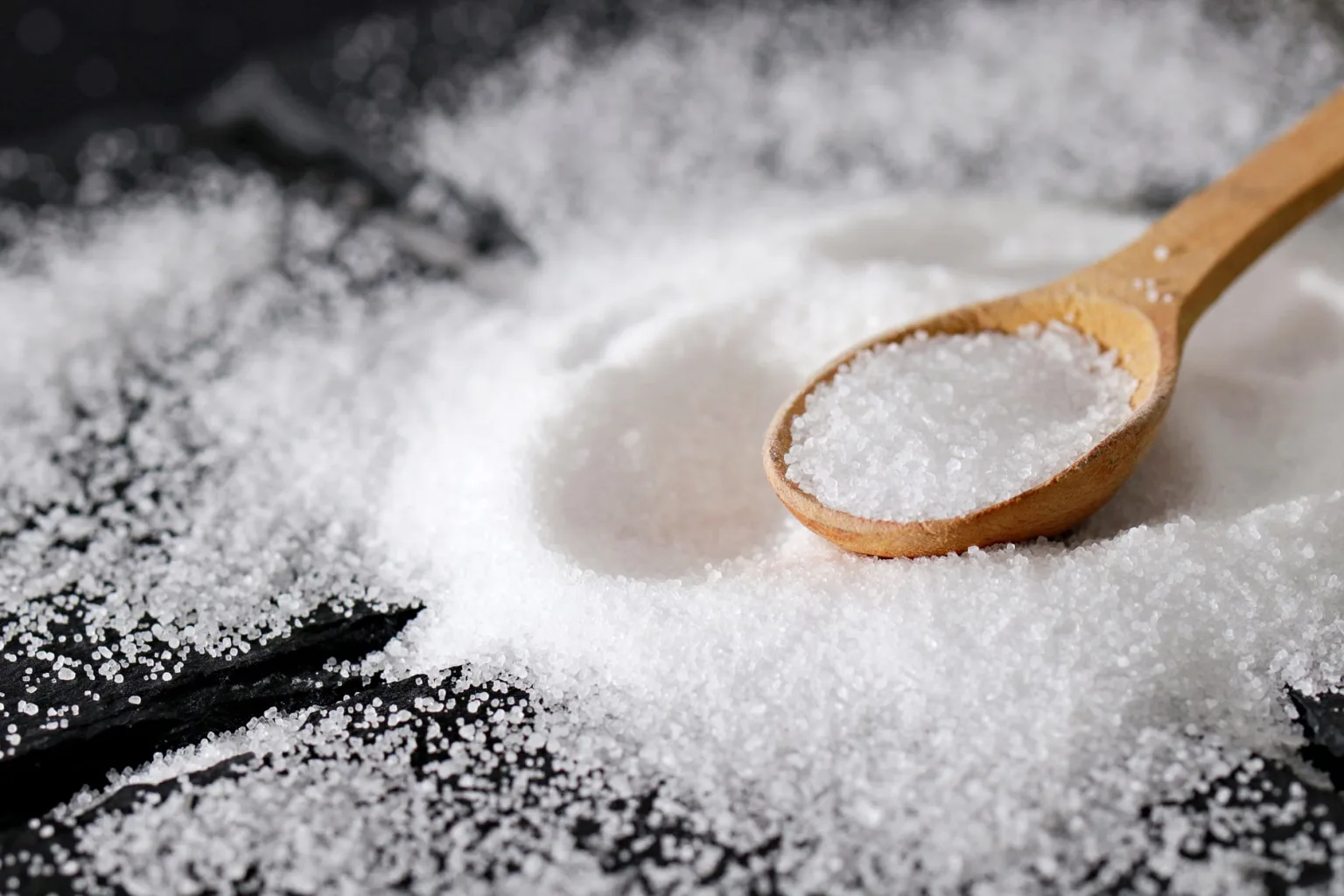
Fine salt is salt with small crystals, commonly used as an everyday seasoning. It may be sold as table salt, but that label alone does not establish that every product has undergone the same processing or contains the same additions. Salt provides a salty taste and can enhance or modify other flavors. Its fine texture makes it easy to incorporate into food while cooking or when serving. If the package says the salt is iodized, enriched, or contains other ingredients, that is a feature of that particular product and should not be assumed of all fine salt.
When to use it
Choose fine salt when you want to season everyday preparations such as soups, stews, braises, meat, cream soups, dressings, or sauces. It can also be used in sweet dishes, where a small amount may contribute to flavor balance. Use it during cooking or to adjust seasoning at the table. If a recipe calls for another kind of salt, remember that crystals of different sizes do not distribute in the same way, and adjust gradually.
How to use it
Add fine salt gradually while cooking or near the end, and taste the dish before adding more. Its small crystals make it easy to distribute through ingredients, but the amount needed depends on the recipe and on other salty ingredients. In soups, stews, braises, cream soups, and sauces, add a little, stir, and taste again. For meat and other dishes served directly, you can adjust the seasoning before serving. When switching to coarse salt or flakes, do not automatically use the same measure: crystal size affects how the salt is distributed and perceived.
Flavour and texture
Salt contributes a salty taste and can enhance some flavors while softening or modifying others. Fine salt is distinguished mainly by its small crystals, which make it easy to distribute through a preparation. Different salts can vary in texture, color, and characteristics according to how they are processed, so do not assume every product called fine salt has identical attributes.
How to choose it
Check that the package identifies the product as fine salt or table salt, and read its ingredient list and label. Salt may be sold with additions such as iodine or without them, so do not assume all varieties are the same. Fine crystals are convenient for everyday cooking when you want to incorporate seasoning easily; choose according to your intended use and the product details on the package.
Storage
Keep fine salt dry and tightly closed, and use a clean, dry utensil when serving it. Avoid leaving the package open beside liquids or wet surfaces, as moisture can make the product harder to handle. Follow any storage directions on the package; the available sources do not establish a specific shelf life or special storage method.
Substitutions
Fine sea salt can replace fine salt; adjust the amount by tasting the dish. Coarse salt and flakes can also be used for seasoning, but their crystals distribute differently. Do not assume the same volume measure will give the same result when changing texture: add the substitute gradually and adjust to taste.
Common mistakes
A common mistake is adding too much salt at once without tasting the food. Another is replacing fine salt with coarse crystals or flakes using exactly the same measure. Season gradually and taste again before adding more.
Safety and allergens
Add salt gradually and taste before adjusting: it can enhance flavors but can also dominate a dish if overused. Check the package if you need to know whether the product contains additions.
Culinary uses
- condimentar y ajustar el sabor salado
- realzar o matizar sabores en preparaciones saladas y dulces
Recommended techniques
- sazonar durante la cocción
- añadir al final o en la mesa
- incorporar a sopas y guisos
Pairs well with
- sopas, guisos y estofados
- carnes y pescados
- cremas, salsas y preparaciones dulces
Frequently asked questions
What is fine salt used for?
It seasons preparations such as soups, stews, braises, meat, cream soups, and sauces, either during cooking or when serving.
Can I substitute coarse salt or flakes?
Yes, but crystal size changes how the salt is distributed. Add the substitute gradually and taste before adding more.
Is all fine salt iodized?
Do not assume so. Whether iodine or other additions are present depends on the product; check the label.
Estimated nutrition
- Fat
- 0 g
- Saturates
- 0 g
- Carbohydrate
- 0 g
- Sugars
- 0 g
- Protein
- 0 g
- Salt
- 100 g
Sources and review
Automatically researched, cross-checked and validated content. Sources consulted:
- Client Challenge doi.org
- The Essential Glossary of Cooking Terms for the Culinary Arts - Escoffier escoffier.edu
- 15 tipos de sal para dar variedad a nuestros platos: cómo elegirlas y usarlas en la cocina directoalpaladar.com
- educational content to support healthful lifestyle practices sjsu.edu
- Glimpses of an 18th century Colonial Kitchen in Manila archium.ateneo.edu
- Los tipos de sal y sus usos en la cocina | Recetas Nestlé recetasnestle.com.mx
- Macarrones a la Crema 1946 (Macaroni with Cream) - lacocina.utsa.edu
- Thermal pasteurization of ready-to-eat foods and vegetables wpcdn.web.wsu.edu
- Names of the Chapters of the Harmonized Code in English and Spanish library.ucsd.edu
- Sal gourmet: cómo elegir la mejor (tipos, usos y trucos de chef para cada plato) - El Salí de Cambrils · Banya't amb l'energia dels Pirineus salidecambrils.cat
- Tipos de sal: ¿sabes cuál hay que escoger en cada momento? carnesmarch.com
- Tipos de sal y su uso en la cocina profesional - EN LA COCINA Magazine enlacocina.telemesa.es