- Category
- Fish and seafood
- State
- Fresh
- Usual unit
- g
What it is
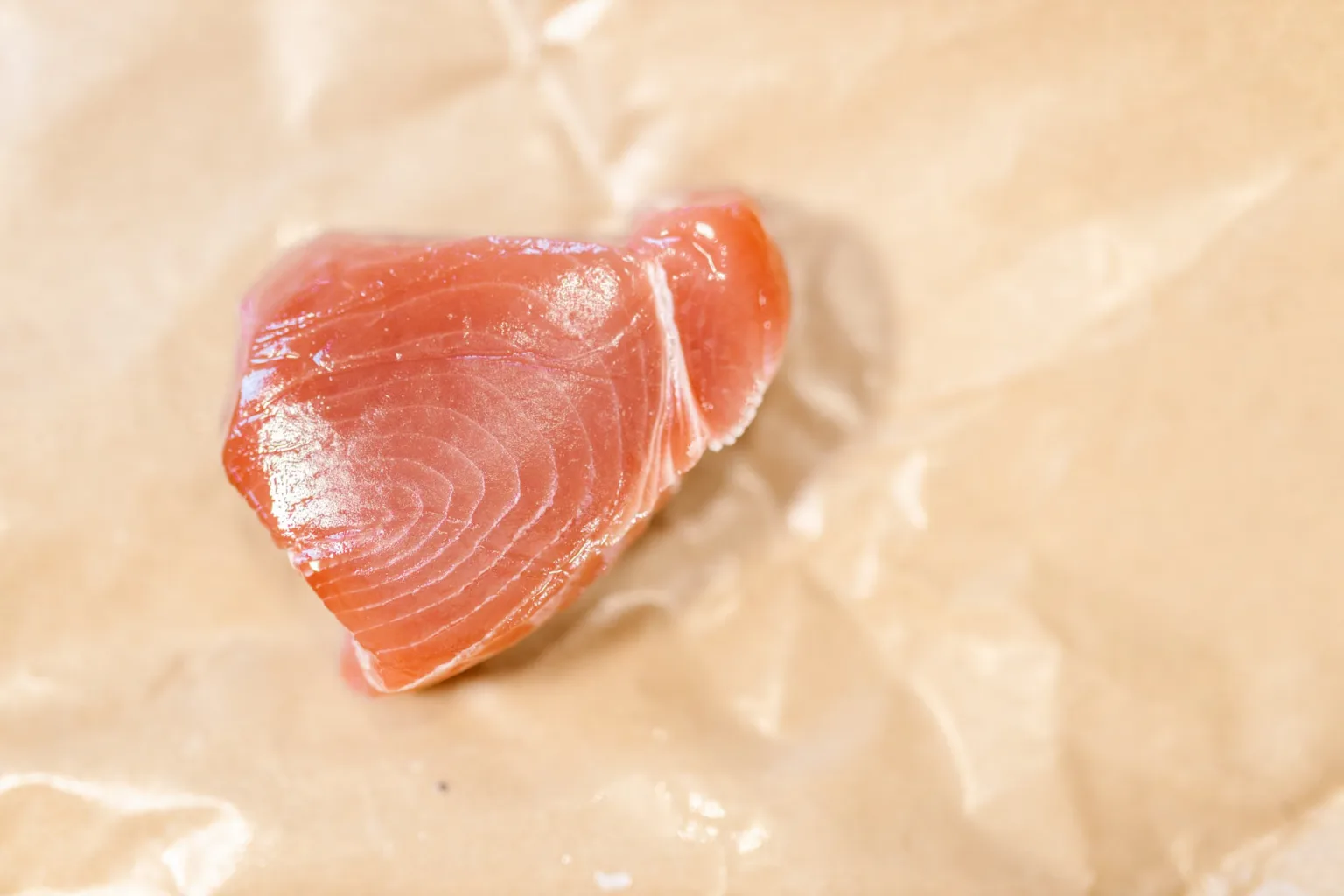
Firm tuna is fresh tuna flesh with a texture that holds its shape when cut and cooked. Tuna is not a uniform product: species and cut can change its color, flavor intensity, fat content, and juiciness. “Firm” is therefore a culinary description, not the name of a specific species or a guarantee that every piece will behave in the same way. Tuna is sold in pieces or portions and can be cooked; it also appears in raw dishes such as tartare and sashimi, although this profile cannot confirm that any particular piece is suitable for raw eating. This entry concerns fresh tuna, not canned tuna or cured products, which have different textures and uses.
When to use it
Use it when you want fish that keeps its structure when cut and can anchor a dish. Firm cuts work well on a griddle or grill, or with searing; tuna is also used in salads and stews. Choose the cut for the result you want: natural differences in fat and texture can make one piece juicier than another. Tuna is also used in tartare and sashimi, but being fresh or firm does not establish that it is suitable for a raw preparation. Do not infer safety from appearance; follow local official guidance and advice from a trusted supplier for that use.
How to use it
Keep the piece cold until preparation and use clean utensils and surfaces. Cut it into portions of similar size to help it cook more evenly. You can cook it on a griddle or grill, or add it to a stew; cuts and results vary, so adapt the preparation to the piece and recipe rather than assuming all tuna behaves alike. For a salad, you can add cooked tuna. Tuna is also used in tartare and sashimi, but a fresh appearance alone cannot establish that it is suitable for raw eating. If you choose that preparation, consult local official guidance and the supplier’s advice. Keep raw fish separate from ready-to-eat foods and follow the package or retailer’s instructions.
Flavour and texture
Tuna generally has a pronounced marine flavor and firm flesh, though color, intensity, and juiciness depend on species and cut. Some parts are fattier and more succulent; others are leaner and more intensely flavored. A firm piece holds its shape when cut, but that does not mean it is dry or that every piece has the same texture. Cooking changes the consistency too: brief cooking and stewing produce different results. Choose a cut with the structure and juiciness suited to the dish.
How to choose it
Buy from a trusted seller and ask about the cut and species if that matters to your recipe. The supplied seafood-buying guide advises that fresh fish should have a mild smell; avoid pieces with a strong fishy, sour, or ammonia-like odor. Check that it is sold chilled or on ice and that its appearance is suitable, without relying on color alone, which can vary by species and cut. If you plan to serve it raw or undercooked, do not assume its appearance proves suitability; check with the seller and consult local official guidance.
Storage
Fresh tuna is perishable: keep it cold on the way home and follow the seller’s or package’s storage instructions. Refrigerate it separately from cooked or ready-to-eat foods to prevent contact with its juices. If you will not prepare it soon, follow the supplier’s advice about storage and use; this profile does not set a tuna-specific time or temperature. Do not rely on appearance or smell alone to confirm safety, and discard it if it shows clear signs of spoilage or has an unpleasant odor.
Substitutions
Another tuna cut can replace it when the recipe allows variation, although fat, juiciness, and flavor intensity may change. Albacore or light tuna are possible alternatives if the recipe can accommodate differences in texture and profile; they are not identical to the cut described. Choose a firm piece when structure matters, such as for griddling or a salad. Canned tuna is not a direct replacement in brief-cooking recipes: it has already been processed and has a different texture and flavor.
Common mistakes
Do not treat every cut as if it had the same fat, texture, or cooking needs. Do not mistake firm flesh or an attractive color for proof of freshness or suitability for raw eating. Keep raw fish away from ready-to-eat foods, and do not swap canned tuna for fresh tuna without adapting the recipe: the canned product has a different texture and behaves differently.
Safety and allergens
Tuna is fish and can cause reactions in people with a fish allergy; prevent cross-contact when an allergy is present. For buying, storing, and preparing tuna, follow the package or retailer’s instructions and local official guidance. This profile does not determine whether a particular piece is safe to eat raw or partly cooked.
Culinary uses
- Plato principal
- Ingrediente para ensaladas, tartares y guisos
Recommended techniques
- A la plancha o sellado
- A la parrilla
- En guisos
- En tartar o sashimi, solo cuando la procedencia y el manejo permitan ese uso
Pairs well with
- Ensaladas
- Arroz y preparaciones de cuchara
Frequently asked questions
Does firm tuna mean a particular species?
No. “Firm” describes a culinary characteristic of the flesh; it does not identify a species. Species and cut can change color, fat, flavor, and texture.
Can firm tuna be eaten raw?
Tuna is used in tartare and sashimi, but freshness or firmness alone does not confirm that it is suitable for raw eating. Ask the supplier and follow local official guidance.
What can I use instead?
Another tuna cut, or albacore or light tuna if the recipe can accommodate a change. Texture, juiciness, and flavor may differ; canned tuna is not a direct equivalent to fresh tuna.
Sources and review
Automatically researched, cross-checked and validated content. Sources consulted:
- Client Challenge doi.org
- The Essential Glossary of Cooking Terms for the Culinary Arts - Escoffier escoffier.edu
- Tuna - National Center for Home Food Preservation nchfp.uga.edu
- Agencia Española de Seguridad Alimentaria y Nutrición aesan.gob.es
- Kitchen Companion: Your Safe Food Handbook ucanr.edu
- Food Labeling Guide marketready.uky.edu
- USDA FoodData Central libguides.marist.edu
- EL AÚN, EL REY DEL MAR lasalmedina.com
- El atún, ese gran ingrediente de nuestras cocinas - EN LA COCINA Magazine enlacocina.telemesa.es
- Bulletin 3110, Guidelines for Safe Seafood Consumption: Buying, Storing, Cooking and Seafood Allergies - Cooperative Extension Publications - University of Maine Cooperative Extension extension.umaine.edu
- Food Safety for Camping | Home & Garden Information Center hgic.clemson.edu
- Cooking 101 (Week 4) Quick and Easy Menus, Recipes and Tips for Singles and Couples: Grocery Shopping Made Easy | NDSU Agriculture ndsu.edu
- Smilemakers in the Kitchen by Jackson Cook | The Diamond Line thediamondline.uark.edu
- Qué partes del atún se utilizan en la gastronomía gourmet | Herpac herpac.com
- ▷ ¿Qué es la mojama de atún? Origen, elaboración y usos costapujol.cat