- Category
- Bread and dough
- State
- Fresh
- Usual unit
- unit
What it is
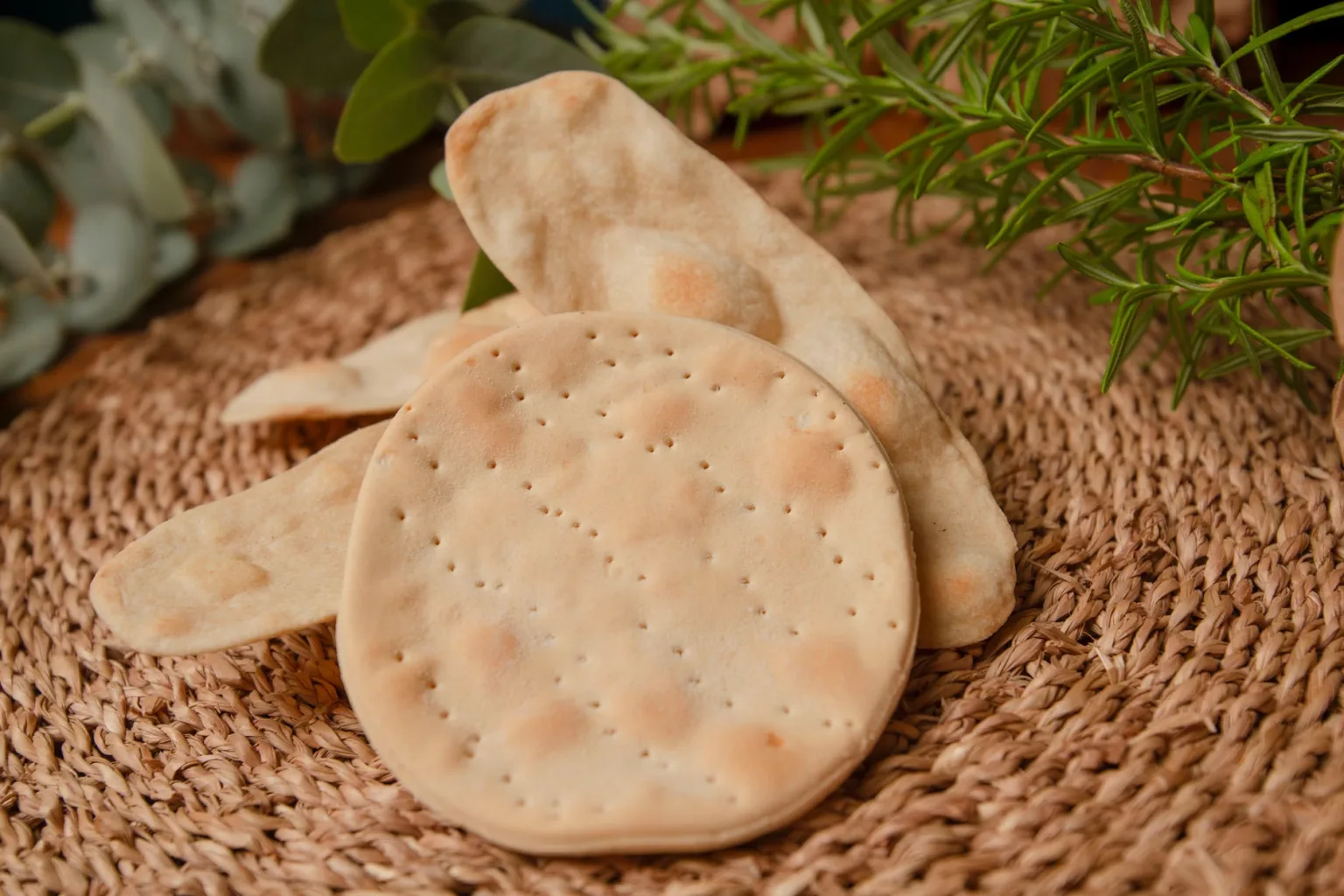
Flatbread is a general name for breads made from dough shaped and cooked in a relatively flat form. It does not describe one standard formula: varieties differ in ingredients, thickness, and texture, and some are leavened while others are unleavened. Flatbreads are made with different grains, and many have distinct names and preparation traditions. Lavash, katyrma, jupka, and yufka are names for flatbreads associated with communities in several countries; chapati, pita, tortilla, and focaccia are other breads commonly grouped in this broad category. Because the category is so varied, choose a particular style for the way you plan to serve it rather than assuming all flatbreads behave the same.
When to use it
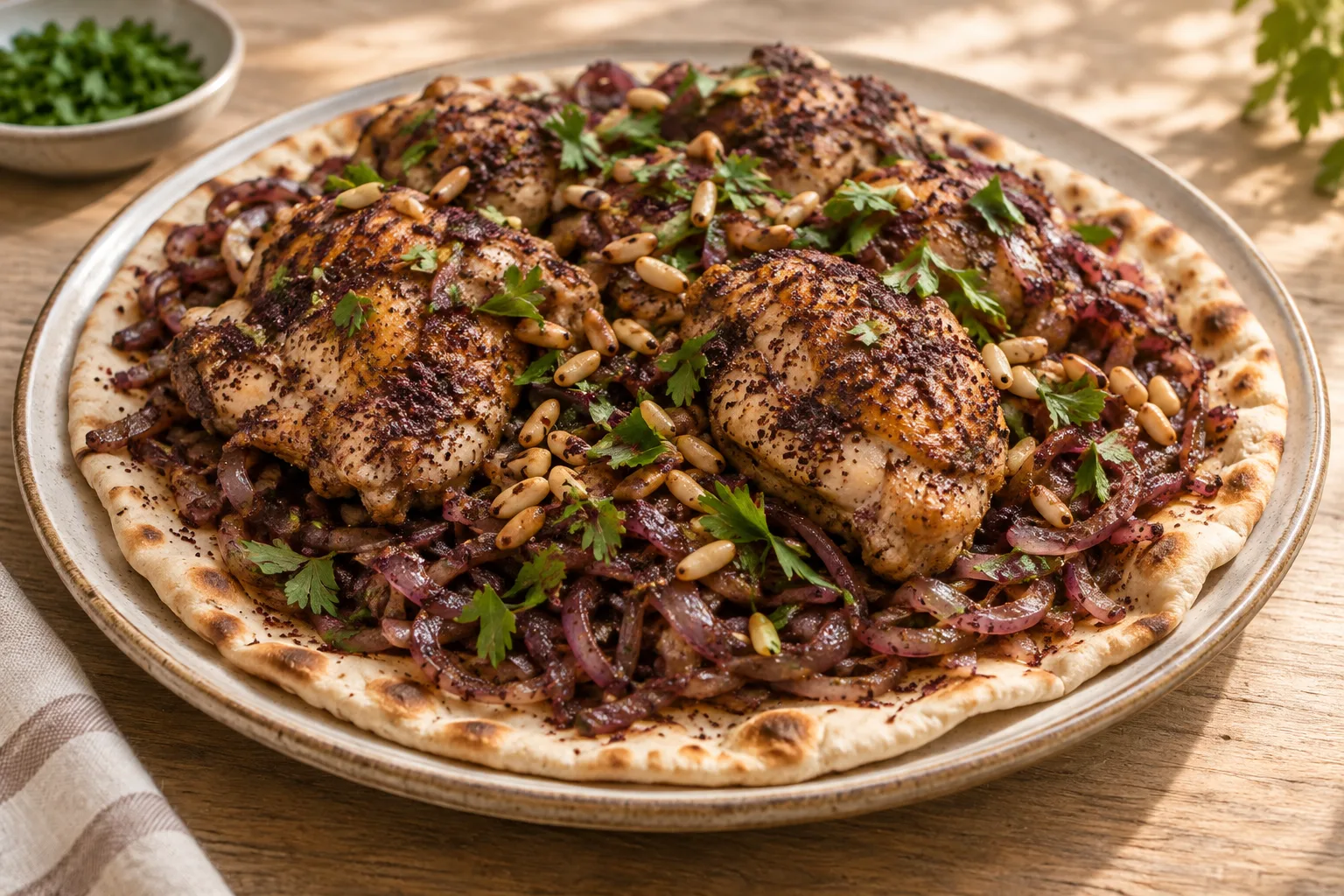
Use flatbread when you want a simple base for toppings, a surface for wrapping a filling, or an accompaniment for a saucy dish. Flexible varieties can work well for wraps or sandwiches; other styles are suited to serving alongside stews and vegetable or meat dishes. Flatbread can also serve as a pizza-style base, although the result depends on the bread’s type and thickness. If a recipe depends on a particular shape or texture, choose the appropriate variety: flatbread includes thin and thicker breads, and they are not all equally interchangeable.
How to use it
Choose a variety according to the job: look for a pliable bread for wrapping, or a sturdier piece if it needs to support toppings. Serve it whole alongside a saucy dish, cut or tear it into portions for sharing, or add fillings such as vegetables, proteins, and condiments. For a wrap-style meal, place the filling on the bread and fold or roll it according to its flexibility. For a topped base, distribute the ingredients without overloading the bread, and follow the product’s own directions for serving. Some flatbread recipes are cooked on a pan, griddle, in an oven, or with other equipment, but those methods apply to particular varieties; they are not universal instructions for reheating every packaged flatbread.
Flavour and texture
Flavor and texture vary considerably from one variety to another because grain, thickness, and recipe can differ. Some flatbreads are thin and flexible; others are thicker or have a more pronounced crumb. Their flavor is often mild enough to accompany fillings, sauces, and stews without overwhelming them, but there is no single taste that defines every flatbread.
How to choose it
Choose the bread for its intended use: for wrapping, look for pieces that bend without breaking; for holding toppings, a sturdier style may be practical. Check the variety name and package information because flatbread covers products with different recipes, thicknesses, and ingredients. If you need a particular result, do not assume pita, chapati, tortilla, and other flatbreads are identical.
Storage
Follow the package directions and date for the specific product, since this category includes many kinds of bread. Keep the package closed between uses to help prevent the bread from drying out, and check the label for product-specific guidance. The available evidence does not establish one storage period or temperature that applies to every variety.
Substitutions
Tortilla, pita, or chapati may stand in for another flatbread when a recipe can accommodate a different shape or texture. For wrapping, choose a pliable bread; for serving with sauce, choose one that can be torn or used to scoop it up. These are not identical substitutes, so adapt the use to the bread you have.
Common mistakes
A common mistake is treating every flatbread as the same recipe with the same flexibility and thickness. Another is choosing a piece too fragile to wrap a filling, or overloading a base until it becomes difficult to handle. Check the variety and match the use to its shape and texture.
Safety and allergens
Follow the package directions and handle the bread or cooking surface carefully if hot. Use dry protection when handling hot cookware, and take care when using knives or cutting tools.
Culinary uses
- Base for toppings such as pizza-style toppings
- Wrapper or hand-held accompaniment for fillings and saucy dishes
Recommended techniques
- Warm briefly on a pan or griddle before serving
- Cut or tear into pieces for serving alongside a meal
Pairs well with
- Stews and other dishes with sauce
- Fresh vegetables, proteins, and condiments as fillings
Frequently asked questions
Are all flatbreads made without yeast?
No. The category includes both leavened and unleavened varieties; the recipe depends on the specific bread.
Can I use flatbread to make a wrap?
Yes, if the variety is flexible enough to fold or roll around the filling. Some firmer pieces work better as an accompaniment or base.
What is the difference between pita, chapati, and tortilla?
They are distinct varieties with their own shapes and characteristics. They can serve similar roles in some meals, but they are not necessarily interchangeable in every preparation.
Estimated nutrition
- Fat
- 5.5 g
- Saturates
- 2 g
- Carbohydrate
- 30 g
- Sugars
- 2 g
- Fibre
- 2 g
- Protein
- 10 g
- Salt
- 1.4 g
Sources and review
Automatically researched, cross-checked and validated content. Sources consulted:
- Client Challenge doi.org
- Pampered Chef Official Site | Pampered Chef US Site i-links.illinois.edu
- Guia_RGSEAA.pdf aesan.gob.es
- MAD WORLD OF vtechworks.lib.vt.edu
- Culinary Arts Tour Guide schoolcraft.edu
- Culinary Careers - The Culinary School of Fort Worth csftw.edu
- Preventing Kitchen Accidents When Preserving Food extension.psu.edu
- El pan plano: origen, tipos y recetas | SoplosViajeros soplosviajeros.com
- El pan plano o flatbread, el gran compañero de muchas preparaciones buenprovecho.hn
- La tradición cultural de fabricar y compartir el pan plano denominado lavash, katyrma, jupka o yufka - UNESCO Patrimonio cultural inmaterial ich.unesco.org
- CHAPATI, pan plano indio – Recetas en mi maleta recetasenmimaleta.wordpress.com